






The Spoon-for-Spoon Calorie Count
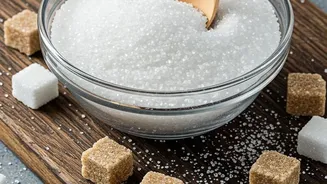
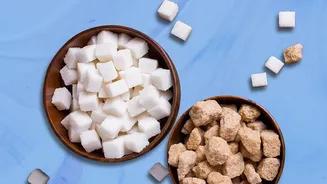
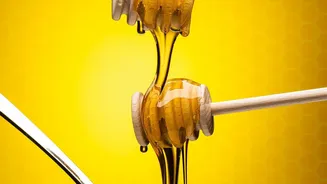
Let's get the main question out of the way first. A teaspoon of honey contains about 21-22 calories, while a teaspoon of granulated white sugar contains about 16 calories. So, on a direct spoon-for-spoon comparison, honey is indeed more caloric. The reason
for this comes down to density and composition. Honey is denser than sugar and contains water, meaning a teaspoon of honey actually weighs more than a teaspoon of sugar (about 7 grams for honey versus 4-5 grams for sugar). While sugar has more calories per gram, the heavier serving size of a spoonful of honey gives it more calories overall.
Composition and How Your Body Sees Them
Table sugar, or sucrose, is a molecule made of 50% glucose and 50% fructose bonded together. Your body must break this bond during digestion before it can use the energy. Honey is also made of glucose and fructose, but they exist as separate, individual sugars. It is composed of roughly 40% fructose and 30% glucose, with the rest being water, pollen, and other trace compounds. Because the sugars are already separated, honey is arguably easier for the body to process. This difference in structure is fundamental to understanding their varying impacts on the body.
The Glycemic Index Factor
The Glycemic Index (GI) measures how quickly a food raises your blood sugar levels. Regular white sugar has a GI of around 65. Honey typically has a lower GI, often averaging around 58, though this can vary widely depending on the type of honey. The higher fructose content in honey is a key reason for this lower GI, as fructose is absorbed more slowly and doesn't cause as sharp an initial spike in blood glucose. This makes honey a slightly better option for maintaining more stable blood sugar levels, though both sweeteners will raise them and should be used in moderation, especially by individuals with diabetes.
Beyond Calories: Nutrients and Antioxidants
This is where honey pulls ahead. Refined table sugar provides what are often called 'empty calories', meaning it offers energy but no other nutritional value. In contrast, raw honey contains trace amounts of vitamins, minerals, enzymes, and powerful plant-derived antioxidants like flavonoids. Darker, less processed honeys tend to have higher antioxidant content. While these amounts are too small to meet your daily nutritional needs, they represent a significant difference from sugar, which contains none of these beneficial compounds. Some studies also point to honey’s natural antimicrobial properties.
Sweetness, Perception, and Usage
Perhaps the most practical difference is in their sweetness. Thanks to its higher concentration of fructose, honey is actually sweeter than table sugar. This means you might find yourself using less honey to achieve the same level of sweetness you would get from sugar. Over time, using a smaller amount could potentially negate the fact that honey has more calories per spoon. This is a crucial point: the 'healthier' choice often comes down to how much of it you use. Moderation remains the most important factor for any added sugar.