




The Sun's Turbulent Weather
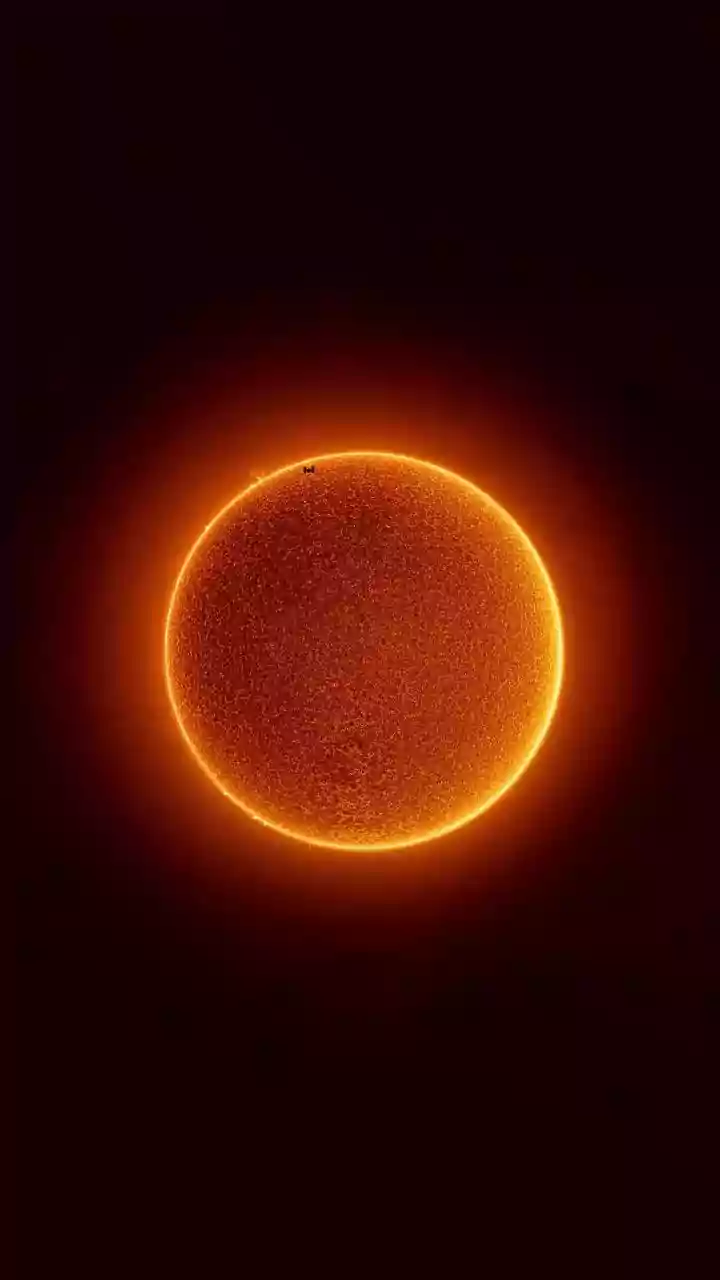
Our Sun is not the perfectly calm star it might appear to be. It has a dynamic and often violent atmosphere, giving rise to what scientists call 'space weather'. The primary culprits are solar flares and Coronal Mass Ejections (CMEs). A solar flare is an intense
burst of radiation, while a CME is a massive eruption of magnetised plasma and charged particles hurled into space. When these events are directed towards Earth, they can have significant consequences. Travelling at incredible speeds, these solar storms can reach our planet in anywhere from a few hours to a few days, bringing with them the potential to disrupt our technologically dependent society.
Satellites in the Firing Line
Global Navigation Satellite Systems (GNSS), which include the American GPS, Europe's Galileo, Russia's GLONASS, and India's own NavIC, are particularly vulnerable to space weather. The journey of a navigation signal from a satellite to a receiver on the ground is a delicate one. When a solar storm hits, it bombards Earth's magnetic field and upper atmosphere. This can cause the ionosphere—a layer of the atmosphere crucial for radio wave propagation—to become highly charged and irregular. This disturbance can delay, distort, or even block the signals from GPS satellites, leading to positioning errors or complete signal loss. Furthermore, the high-energy particles can damage the sensitive electronics and solar panels of the satellites themselves, potentially shortening their operational lifespan or causing total failure.
An Unblinking Eye in Space
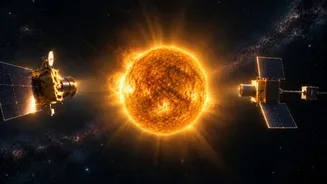
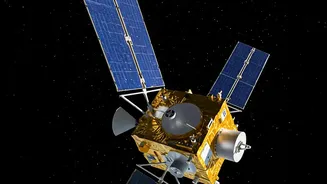
This is where Aditya-L1, the Indian Space Research Organisation's (ISRO) first dedicated solar observatory, plays its vital role. The spacecraft is strategically placed in a halo orbit around the Sun-Earth Lagrange Point 1 (L1), approximately 1.5 million kilometres from Earth. This unique vantage point allows Aditya-L1 to have a continuous, uninterrupted view of the Sun, free from any eclipses or blockages by the Earth or Moon. From this position, it can spot solar events like CMEs as they erupt from the Sun, long before they begin their journey towards our planet. This constant watch is the key to providing an effective early warning system.
The Right Tools for Early Warning
Aditya-L1 is equipped with a suite of seven sophisticated instruments designed to study the Sun and the space environment. Four of these payloads observe the Sun directly, while three perform 'in-situ' measurements, studying the particles and magnetic fields that flow past the spacecraft. Instruments like the Aditya Solar wind Particle Experiment (ASPEX) and the Plasma Analyser Package for Aditya (PAPA) directly sample the solar wind, measuring its composition and energy. A high-resolution magnetometer continuously tracks the strength and direction of the interplanetary magnetic field. By combining this data, scientists can build a comprehensive picture of an approaching solar storm—its speed, density, and magnetic orientation—which are critical for predicting its potential impact on Earth.
From Solar Data to Satellite Defence
The data collected by Aditya-L1 is the foundation of modern space weather forecasting. When the spacecraft detects a potentially hazardous solar flare or CME, it transmits the information back to Earth. Scientists can then analyse this data to predict when the storm will arrive and how severe it might be. This lead time, which can be hours or even days, is invaluable. With this early warning, satellite operators, including those managing GPS and NavIC constellations, can take protective measures. They can command satellites to enter a safe mode, temporarily shutting down non-essential and sensitive electronics to protect them from electrical surges. They can also prepare ground systems for potential signal disruptions and inform critical industries like aviation, shipping, and finance that rely on precise timing and navigation.