
Rajasthan: The Celebratory Ghevar
In Rajasthan, the arrival of Sawan is incomplete without Ghevar. This disc-shaped sweet, with its distinctive honeycomb texture, is a regional icon. Made from a batter of flour and ghee that is skillfully poured into hot oil, it becomes a crispy, lace-like
cake. It's then soaked in sugar syrup and often topped with rabri (thickened sweet milk), nuts, and saffron. Ghevar is especially popular during the festivals of Hariyali Teej and Raksha Bandhan, both of which fall during the Sawan month, making it a sweet symbol of monsoon festivities and family bonds.
Uttar Pradesh: The Classic Kuttu ki Puri
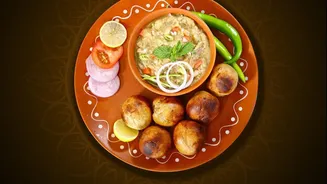
Across Uttar Pradesh and much of North India, Sawan fasting menus are defined by vrat-friendly flours, and Kuttu ka Atta (buckwheat flour) is a star ingredient. This flour is kneaded, often with boiled and mashed potatoes, into a dough and rolled into small discs, which are then deep-fried to make crispy Kuttu ki Puri. These puris are not just filling but also provide the energy needed during a fast. Typically served with a simple, no-onion-no-garlic potato curry (vrat wale aloo) and a side of fresh curd, this combination turns a day of fasting into a hearty, satisfying meal.
Maharashtra: The Ubiquitous Sabudana Vada
Walk through Maharashtra during Shravan, and you are sure to encounter the irresistible Sabudana Vada. These deep-fried patties are a beloved fasting staple, offering a delightful contrast of a crispy exterior and a soft, chewy interior. Soaked tapioca pearls (sabudana) are mixed with mashed potatoes, roasted and crushed peanuts, green chillies, and cumin. The mixture is shaped into small vadas and fried until golden brown. Served hot with a side of sweetened yogurt or a spicy peanut chutney, it’s a snack that is both comforting and quintessentially Maharashtrian.
Gujarat: The Versatile Farali Cuisine
Gujarat boasts an extensive and sophisticated fasting cuisine known as 'farali'. During Shravan, this culinary tradition shines with dishes like Farali Patra. A clever adaptation of the classic patra, this version uses vrat-friendly flours like rajgira (amaranth) to create a paste that is spread on colocasia leaves. The leaves are rolled, steamed, and then tempered with cumin and sesame seeds. Another popular choice is a shaak (vegetable curry) made from kand (purple yam), which provides a unique flavour and texture. These dishes showcase how Gujarati cuisine creatively adapts to the rules of fasting without sacrificing taste.
Bihar: The Humble Makhana Kheer
Bihar, a major producer of makhana (fox nuts), naturally incorporates this nutritious ingredient into its festive and fasting foods. During Sawan, Makhana Kheer is a simple yet deeply comforting dessert. The fox nuts are lightly roasted in ghee to make them crisp, then simmered in milk until it thickens. The kheer is sweetened with sugar and delicately flavoured with cardamom and garnished with chopped nuts. This dish is light on the stomach but rich in calcium, making it an ideal food for breaking a fast while adhering to sattvik principles.
Uttarakhand: The Pahadi Jhangora ki Kheer
In the Himalayan state of Uttarakhand, the food is deeply connected to the local agriculture. During Sawan, Jhangora ki Kheer is a traditional dessert made from the local barnyard millet, known as jhangora. This tiny, nutrient-rich grain has been a staple in the hills for generations. To make the kheer, the millet is washed, sometimes roasted in ghee, and then slow-cooked in milk until it becomes thick and creamy. Sweetened with sugar and flavoured with cardamom and nuts, it’s a wholesome and earthy pudding that reflects the simplicity and purity of Pahadi cuisine, fitting perfectly with the spiritual mood of Sawan.
West Bengal: The Delicate Niramish Payesh
In West Bengal, where the month is known as 'Shrabon', many households observe vegetarianism, creating 'niramish' (no onion or garlic) versions of their favourite dishes. Payesh, a creamy rice pudding, is a celebratory staple that finds its way into Shrabon festivities. Made with fragrant Gobindobhog rice, full-fat milk, and sweetened with sugar or date palm jaggery (nolen gur), it is slow-cooked for hours. The patient simmering allows the milk to thicken naturally, giving the payesh a rich, luscious texture without being heavy. Flavoured with bay leaves and cardamom, it is a sublime offering made to deities before being shared.