





The Hidden Cost of AI Writing Help
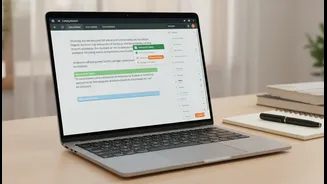
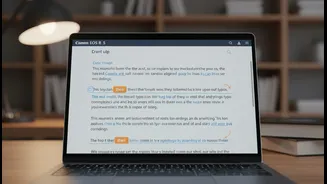
The rise of AI writing assistants has been a game-changer for students looking to improve their work. Tools like Grammarly, QuillBot, and even integrated features in major word processors offer powerful suggestions for clarity, tone, and grammar. However,
this convenience often comes with a hidden cost: data privacy. Many mainstream AI tools, especially free versions, may store, reuse, or even learn from the text that users input. For students, this raises significant concerns. Submitting a draft of a personal essay or a sensitive research paper means that data could potentially be saved and utilized by the AI company. This creates a climate of uncertainty, where the tool meant to help could expose private information or intellectual property.
The Fear of the AI Detective
Beyond data collection, the primary anxiety for many students is the institutional use of AI detection software like Turnitin. While universities use these tools to uphold academic integrity, they create a culture of surveillance. A major fear is the risk of false positives, where a student's original writing is incorrectly flagged as being generated by AI. This is a particular concern for students who are non-native English speakers, as their writing patterns can sometimes be misidentified by the algorithms. The outputs from these detectors can be difficult to challenge, as they often lack verifiable evidence beyond a percentage score, leaving students in a vulnerable position. The result is that even students using AI ethically for brainstorming or minor edits may fear being unjustly accused of misconduct.
A New Class of Discreet Tools
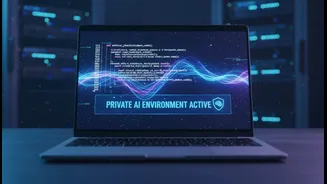
In response to these fears, a new market of privacy-focused AI checkers is gaining traction. These tools are built on a fundamentally different premise: what you write is yours and should not be stored or scanned without your consent. Their core selling point is that they do not save user data or use it to train their models. Some operate entirely on the user's device, ensuring that sensitive text never leaves their computer. Others are explicitly designed with features like no-login requirements or instant data deletion after use. Tools like AI Checker offer frictionless, no-account scans, making them easy to use for quick checks without creating a data trail. This approach directly addresses the student anxieties of being tracked or having their work permanently logged in a third-party database.
Navigating the New Academic Landscape
The popularity of these discreet tools highlights a growing sophistication among students about digital rights and privacy. They are not necessarily seeking ways to cheat the system, but rather to protect themselves within it. This trend presents a new challenge for educational institutions. Universities are committed to upholding academic integrity, but they must also respect student privacy rights as protected by laws like FERPA. The heavy-handed use of surveillance-style AI detectors can erode trust and penalize students unfairly. A more balanced approach may involve clearer policies on acceptable AI use, educating students on both the benefits and risks of different tools, and prioritizing pedagogical methods that value the writing process over a final, algorithmically-vetted product.