


Decoding a Distant Sky
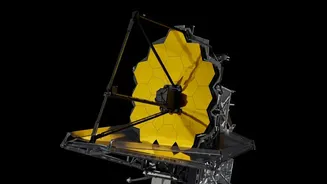
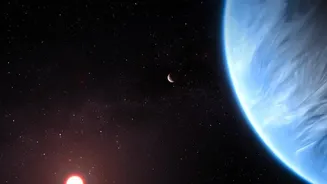
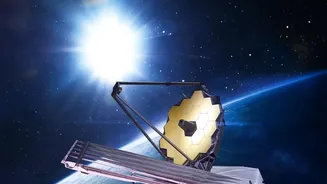
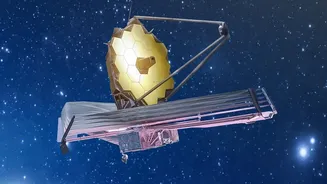
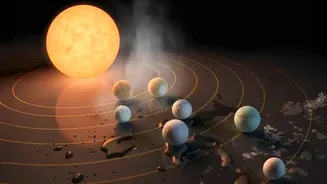
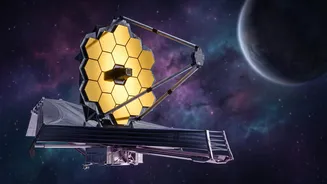
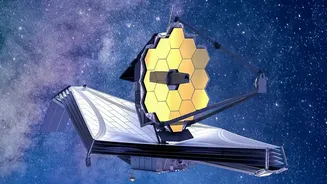
Super-Earths are a class of exoplanet more massive than Earth but smaller than Neptune. They are common in our galaxy, but we have none in our own solar system, making them a profound mystery. The James Webb Space Telescope is uniquely equipped to study
these worlds. Using a technique called spectroscopy, it analyses the light from a distant star as it passes through a planet's atmosphere during a transit. The molecules in the atmosphere absorb specific wavelengths of this light, leaving behind a chemical fingerprint that Webb’s powerful infrared sensors can read from light-years away. This allows scientists to determine what gases are present, offering clues about the planet’s temperature, climate, and potential for habitability.
The Case of the Lava World
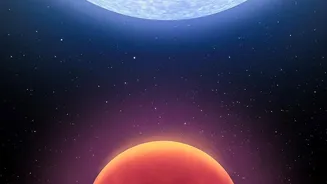
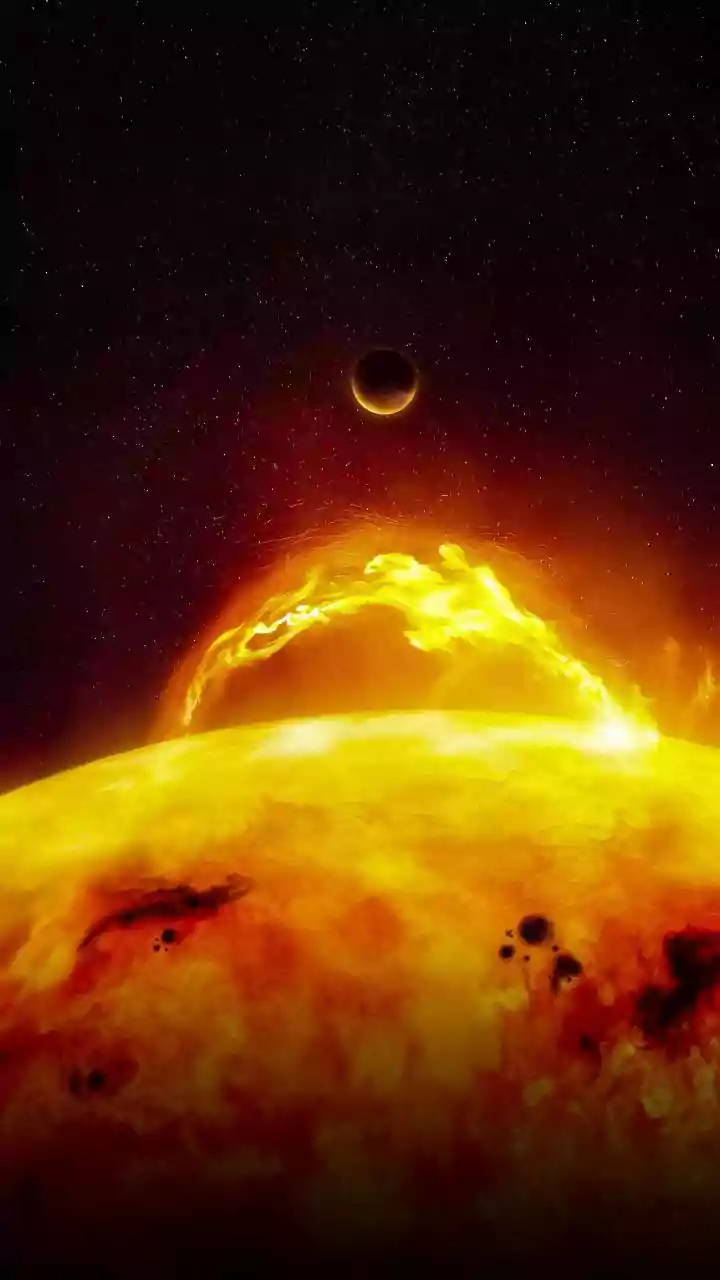
One of the most fascinating super-Earths studied by JWST is 55 Cancri e, a rocky world 41 light-years away. It orbits its star so closely that a year lasts a mere 18 hours, and its surface is thought to be a bubbling ocean of molten rock. Conventional wisdom suggested any atmosphere should have been blasted away long ago. Yet, JWST’s infrared data revealed something stunning: the planet is cooler than expected if it were just bare rock. This points to the presence of a substantial atmosphere that redistributes heat. Scientists believe this is a 'secondary' atmosphere, constantly being replenished by gases like carbon monoxide and carbon dioxide venting from the magma ocean below. It's a dynamic, volcanic world with a surprisingly resilient atmosphere.
A Different Kind of World
Not all super-Earths are hellish lava planets. Take LHS 1140 b, which orbits its star within the habitable zone—the region where liquid water could exist. JWST observations published in 2024 have ruled out a hydrogen-dominated atmosphere, which would have made it a mini-Neptune. Instead, the data hints at a world with a higher mean molecular weight atmosphere, possibly containing nitrogen, water vapor, and carbon dioxide. The planet's low density suggests that 10-20% of its mass could be water, painting a picture of a potential ocean world or a snowball planet with a subsurface ocean. These findings have made LHS 1140 b one of the most promising targets in the search for habitable conditions outside our solar system.
When There Is No Atmosphere
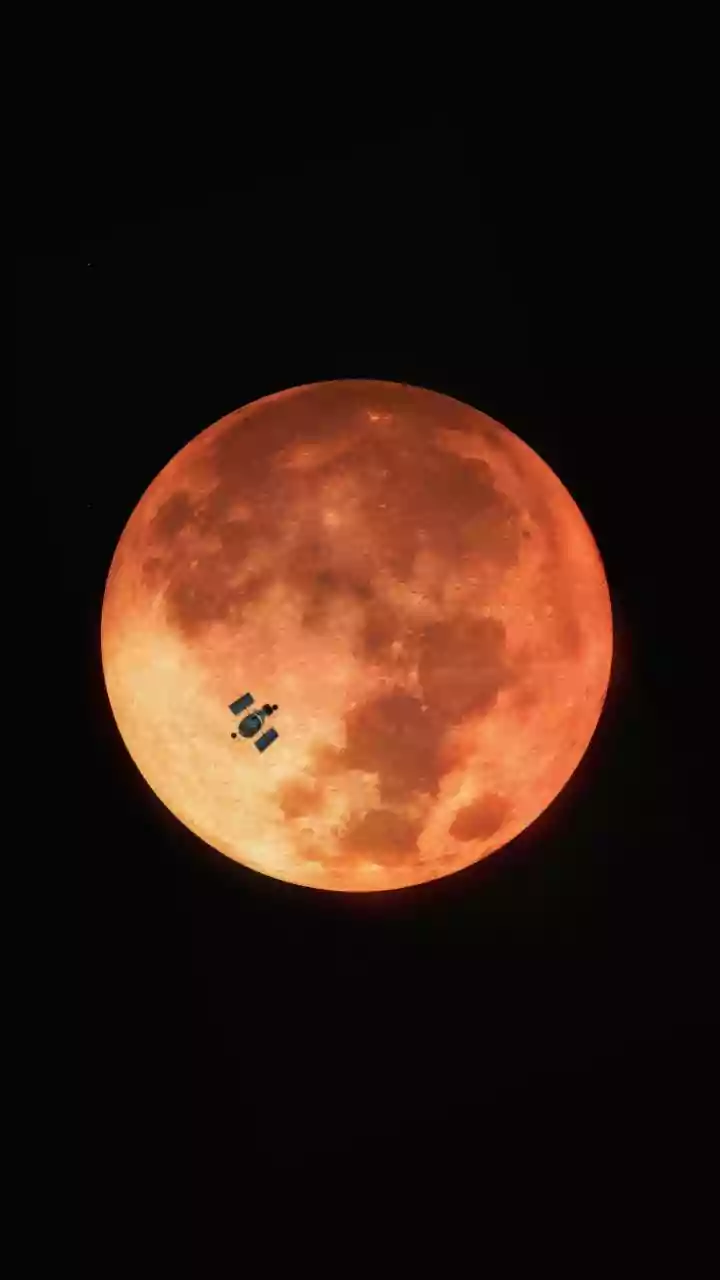
Sometimes, what the JWST doesn't find is just as revealing. The telescope studied another super-Earth, LHS 3844 b, which orbits its star in just 11 hours. The data from its Mid-Infrared Instrument (MIRI) showed a dark, barren world with no significant atmosphere to speak of. The absence of an atmosphere allowed scientists to study the planet's surface directly for the first time, a new field dubbed 'exoplanet geology'. The readings were consistent not with fresh, Earth-like crust but with ancient, weathered basaltic rock, similar to the surface of our Moon or Mercury. This finding demonstrates JWST's incredible versatility, allowing it to study not just the skies but also the solid ground of alien worlds.
The Bigger Picture for Planet Hunters
Each observation by the JWST, whether it reveals a volcanic atmosphere, hints of a water world, or finds nothing at all, is a crucial piece of the puzzle. The findings on planets like 55 Cancri e and TOI-561 b are challenging long-held theories about how planets so close to their stars can retain atmospheres. Meanwhile, worlds like LHS 1140 b are narrowing the search for potentially life-bearing environments. The infrared readings are providing a catalogue of planetary diversity that was unimaginable just a few years ago. We are moving from simply detecting planets to truly beginning to understand them. This international scientific endeavor is not just taking pictures; it's conducting remote chemistry, geology, and climatology across the cosmos, refining the search for a true Earth 2.0 with every observation.