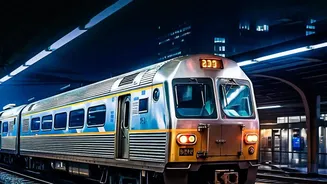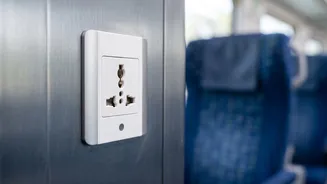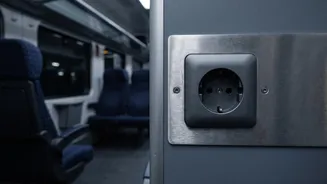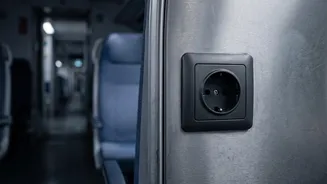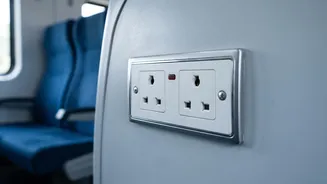






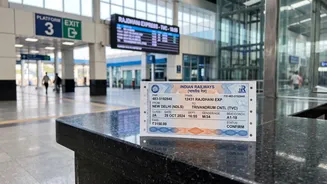

Planning an overnight train journey? You might want to charge your devices beforehand. Indian Railways is strictly enforcing a rule to switch off charging sockets between 11 PM and 5 AM, prioritising passenger safety over convenience.
What is the 'No Charging' Rule?
Indian Railways has
reiterated a long-standing directive for all its zones: power to the mobile and laptop charging sockets in all coaches must be switched off for six hours every night, from 11 PM to 5 AM. This is not a new policy, but a strict reinforcement of a rule that has been in place for years. Following a recent incident involving a power bank explosion, the Railway Board issued a letter on October 26, 2026, instructing staff to ensure there are no exceptions to this rule. To guarantee compliance, officials and supervisors will now conduct surprise inspections on overnight trains.
The Primary Driver: Fire Safety
The core reason behind the nightly power-down is to prevent fires. Railway officials have identified that a significant cause of fires on trains is related to electronic devices left charging unattended overnight. Gadgets like smartphones, laptops, and especially power banks, can overheat when plugged in for extended periods. Using faulty or low-quality chargers exacerbates this risk, potentially leading to short circuits and sparks. With passengers asleep, a small electrical fire could go unnoticed and quickly become a major disaster. The rule is a precautionary measure designed to mitigate this specific risk during the most vulnerable hours of the journey.
A Rule Born from Past Tragedies
The policy isn't a recent invention; it dates back to a recommendation made in 2014. The Commissioner of Railway Safety first suggested the measure following a deadly fire in an AC coach of the Bengaluru-Hazur Sahib Nanded Express in December 2013. The Railway Board then issued the instruction to all zones to turn off power points between 11 PM and 5 AM. Over the years, the rule has been re-emphasised after other fire incidents, including one on the Dehradun-bound Shatabdi Express in March 2021 and another on the New Delhi-Darbhanga Humsafar Clone Special in November 2023. The most recent push for enforcement in October 2026 came after a power bank exploded on a South Eastern Railway train where staff had failed to switch off the sockets.
How This Affects Your Travel Plans
For the modern passenger reliant on electronic devices, this rule has practical implications. On long overnight journeys, the six hour window without access to charging can be a significant inconvenience. It means you cannot leave your phone charging while you sleep and wake up to a full battery. The power is typically available outside of these restricted hours, so passengers need to plan their charging accordingly. The rule applies to all coach types, including AC and non AC sleeper classes, as safety concerns are universal across the train. While newer trains like the Vande Bharat may have more advanced electrical systems, the general advice remains to avoid overnight charging.
Tips for the Prepared Overnight Passenger
Adapting to the rule is straightforward with a little planning. The most effective strategy is to carry a fully charged power bank. This allows you to keep your devices topped up without relying on the train's sockets during the restricted hours. It's also wise to ensure all your essential devices—phone, tablet, or laptop—are fully charged before the 11 PM cutoff. Many passengers already do this, treating the onboard sockets as a bonus rather than a primary power source. If you notice any device becoming unusually hot, emitting a strange smell, or smoking while charging, unplug it immediately and alert the train staff. This vigilance, combined with the railway's policy, contributes to a safer journey for everyone.