




The Snack-Time Showdown
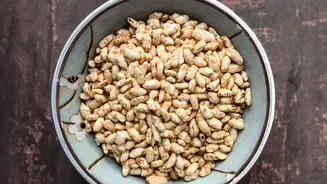
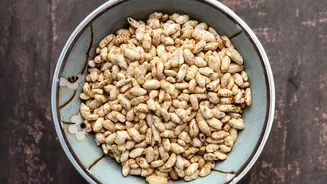
At a glance, puffed rice and puffed quinoa seem similar. Both are made by heating grains until they expand, creating a light, airy texture. Puffed rice, often known as 'murmura' in India, is a long-standing, low-calorie staple used in everything from
bhel puri to simple breakfast cereals. Quinoa puffs are a more recent arrival, gaining popularity as a nutrient-dense alternative. While they share a similar form and gluten-free status, their nutritional profiles tell two very different stories, making each one suitable for different goals.
A Nutritional Head-to-Head
The most significant differences lie in the macronutrients. Puffed rice is the undisputed champion of low-calorie snacking. A cup of plain puffed rice contains only about 50-60 calories, making it an excellent choice for adding volume to your diet without a heavy caloric penalty. However, it offers very little in terms of protein or fibre. Puffed quinoa, on the other hand, is more nutritionally robust. A similar serving size is higher in calories but packs a much stronger punch with more protein, fibre, and healthy fats. This makes quinoa puffs a more satiating option that keeps you feeling full for longer.
The Protein and Fibre Advantage
If protein is your priority, quinoa puffs are the clear winner. Quinoa is one of the few plant-based foods that is a 'complete protein', meaning it contains all nine essential amino acids your body needs for functions like muscle repair. Puffed quinoa retains much of this benefit, offering around 4 grams of protein per serving compared to just 1 gram in puffed rice. The fibre content tells a similar story. Quinoa puffs contain significantly more dietary fibre, which is crucial for digestive health and helps stabilise blood sugar levels. Puffed rice has very little fibre, making it less effective at promoting fullness.
Glycemic Index and Energy Release
The glycemic index (GI) measures how quickly a food raises your blood sugar levels. This is where another key difference emerges. Puffed rice, particularly white rice, generally has a high GI, meaning it provides a quick burst of energy but can also lead to a subsequent crash. Quinoa has a naturally lower GI, and even in its puffed form, it results in a more gradual release of energy. The combination of protein and fibre in quinoa puffs further helps to slow down digestion, preventing the sharp blood sugar spikes associated with high-GI snacks. This makes puffed quinoa a better choice for sustained energy and for individuals managing blood sugar.
Micronutrients: The Hidden Value
Beyond the big three (carbs, protein, fat), quinoa puffs also lead in micronutrient content. They are a good source of essential minerals like iron, magnesium, and folate. These minerals are vital for everything from energy production and muscle function to cell growth. While some puffed rice is enriched with vitamins and minerals, puffed quinoa naturally offers a more dense and diverse nutrient profile.
Which Puff Is Right for Your Diet?
So, how do you choose? It all comes down to your individual needs.Choose Puffed Rice if:- You are managing your calorie intake strictly and want a high-volume, low-calorie snack.- You need a quick, easily digestible source of energy before a short workout.- You have a sensitive stomach, as it's very light and easy to digest.Choose Quinoa Puffs if:- You want a snack that will keep you full for longer and help control your appetite.- You're focused on increasing your protein intake, especially from plant-based sources.- You need a nutrient-dense option with more vitamins and minerals.- You need to manage your blood sugar levels and prefer a lower-GI snack for sustained energy.