
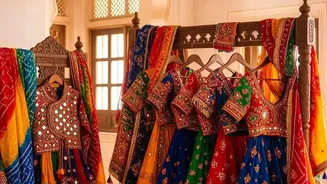
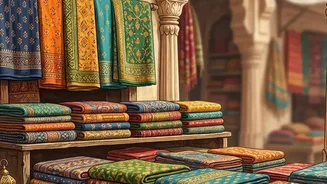

That pile of old clothes doesn't have to end up in a landfill. Across India, age-old textile traditions offer a beautiful and sustainable solution, turning worn-out fabrics into cherished items for your home. It’s a practice rooted in resourcefulness.
Kantha: The Running Stitch of Bengal
Hailing from the Bengal region, Kantha is a celebrated craft born from the simple idea of making old things new again. Traditionally, women would layer old, soft cotton saris and dhotis, stitching them together with a simple running stitch to create light quilts and blankets. This technique, passed down through generations, strengthens worn fabric while creating intricate patterns. The beauty of Kantha lies in its texture, created by the dense stitching, and its ability to tell a story through motifs inspired by nature and daily life. You can use this method to turn old cotton shirts or dupattas into vibrant cushion covers, wall hangings, or table runners. The process involves layering fabric pieces and covering them with parallel rows of stitches, giving new life and durability to otherwise forgotten textiles.
Godhadi: Maharashtra’s Patchwork Heirlooms
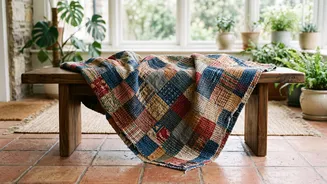
In Maharashtra, the Godhadi is more than just a quilt; it's a tapestry of memories. These hand-stitched blankets are made by layering and stitching together pieces of old clothing, from saris to shirts. The craft is a testament to sustainable living, transforming discarded fabrics into functional and beautiful objects of comfort. Godhadi-making is often a communal activity, where women gather to sew, turning it into a social event. For home decor, you can adapt the Godhadi technique to create thick, comfortable floor cushions, durable rugs, or warm, personalised blankets. The process involves arranging different fabric scraps for internal layers and using larger pieces, like old saris or dupattas, for the outer surfaces, all joined by hand with strong thread.
Kowdhi: The Patchwork Quilts of Karnataka
Kowdhi, a patchwork quilting tradition from northern Karnataka, is another craft centered on reusing old cloth. Women create these quilts for household use, often using a mix of printed and plain pieces from old clothing and tailors' scraps. The fabrics are cut into geometric shapes and meticulously sewn together to form a vibrant, collage-like top layer. This patchwork is then layered with batting for warmth and a complementary backing fabric. While traditionally used for quilts, the Kowdhi technique is perfect for creating eye-catching tote bags, table mats, and decorative throws. Each piece is unique, reflecting the artisan's personal aesthetic and the stories held within the repurposed fabrics.
General Patchwork and Appliqué
Beyond specific regional quilts, the general principle of patchwork is found across India, offering endless creative possibilities. In regions like Rajasthan and Gujarat, patchwork is used to create everything from bedspreads to decorative hangings. You can easily adopt this idea by cutting interesting sections from your old kurtas, jeans, or dresses and stitching them together. These patched fabrics can be used to reupholster a small stool, create unique fabric-covered storage boxes, or design a one-of-a-kind art piece by stretching the fabric over a canvas frame. Appliqué, another technique popular in Odisha as 'Pipli' work, involves sewing smaller shaped fabric pieces onto a larger base cloth to create decorative patterns, perfect for personalising plain curtains or cushions.