



A Tale of Two Identities
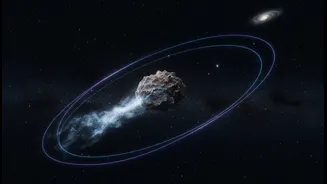
On paper, the object known as (248370) 2005 QN173 is an asteroid. It was discovered in 2005, follows a predictable orbit in the main asteroid belt between Mars and Jupiter, and for years, it behaved just like its millions of rocky neighbours. It was just another
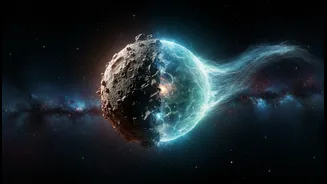
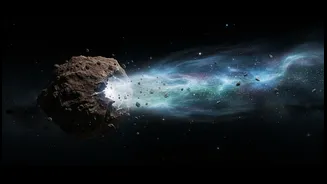
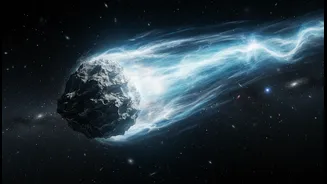
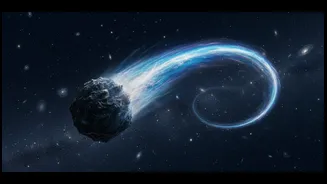
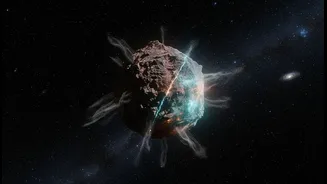
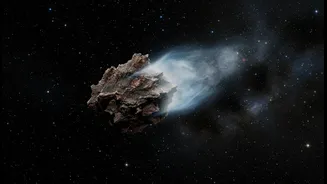
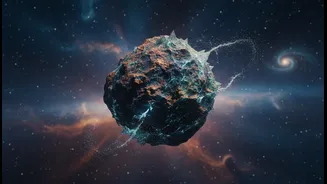
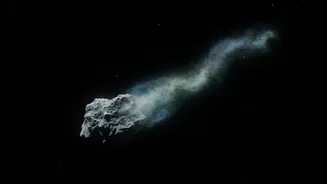
inert point of light in the cosmic darkness. But in July 2021, astronomers noticed something strange. This supposedly quiet asteroid had sprouted a tail. Suddenly, it looked a lot less like a static rock and a lot more like a comet. This wasn't just a fleeting event. When scientists dug into archival images, they found evidence of similar activity back in 2016, confirming that this object has a history of coming alive. This recurring activity suggests that something is causing material to be ejected from its surface, a hallmark of comets, not asteroids.
Asteroid vs. Comet: The Classic Divide
For centuries, the distinction between asteroids and comets was simple. Asteroids are primarily composed of rock and metal. They formed closer to the Sun, where the heat made it impossible for ice to remain solid. Comets, on the other hand, are often called “dirty snowballs.” They are a mix of ice, dust, and rock that formed in the frigid outer reaches of the solar system, like the Oort Cloud. Their orbits are typically long and highly elliptical. When a comet’s journey brings it close to the Sun, its ice turns directly into gas in a process called sublimation, creating a glowing halo (a coma) and a spectacular tail of dust and gas. Asteroids, being mostly rock, were not expected to do this. They were supposed to remain inactive, quietly orbiting in their belt.
Enter the 'Active Asteroid'
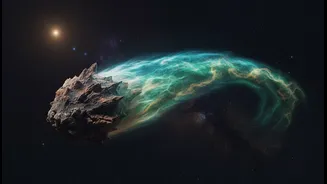
Objects like 2005 QN173 force a rethink of these tidy definitions. Scientists now use the term 'active asteroid' to describe bodies that have asteroid-like orbits but display comet-like visual characteristics, such as a tail or coma. They are also sometimes called 'main-belt comets'. This hybrid category acknowledges that the solar system is more complex than a simple binary classification allows. The activity on these asteroids can be caused by several things. For some, like 2005 QN173, the leading theory is the sublimation of buried ice that gets exposed to sunlight. For others, activity might be triggered by a recent impact with a smaller object or by the asteroid spinning so fast that it starts flinging material off its surface. There are fewer than 40 of these active asteroids known, making each discovery incredibly valuable.
Why These Blurry Boundaries Matter
These category-defying rocks aren’t just cosmic curiosities; they are scientifically crucial. For one, they challenge our models of solar system formation. The existence of icy bodies in the relatively warm asteroid belt suggests that ice might be more common in this region than previously believed. This has profound implications for one of the biggest questions in science: Where did Earth's water come from? For a long time, classical comets from the outer solar system were considered the primary delivery mechanism. However, studies of their water composition don't perfectly match Earth's oceans. Active asteroids in the main belt, which are much closer, offer a compelling alternative source for the water that made life on our planet possible. Studying them is like finding a new piece to a very old puzzle.
Cosmic Time Capsules and Future Resources
Because these objects are leftovers from the formation of our solar system 4.6 billion years ago, they are essentially time capsules. The ice locked within an active asteroid could provide a pristine sample of the materials that were present in the early solar system. Furthermore, these objects could one day be vital for space exploration. The same water ice that creates their beautiful tails could be harvested and used for rocket fuel, or even broken down to provide breathable air for astronauts on long-duration missions. Projects like the citizen science initiative Active Asteroids are now helping professional astronomers scan hundreds of thousands of images to find more of these rare objects, democratizing discovery and accelerating our understanding of these mysterious space rocks.