




The Challenge of Hitting the Brakes
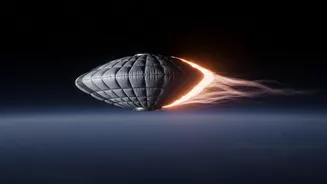
Any object entering a planet's atmosphere at hypersonic speeds faces an immense challenge. As the craft ploughs through the air, the gases in front of it compress and form a superheated layer of plasma that can reach thousands of degrees. Without protection,
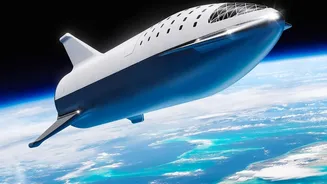
any probe or capsule would be incinerated in moments. For decades, the solution has been rigid heat shields, like the ablative ones used on the Apollo capsules that burned away to dissipate heat, or the ceramic tiles on the Space Shuttle. These have worked reliably, but they come with a significant limitation: they have to fit inside the nose cone, or fairing, of the rocket that launches them. This puts a hard cap on their size, which in turn limits the size and weight of the payload they can protect.
Thinking Outside the Rocket Fairing
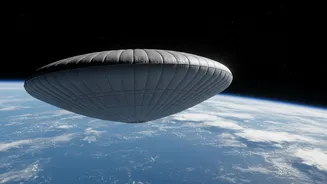
This is where inflatable heat shields, formally known as Hypersonic Inflatable Aerodynamic Decelerators (HIADs), change the game. Developed by NASA and its partners over the last decade, this technology allows a massive heat shield to be packed into a small volume for launch. Once in space, it inflates like a high-tech airbag, forming a large, protective aeroshell. This simple-sounding idea overcomes the 'tyranny of the rocket shroud,' as engineers call it. The key innovation is not just its packability, but its sheer size. A larger shield creates more drag, acting like a giant brake high in the atmosphere where the air is thin. This allows the spacecraft to decelerate more gradually and at higher altitudes, significantly reducing the intense heat and forces experienced during entry.
How It Works: Strength in Flexibility
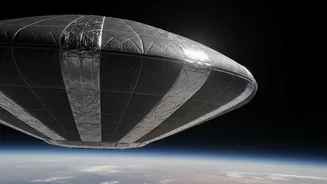
An inflatable heat shield isn't just a simple balloon. It's a highly engineered system composed of several advanced components. The structure consists of stacked, concentric rings, or tori, woven from synthetic polymers that are ten times stronger than steel by weight. This allows them to be flexible enough to be folded, yet incredibly rigid and strong when inflated. The side facing the intense heat of reentry is covered by a flexible thermal protection system. This multi-layered blanket includes an outer layer of ceramic fiber cloth that can withstand temperatures over 1,600 degrees Celsius, layers of insulation, and an inner barrier to protect the inflatable structure itself. The entire assembly is inflated just before reentry using a gas generator or stored nitrogen, creating a robust, cone-shaped shield.
A Game-Changer for Future Missions
The successful orbital test of NASA's LOFTID (Low-Earth Orbit Flight Test of an Inflatable Decelerator) in late 2022 was a landmark moment for this technology. The six-meter diameter shield survived reentry from orbital speeds, proving the concept is viable for real-world applications. The implications are enormous. For Mars, a larger heat shield means we can land much heavier payloads, such as habitats and ascent vehicles needed for human missions. It also allows access to higher-altitude landing sites that were previously unreachable because the thinner atmosphere didn't provide enough braking power for traditional shields. Beyond Mars, the technology could be used for missions to Venus, Titan, or any destination with an atmosphere.
From Exploration to Commercial Use
The benefits aren't limited to planetary exploration. Inflatable heat shields offer a cost-effective way to return large payloads to Earth. This could include bringing back scientific samples, returning cargo from the International Space Station, or even recovering valuable rocket components for reuse. United Launch Alliance, for instance, has partnered with NASA on this technology with the goal of recovering the expensive main engines of its Vulcan rocket. The engines would separate, deploy an inflatable heat shield, and splash down in the ocean for retrieval, dramatically cutting the cost of access to space. As the technology matures, it could also enable new commercial ventures, like returning materials manufactured in space.