



The Monsoon's Official Anthem
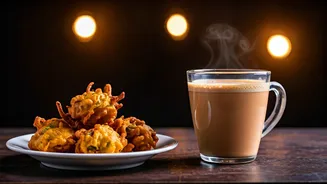
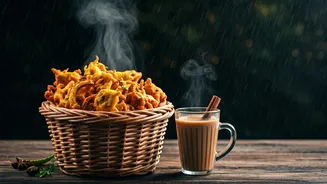
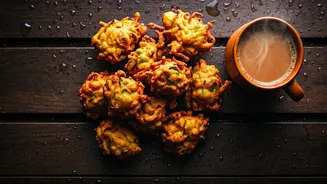
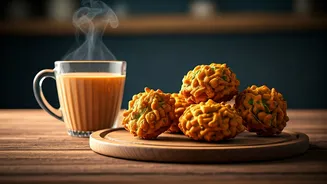
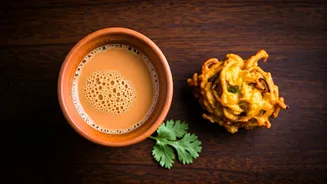
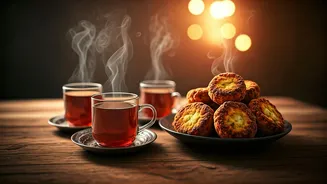
There are food pairings, and then there are cultural institutions. Chai and pakoras fall firmly into the latter category. For millions of Indians, the scent of ginger-infused tea brewing alongside the sizzle of batter hitting hot oil is the official soundtrack
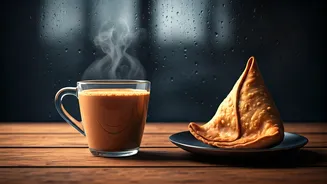
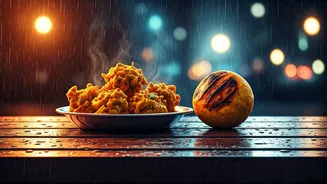
of the monsoon. It’s more than just a snack; it’s a response to the weather, a tradition embedded in the collective consciousness. The cool, damp air of a rainy day seems to demand the warmth and crunch that only this duo can provide. It’s a comforting ritual that turns a gloomy day into an opportunity for indulgence and comfort, a culinary silver lining to the grey clouds.
A Masterclass in Contrast
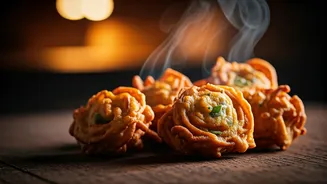
So, why does this combination work so perfectly? The answer lies in a beautiful symphony of sensory contrasts. First, there’s temperature. The piping hot, milky chai provides a soothing warmth that is punctuated by the fiery heat of a freshly fried pakora. Then comes texture. The smooth, liquid grace of the tea is the perfect counterpoint to the crunchy, irregular exterior and soft, steamy interior of the pakora. Finally, and most importantly, there’s taste. The slightly sweet, spiced, and milky flavour of masala chai cuts through the savoury, sometimes spicy, and oily richness of the pakora. Each sip of chai cleanses the palate, making you ready for the next delicious, crispy bite. It’s a culinary conversation where each partner brings out the best in the other.
The Language of Togetherness
To reduce chai and pakoras to mere food items is to miss the point entirely. They are a social glue. A plate of pakoras and a kettle of chai are an open invitation to pause, connect, and share. It’s the snack of choice for impromptu family gatherings on a rainy afternoon, the fuel for long conversations with friends, and the perfect excuse to take a break from the workday. In offices, canteens, and homes, the phrase “Let’s get some chai-pakora” is code for “Let’s take a moment to relax together.” This pairing isn’t meant to be eaten alone in a hurry; its true flavour is unlocked by the laughter and chatter that accompanies it.
A Universe of Variety
Part of the enduring appeal of this pair is its sheer versatility. ‘Pakora’ is not one thing, but a universe of possibilities. From the classic onion (pyaz) and potato (aloo) to more adventurous versions with spinach (palak), paneer, cauliflower (gobi), or even bread, there’s a pakora for every taste. The batter itself can be tweaked with different spices—ajwain, red chilli powder, turmeric, chaat masala. The chai, too, is a personal affair. Some prefer it strong and dark (kadak), others milky and sweet. It can be infused with ginger (adrak), cardamom (elaichi), cloves, or a full-bodied masala blend. This adaptability ensures that the pairing remains exciting and can be tailored to any palate or region.
Crafting the Perfect Moment
While there are no hard rules, achieving chai-pakora nirvana involves a little bit of art. For truly crispy pakoras, ensure your oil is hot but not smoking, and don’t overcrowd the pan. A double-fry method—frying once until lightly golden, then again just before serving—can yield an unbeatable crunch. For the chai, simmering the tea leaves, spices, and ginger with the milk and water allows the flavours to meld into a rich, aromatic brew. But the most important ingredient is timing. The pakoras should be served straight from the kadai, and the chai should be steaming. It’s a fleeting moment of perfection, best enjoyed immediately, preferably with good company and the sound of rain in the background.