

The Quest for Spectrum
SpaceX recently announced an agreement to purchase a portfolio of 800 MHz spectrum from the investment firm Grain Management. Think of radio spectrum as invisible highways that carry wireless signals. Different bands of spectrum have different properties.
High-band spectrum offers incredible speeds over short distances, while low-band spectrum, like the 800 MHz band SpaceX is acquiring, is prized for its ability to travel long distances and, crucially, penetrate walls and buildings. This acquisition is what Elon Musk called 'the last critical piece of the spectrum puzzle' to provide comprehensive phone coverage across America. Without this low-band spectrum, Starlink's satellite signals would struggle to provide reliable service indoors, a fatal flaw for any aspiring mobile carrier.
The 'Direct to Cell' Grand Plan
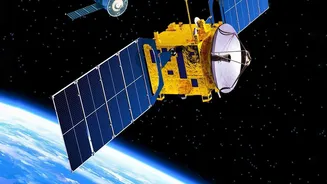
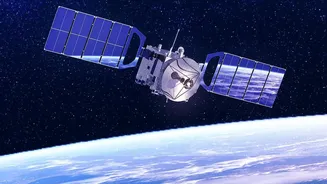
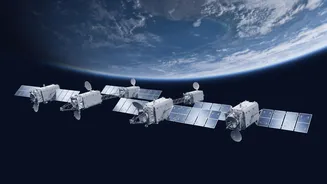
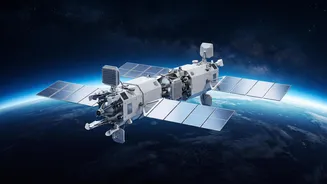
This spectrum deal is not happening in a vacuum. It directly supports Starlink's 'Direct to Cell' strategy, which aims to provide mobile service to any existing LTE smartphone with a view of the sky. For years, satellite phones were bulky, expensive, and required specialized hardware. Starlink Mobile's vision is different: to have its satellites act as 'cell towers in space', connecting directly to the phone already in your pocket. The company has already been trialing a basic version of this service, primarily for texting in remote areas, through a partnership with T-Mobile. However, owning its own spectrum is the key that unlocks the ability to move beyond being a partner and become a full-fledged competitor to giants like AT&T, Verizon, and T-Mobile.
A Hybrid Network Approach
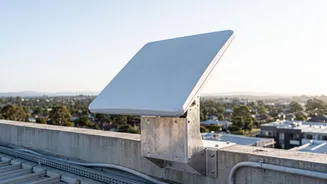
SpaceX isn't just planning to rely on satellites. The company has made it clear that its strategy involves a flexible, hybrid architecture combining its satellite constellation with a terrestrial network on the ground. This means deploying its own ground-based infrastructure, including radios and antennas on towers and rooftops, to supplement the satellite coverage. This is particularly important for handling the high capacity demands of cities and dense suburban areas, where a satellite-only network would likely struggle. This two-pronged approach—satellites for universal coverage and terrestrial assets for capacity—is how Starlink plans to offer a service that can compete on both availability and performance.
Navigating Hurdles and Skepticism
The path to becoming the fourth major US carrier is fraught with challenges. The spectrum deal itself requires approval from the Federal Communications Commission (FCC), though many analysts expect it to pass. More significantly, building a nationwide terrestrial network is an enormously expensive and time-consuming undertaking. Executives from rival carriers have publicly expressed skepticism, noting that great wireless networks are built 'site by site, neighborhood by neighborhood', not just with headlines and spectrum licenses. T-Mobile's CTO pointed out that even with this acquisition, Starlink's total spectrum holdings would be a fraction of what T-Mobile controls. Despite this, the ambition is clear. The FCC recently approved SpaceX's application to launch 15,000 next-generation satellites designed for this service, a massive expansion of its current constellation.