






Freedom from the Four-Wheeled Crowd
For a solo traveller, relying on taxis or even ride-hailing apps like Grab and Gojek can quickly add up, dictating your schedule and limiting your spontaneity. A private driver for a day can cost between Rp 500,000 and Rp 700,000 ($35–$45 USD). While
app-based services are cheaper for single trips, costs accumulate. Renting a scooter transforms your trip. It’s not just about saving money; it’s about the freedom to explore Bali on your own terms. You can navigate the island's notorious traffic with greater ease, discover hidden beaches, and stop for a roadside snack whenever the mood strikes. For travelers making several trips a day, a scooter is significantly more cost-effective than any other option.
The Real Cost of Renting a Scooter
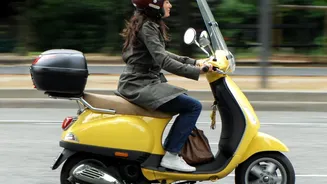
Renting a scooter is remarkably affordable. In 2026, daily rates for a standard model like a Honda Scoopy or Vario range from approximately Rp 60,000 to Rp 130,000 ($4–$8 USD). If you're staying for a week or more, the savings get even better. Weekly rentals can bring the effective daily rate down, while monthly rentals are the most economical, often costing between Rp 1,200,000 and Rp 1,800,000 ($75–$110 USD) for a standard scooter. For those seeking more power for hills or longer distances, a Yamaha NMAX or Honda PCX might cost around Rp 150,000 to Rp 250,000 ($10–$15 USD) per day. Fuel is another minimal expense; petrol costs around Rp 10,000 per litre, meaning a full tank that can last for days will only set you back a couple of dollars.
Your Pre-Ride Legal and Safety Checklist
Before you hit the road, getting your documents in order is crucial. Indonesian law requires all foreign riders to possess a valid International Driving Permit (IDP) with a motorcycle endorsement, alongside their original home country license. A car-only license is not sufficient. Police conduct frequent checks, and riding without the proper paperwork can lead to fines and, more importantly, can void your travel insurance in case of an accident. When you rent, never leave your original passport as a deposit; a photocopy or a cash deposit is standard practice for reputable vendors. Always inspect the scooter before finalizing the rental: check the brakes, tyres, and lights. Insist on a quality, well-fitting helmet, as the ones provided are not always up to standard.
Navigating Bali's Roads Like a Pro
Driving in Bali is an experience in itself, with its own unwritten rules. Traffic can be chaotic, so it's essential to stay alert and confident. If you have never ridden a scooter before, Bali's busy streets are not the ideal place to learn. For experienced riders, the key is to be predictable and aware. Use your horn not as a sign of aggression, but as a friendly “hello, I’m here” when overtaking or approaching blind corners. Watch out for potholes, stray dogs, and unexpected ceremonial processions that can block roads. Be especially cautious during and after rain, as roads can become slippery. Embrace the local driving rhythm—it's more of a flow than a strict adherence to lanes—and you'll find it's the most efficient way to get around.
Where Your Scooter Can Take You
With your own transport, the best of Bali opens up to you. Imagine an early morning ride to the Tegalalang Rice Terraces near Ubud before the tour buses arrive, or cruising along the cliff-top roads of Uluwatu to find a secluded beach for sunset. A scooter allows you to easily beach-hop in areas like Canggu and Seminyak, or venture further afield to discover the waterfalls of North Bali. This mode of transport is perfect for exploring the quiet backroads of Ubud or finding authentic local warungs (small eateries) that are off the main tourist track. The ability to park almost anywhere gives you an unparalleled advantage in accessing popular spots without the hassle and cost of car parking.