




A New Playbook for the Red Planet
NASA recently announced it has selected seven American companies for contracts to design the next wave of Martian robots. This initiative, called Science Transport and Robotic Innovation for Deployment and Exploration (STRIDE), represents a significant
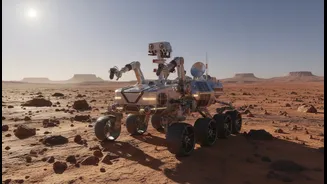
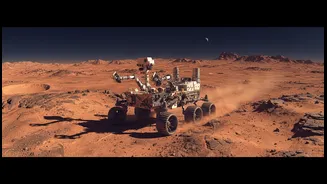
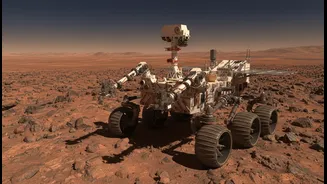
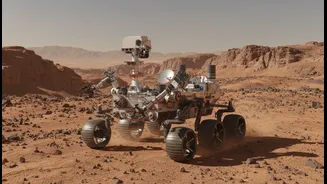
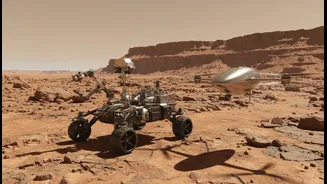
shift in the agency's approach to planetary exploration. Instead of relying solely on large, monolithic rovers like Curiosity and Perseverance, which have been hugely successful but are costly and complex, NASA is investing in a more diverse ecosystem of machines. The $17 million in contracts signals a commitment to public-private partnerships, aiming to leverage commercial innovation to build robots that can go farther and access scientifically rich areas that are currently out of reach. This model allows NASA to tap into specialized expertise and potentially lower mission costs, enabling more frequent trips to the Red Planet.
Meet the Robotic Trailblazers
The seven companies selected represent a cross-section of the aerospace and robotics industry, each bringing unique skills to the table. The awardees are AeroVironment, Astrobotic, Venturi Astrolab, Ground Control Robotics, Honeybee Robotics, Intuitive Machines, and MEI Technologies. AeroVironment, for instance, has a rich history with Martian aerial vehicles, having been a key collaborator on the groundbreaking Ingenuity helicopter. Honeybee Robotics has a long track record of developing drills and sample collection systems for NASA missions. Astrobotic and Intuitive Machines are major players in the commercial lunar landing scene, giving them crucial experience in delivering payloads to other worlds. This diverse portfolio of partners ensures that NASA isn't putting all its eggs in one basket, but is instead fostering a competitive and innovative environment to solve Mars' toughest challenges.
Conquering Craters, Slopes, and Skies
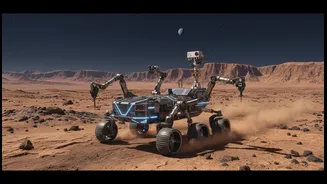
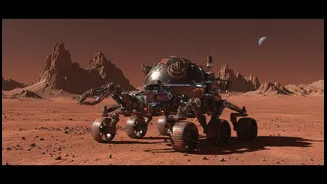
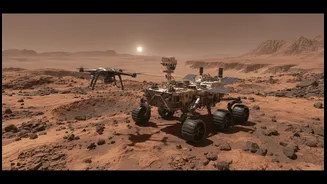
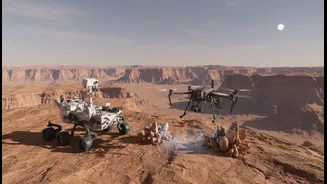
A primary goal of the STRIDE initiative is to overcome the physical limitations that have constrained previous missions. Mars is a planet of extreme landscapes, with deep craters, steep slopes, and sandy regions that can easily trap a multi-million-dollar rover. The new technologies will focus on enhanced mobility to navigate this difficult terrain. This could include everything from advanced wheel and suspension systems on rovers to aerial platforms that can scout ahead. The success of the Ingenuity helicopter, which completed 72 flights before its mission ended, proved the immense value of having an eye in the Martian sky. Future drones could act as scouts for rovers, identifying safe paths, spotting potential hazards, and mapping scientifically interesting targets from the air, dramatically increasing the efficiency and reach of surface missions.
The Power of Autonomous Teamwork
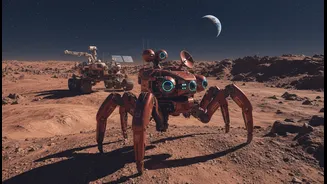
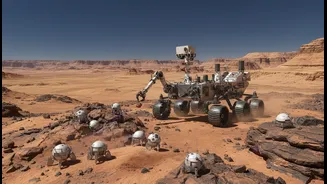
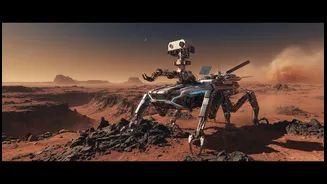
Perhaps the most futuristic aspect of this new strategy is the emphasis on autonomous cooperation. Getting instructions from Earth to Mars takes anywhere from three to 22 minutes, making real-time control impossible. Future missions envision fleets of robots that can work together without constant human oversight. This concept, known as Cooperative Autonomous Distributed Robotic Exploration (CADRE), is already being developed for lunar missions. Under this model, a network of smaller rovers could communicate with each other, share data, and collectively decide how to best explore an area. One robot could stand guard and provide a communications link while others venture into a cave or down a steep crater wall, creating 3D maps of environments that a single explorer could never safely access. This "swarm" approach multiplies the scientific return and provides a level of redundancy that single-rover missions lack.
A Blueprint for Future Exploration
While the immediate focus of the STRIDE contracts is Mars, the technologies developed will have a far broader impact. These next-generation mobility and autonomy systems are directly applicable to NASA's Artemis program, which aims to establish a sustainable human presence on the Moon. Lessons learned on Mars will inform the development of lunar rovers and robotic assistants for astronauts. Furthermore, this push towards commercial partnerships is creating a new economic frontier in space. By acting as a customer and partner, NASA is helping to build a robust commercial space industry capable of conducting missions not just for the agency, but for other clients as well. This creates a virtuous cycle of innovation, driving down costs and increasing access to space for science, exploration, and eventually, human settlement.