


Embrace the Rule of Threes
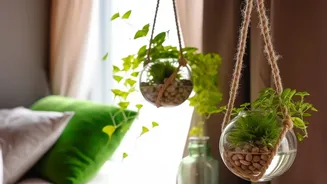
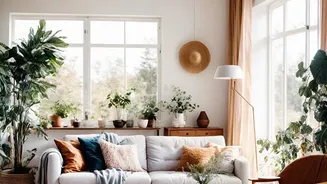
One of the most foundational principles in design is the 'rule of three', which suggests that items arranged in odd numbers are more appealing and natural to the human eye. Instead of placing two or four plants together, try a group of three or five.
This simple trick breaks up the visual monotony of even numbers and symmetry, creating a more dynamic and engaging arrangement. This doesn't mean you need three different types of plants; even three identical pots in a row can feel more dramatic and intentional than a pair. The goal is to create a small vignette that feels balanced but not rigidly symmetrical, allowing the arrangement to feel more organic and alive.
Create a Visual Skyline
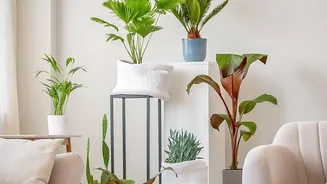
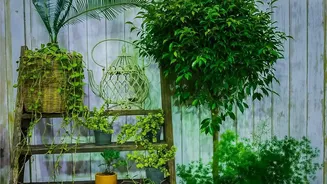
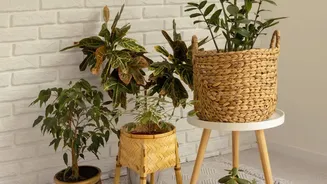
A successful plant grouping relies on creating varied heights and levels, much like a city skyline. When all plants are at the same height, the arrangement can look flat and uninspired. To avoid this, combine plants of different sizes: a tall, upright plant as a 'thriller', a medium-sized bushy plant as a 'filler', and a trailing plant as a 'spiller'. This technique guides the viewer's eye up, down, and through the arrangement. You can achieve this by choosing plants with different growth habits or by using plant stands, books, or small stools to elevate certain pots. This layering adds depth and ensures each plant has its own visual space, making the entire cluster more interesting.
Play with Pots and Textures
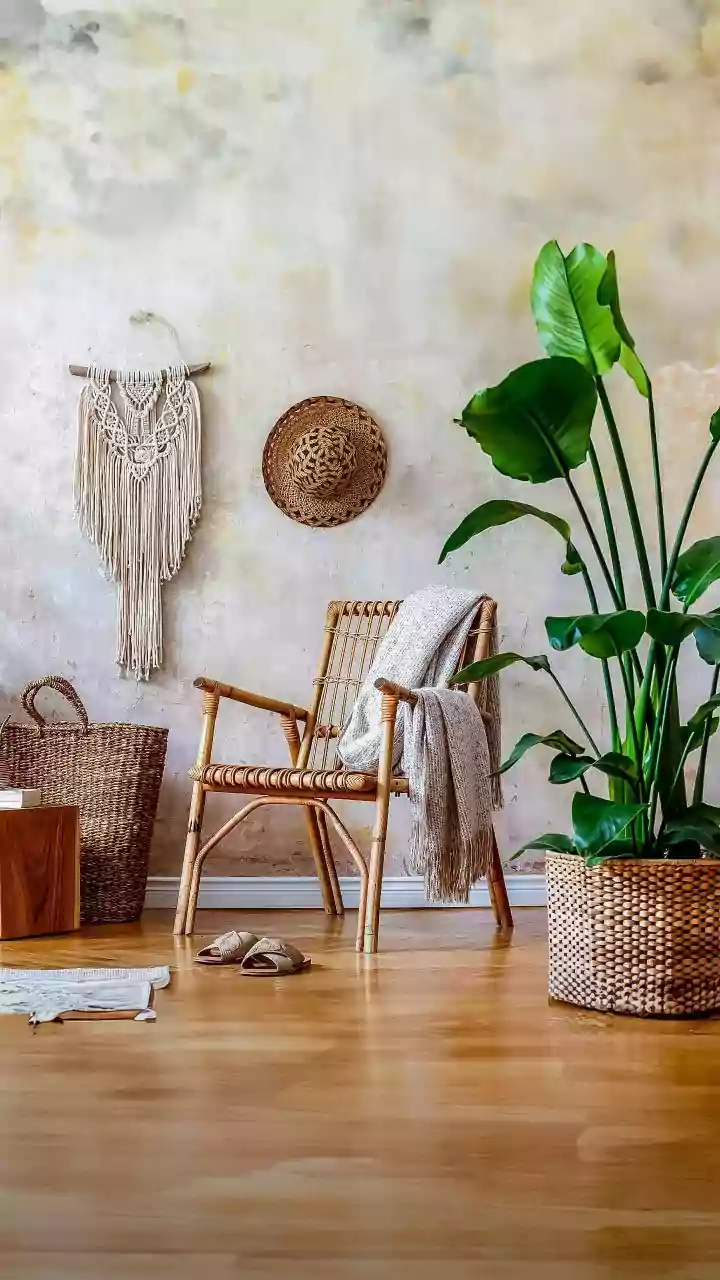
The pots you choose are just as important as the plants within them. They provide the foundation for your grouping's style. For a clean, cohesive look, you might group pots of the same colour or material, like terracotta or simple white ceramic. For a more eclectic, bohemian feel, you can mix and match different pot styles, colours, and materials. A good rule of thumb is to choose a simple colour palette of three or four colours: one neutral base, one complementary colour, and a brighter accent for a small pop. Similarly, pay attention to the texture of the foliage itself. Pairing a plant with large, waxy leaves next to one with fine, feathery fronds creates a beautiful contrast that adds another layer of sensory detail.
Tell a Colour Story
Beyond the pots, the plants themselves offer a rich palette of colour. Green is not just green; it’s a spectrum of chartreuse, olive, deep forest green, and silver-blue. When grouping, consider the colour 'temperature' of the foliage. Pairing warm-toned plants, like a Golden Pothos, with other golden or reddish varieties can create a warm, inviting feel. Conversely, grouping cool-toned plants with silvery or blueish leaves, like certain Calatheas, produces a calmer, more serene effect. You can create a powerful statement by grouping plants with similar shades or go for a high-contrast look by placing a dark-leafed plant next to a vibrantly light one. This thoughtful approach to colour makes the grouping feel purposeful and designed.
Mind the Practicalities
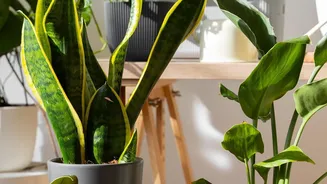
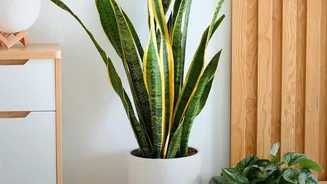
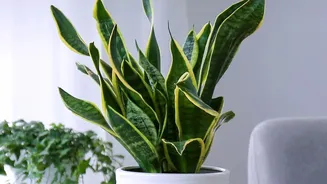
While aesthetics are key, a thriving plant cluster is also a practical one. The most successful groupings are made of plants with similar needs. Grouping humidity-loving ferns and calatheas together not only looks natural but also makes watering and care more efficient. You can create a micro-environment where the collective transpiration of the plants slightly raises the humidity for all of them. Consider the light in your chosen spot. An empty, low-light corner can be brightened with a trio of shade-tolerant plants like the ZZ plant, snake plant, and pothos. By thinking about care from the start, you ensure your beautiful arrangement stays beautiful for the long haul.