




A World of Watery Promise
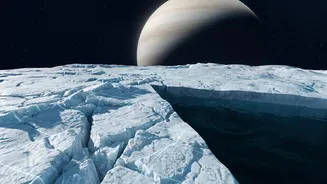
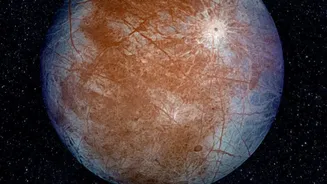
For decades, scientists have been captivated by Europa. It's considered one of the most promising places in our solar system to find a currently habitable environment beyond Earth. Evidence strongly suggests that a global ocean of liquid saltwater is hidden
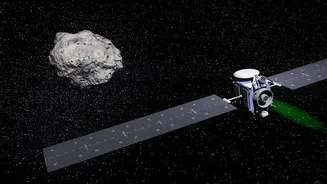
beneath its icy crust, an ocean that may contain more than twice the water of all of Earth's oceans combined. On our planet, wherever we find water, we find life. This makes Europa a top-tier target for astrobiology. The Europa Clipper mission, which launched in October 2024, isn't designed to find life itself, but to determine if the essential ingredients for life—water, chemistry, and energy—are present.
The Detective's Primary Tool: REASON
Of the nine science instruments aboard the spacecraft, one is uniquely capable of looking directly into the ice: the Radar for Europa Assessment and Sounding: Ocean to Near-surface, or REASON. Developed with technology originally used to study Antarctica's ice sheets, REASON is an advanced ice-penetrating radar. It works by sending radio waves of different frequencies (9 MHz and 60 MHz) down into the ice. These signals travel through the ice and bounce off features within it, or off the boundary between the ice and the liquid water ocean below. The returning echoes are captured by the spacecraft's antennas, providing a 3D view of the world beneath the surface.
More Than Just Finding the Ocean
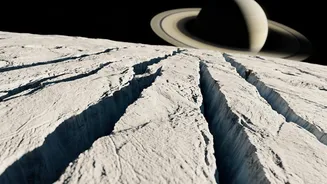
REASON's job goes far beyond just confirming the ocean's existence and measuring its depth. The data it collects will provide critical details about the conditions within the ice and the ocean, which are directly linked to habitability. One of the main goals is to measure the thickness of the ice shell, which could be anywhere from a few kilometers to tens of kilometers deep. Thinner ice might allow for more interaction between the surface and the ocean, a key process for habitability. By analyzing how the radio waves are reflected, scientists can infer the properties of the material they encounter. This allows them to distinguish between solid ice and pockets of liquid water, or brines, trapped within the shell.
Reading the Clues for Habitability
These pockets of water are incredibly important. They could serve as pathways for chemical compounds from Europa's surface—which is bombarded with radiation from Jupiter—to mix into the ocean below. This chemical exchange could provide a source of energy for potential life. The radar data, combined with measurements from the spacecraft's magnetometer, can also help determine the ocean's salinity. The saltiness of the water is a crucial variable for understanding its chemistry and how it interacts with the rocky seafloor, where hydrothermal vents, similar to those on Earth's ocean floors that teem with life, might exist. By mapping the ice shell's structure, locating briny lakes within it, and helping to characterize the ocean's properties, REASON provides the fundamental data needed to build a complete picture of Europa as a dynamic system.