







The Never-Ending Pothole Problem
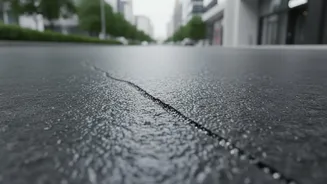
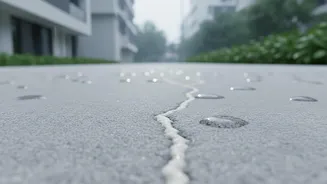
Every year, as the rains sweep across urban India, our roads begin to crumble. Small cracks, often invisible to the naked eye, form due to stress, temperature changes, and heavy loads. Water seeps into these fissures, weakening the structure from within
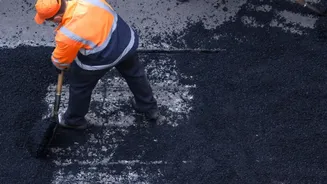
and leading to the bone-jarring potholes that plague our daily commutes. The current solution is a costly and disruptive cycle of manual repair, where crews patch up damage only for new cracks to appear elsewhere. This constant maintenance is not only expensive—in some regions, repairs account for a massive portion of the construction budget—but it's also a temporary fix for a persistent problem. This reactive approach to infrastructure management costs billions annually and causes endless traffic disruptions.
Introducing 'Bio-Concrete'
Imagine a road that actively repairs its own wounds. This is the promise of self-healing concrete, often called 'bio-concrete'. It's a revolutionary material that incorporates dormant bacteria into the standard concrete mix. These are not just any bacteria; they are specific, hardy strains, like Bacillus pseudofirmus or Sporosarcina pasteurii, chosen for their ability to enter a spore-like state and survive for decades, even centuries, within the harsh, alkaline environment of concrete. They lie in wait, inactive, until the moment a crack appears.
How the Magic Happens
The secret to bio-concrete's healing power is a simple, elegant biological process. Along with the bacterial spores, engineers mix in a food source, typically calcium lactate, which is encapsulated in tiny, biodegradable pellets. When a crack forms in the concrete, rainwater inevitably seeps in. This water acts as a trigger. It dissolves the capsules and awakens the dormant bacteria. Now active and with a ready food supply, the bacteria begin to metabolize the calcium lactate. This metabolic process has a crucial byproduct: calcium carbonate, also known as limestone. The bacteria excrete this limestone, which steadily fills the crack, knitting the concrete back together from the inside out. The repair is not just a cosmetic patch; it's a structural fix that restores strength and, crucially, prevents more water from getting in, which stops the cycle of degradation and protects the steel reinforcements within.
The Advantages Over Traditional Roads
The benefits of this technology are transformative. By automatically sealing micro-cracks (typically those up to 0.8mm wide), bio-concrete can prevent them from developing into large, dangerous potholes. This proactive self-repair dramatically extends the lifespan of roads, bridges, and buildings, potentially doubling or even tripling their service life. While the initial cost of bio-concrete can be 15-20% higher than traditional concrete, the long-term savings are enormous. Lifecycle cost analyses project a reduction in maintenance expenses by as much as 60-80%, with a return on the initial investment in as little as five to eight years. Furthermore, by reducing the need for constant repairs, it minimises traffic disruption and lowers the carbon footprint associated with manufacturing new cement and deploying repair crews.
Is India Ready for Self-Healing Roads?
The technology is no longer confined to laboratories. Pilot projects are underway globally, from highways in the US and UK to canals in Amsterdam. In India, research institutions like IIT Madras are developing solutions tailored for the country's unique climate, focusing on bacterial strains that thrive in high-humidity, high-temperature conditions. The government's Smart Cities Mission has also seen pilot projects testing these materials in critical infrastructure. However, challenges remain. The higher upfront cost is a significant hurdle, though this is expected to decrease as the technology becomes more widespread. Additionally, current methods are most effective on micro-cracks, not the massive craters that sometimes form on neglected roads. It’s a solution for prevention and longevity, not a magic wand for pre-existing, large-scale damage.