



What Am I Looking At?
From the ground, the International Space Station (ISS) appears as a very bright, fast-moving point of light, almost like a brilliant, man-made star. The key difference between the ISS and an airplane is its behaviour. The ISS does not blink; it shines
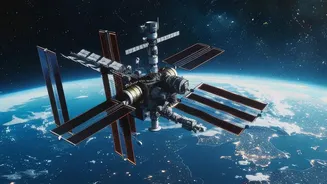
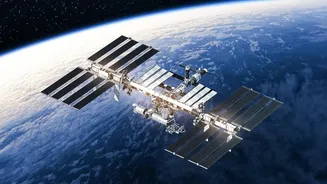
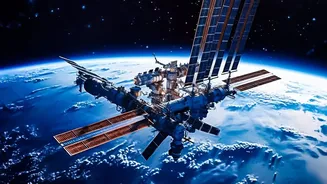
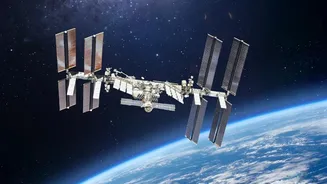
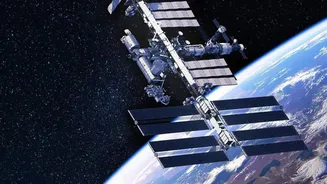
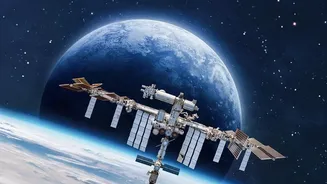
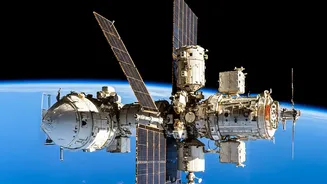
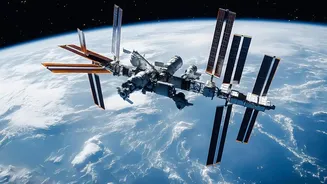
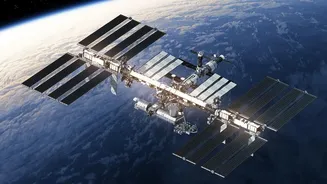
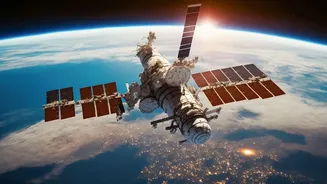
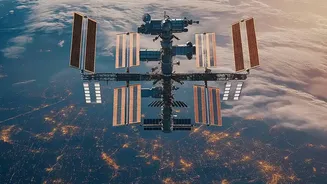
with a constant, steady glow. It moves much faster than a typical satellite, traversing the entire sky in just a few minutes. What you are witnessing is a football-field-sized orbiting laboratory, reflecting sunlight as it soars 400 kilometres above the Earth. It is the third brightest object in our sky, outshone only by the Sun and the Moon, and it is home to a crew of astronauts conducting research as they orbit our planet.
The Science of the Sighting
The reason we can see the ISS so clearly is not because of its own lights, but because its massive solar arrays and structure reflect sunlight. This is also why sightings are only possible during specific windows of time: either shortly after sunset or just before sunrise. During these periods, the sky is dark on the ground, but the ISS, at its high altitude, is still bathed in the sun's rays. It travels at a staggering speed of nearly 28,000 kilometres per hour, allowing it to circle the entire globe once every 90 minutes. This incredible velocity is what makes its journey across your night sky a fleeting, yet memorable, event.
Finding Your Viewing Time
You don't need to be an astronomer to know when to look up. The easiest way to find out when the ISS will be visible from your city is by using NASA's 'Spot The Station' service online. Simply visit the website, select India, and then choose your nearest major city from the list. The site will provide a schedule of upcoming viewing opportunities. It will tell you the exact time the station will appear, the maximum height it will reach in the sky (measured in degrees from the horizon), where it will first become visible, and where it will disappear. A higher 'Max Height' means the station will pass more directly overhead, appearing brighter and staying visible for longer.
Tips for a Perfect Sighting
The best part about spotting the ISS is that you don't need any special equipment. It is easily visible to the naked eye. For the best experience, find a location with a clear view of the horizon, away from tall buildings or trees. While the ISS is bright enough to be seen even from light-polluted urban centres, heading to a darker spot like a park or the outskirts of the city will make the experience even more dramatic. Give your eyes a few minutes to adjust to the darkness before the scheduled pass. Check the weather forecast beforehand; clear skies are essential for a successful sighting. Then, simply face the direction indicated by the tracking service and wait for the show to begin.
What Makes a 'Great' Pass?
Not all ISS passes are created equal. Some are brief and low on the horizon, while others are truly spectacular. A 'great' pass is one where the station reaches a high maximum height, typically above 60 degrees. This means it will travel high across the sky, remaining visible for five minutes or more. During these high-altitude passes, the ISS can be exceptionally bright, often rivalling the planet Venus. These are the moments when you can truly appreciate the speed and scale of this incredible human-made object. The longer duration gives you more time to observe its silent, steady journey and reflect on the human presence in the cosmos.