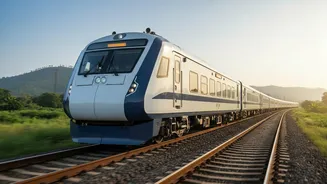






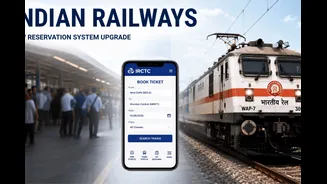
A Major Tech Upgrade for Bookings
Indian Railways has begun the phased rollout of a new Passenger Reservation System (PRS) starting this August, replacing a platform that has been in use for nearly four decades. Developed by the Centre for Railway Information Systems (CRIS), this next-generation
system is designed to make booking tickets faster and more reliable, especially with the massive growth in online ticketing. The new cloud-based platform aims to handle a much higher volume of transactions, promising to process over 1.5 lakh bookings per minute, a nearly five-fold increase from the current capacity of around 32,000. For passengers, this means a smoother experience on the IRCTC website and app, with fewer crashes during peak hours, particularly during high-demand Tatkal bookings.
What the New System Means for You
The primary goal of the upgraded PRS is to reduce booking failures and speed up the process. Enquiry handling capacity is also set to increase tenfold, from 4 lakh to 40 lakh enquiries per minute, ensuring quicker access to information on seat availability and PNR status. A beta version of the new IRCTC website was launched on July 15, 2026, showing early signs of improved performance. While the transition is being managed in phases to avoid disruption, travellers can expect a more user-friendly and multilingual interface for bookings and enquiries. The upgrade is critical, as nearly 89% of all reserved tickets were booked online between June 2025 and June 2026, highlighting the system's importance.
Intensified Ticket Checking Drives
Alongside the digital upgrade, several railway divisions are conducting special ticket-checking drives throughout August to curb ticketless and irregular travel. These campaigns are designed to ensure genuine passengers with confirmed tickets are not inconvenienced by overcrowding in reserved coaches. For example, the Danapur division of East Central Railway penalised over one lakh passengers in July, generating over ₹8 crore in fines. Similarly, the South Central Railway and the Jammu Division of Northern Railway have also reported significant penalties from recent drives. Travellers should be prepared for more frequent and thorough checks on trains and at stations.
Key Documents to Carry
To avoid penalties and ensure a smooth journey, it is essential to carry valid travel documents. Always have your ticket—whether it's a printout or on your mobile via the official app—and a valid photo ID. For any concessional tickets, such as those for senior citizens, be sure to carry the original proof of eligibility. During these special drives, staff are also checking for other violations like unbooked luggage, littering, and smoking, so it’s wise to be aware of all railway rules. Officials have stated that these checks will continue, with the aim of creating a more disciplined and convenient travel environment for everyone.
Changes to Tatkal Booking Rules
For those who rely on last-minute Tatkal tickets, there are important changes to be aware of. As of August 1, 2026, a new token-based system has been introduced for Tatkal bookings at physical reservation counters to manage queues and reduce waiting times. Passengers will be issued tokens during a specific time window before the booking opens. For online Tatkal bookings, Aadhaar authentication and OTP verification remain mandatory to prevent misuse by bots and unauthorised agents. It is crucial to ensure your IRCTC account is linked and authenticated with Aadhaar before attempting to book a Tatkal ticket online.
Special Trains for Festive Rush
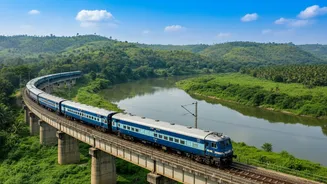
August often sees a surge in travel due to festivals and holidays. To manage this rush, Indian Railways has announced numerous special train services. For instance, to accommodate travellers during the Onam festival, 112 special train trips have been scheduled between August 14 and September 6, primarily serving routes to and from Kerala. These services are intended to clear waiting lists and reduce congestion on regular trains. Passengers are advised to regularly check the official IRCTC website and the National Train Enquiry System (NTES) for announcements about special services on their intended routes.