


A Breakthrough in Space Weather Science
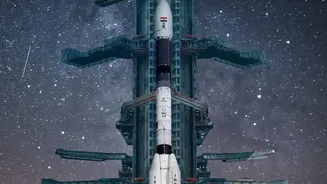
Scientists are celebrating new data from the Aditya-L1 mission, which is proving instrumental in decoding the Sun's behaviour. The Indian Space Research Organisation (ISRO) recently highlighted how the spacecraft's instruments are providing direct measurements
of the solar wind, the stream of charged particles flowing from the Sun. Specifically, the Aditya Solar wind Particle Experiment (ASPEX) payload has been monitoring fluctuations in the speed and pressure of this particle stream. These observations are not just academic; they have already helped scientists understand the causes of unusual geomagnetic disturbances on Earth during intense solar storms. By correlating the spacecraft's data with ground-based magnetic field observations, researchers can now build a more complete picture of how solar events impact our planet's magnetic shield.
What Exactly is Solar Wind?
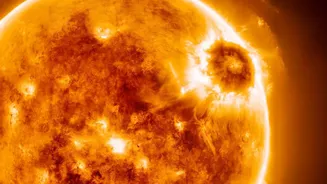
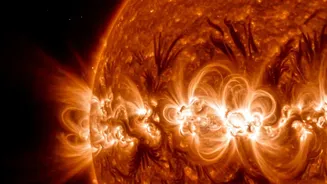
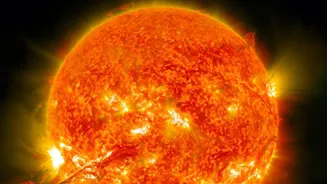
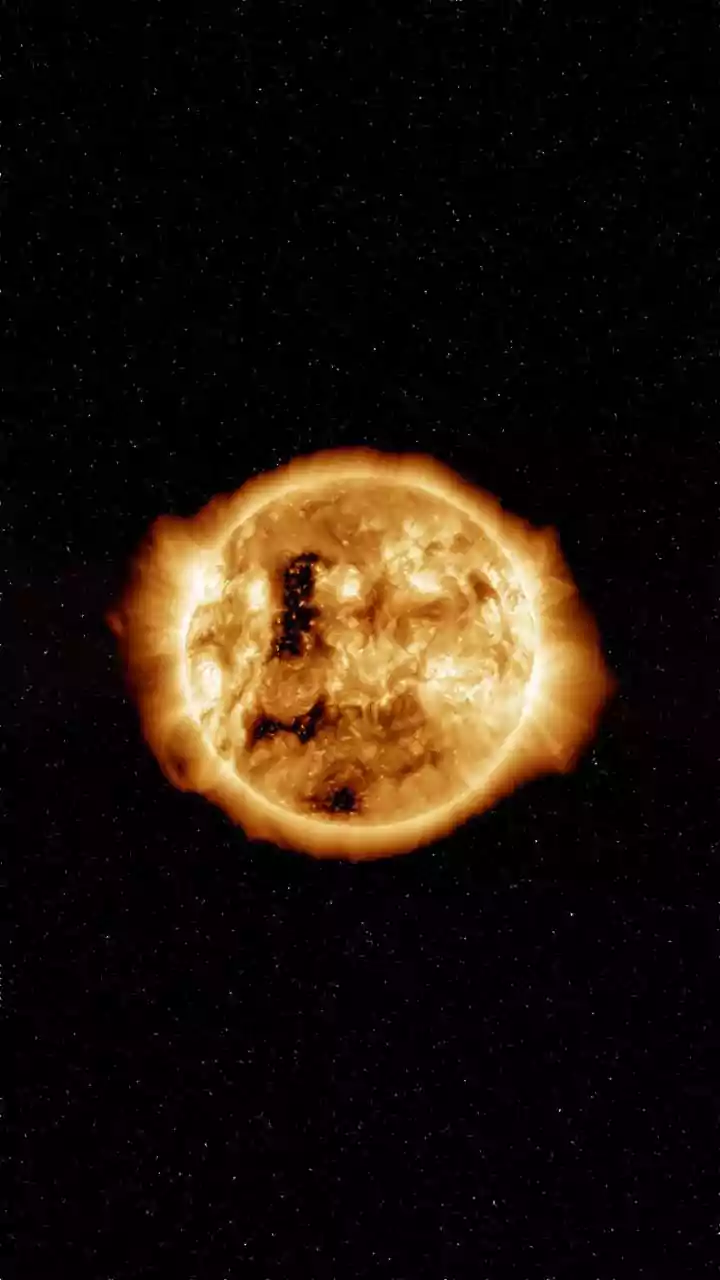
Think of the Sun not just as a source of light and heat, but as a dynamic star constantly shedding material. This material, a plasma of charged particles like protons and electrons, streams outwards in all directions, creating the solar wind. This wind doesn't blow at a steady pace; its speed can vary from a relatively calm 400 kilometres per second to a gale-force 800 kilometres per second or more. These variations are caused by activity on the Sun's surface, such as solar flares and coronal mass ejections (CMEs)—colossal eruptions of plasma and magnetic fields. When these bursts of energy head towards Earth, they can cause what we call 'space weather'.
Earth's Invisible Defence System
Thankfully, Earth isn't defenceless. Our planet is surrounded by a magnetic field, the magnetosphere, which acts as a protective bubble, deflecting most of the solar wind. However, a powerful gust from a CME can smash into this shield, transferring enormous energy into our upper atmosphere. This interaction is the engine behind space weather. The most beautiful effect is the aurora, or the Northern and Southern Lights, which occur when solar particles collide with atmospheric gases. But these geomagnetic storms can also have far more disruptive consequences for our modern, technology-dependent society.
Why Tracking Solar Weather Matters for India
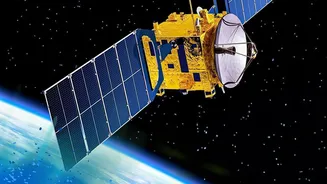
Our reliance on technology makes us vulnerable to severe space weather. Intense geomagnetic storms can induce currents in power grids, potentially causing widespread blackouts. They can disrupt high-frequency radio communications and degrade the accuracy of GPS and our own NavIC navigation systems. Satellites in orbit are particularly at risk, as the charged particles can damage sensitive electronics and solar panels. Aditya-L1's ability to provide advance warning is therefore a crucial asset for India. Recent findings from its instruments have even identified small-scale brightening events that occur hours before a major solar flare, offering a potential breakthrough in forecasting these powerful eruptions. This gives satellite operators, airlines, and power grid managers precious time to take protective measures.
A Perfect Vantage Point in Space
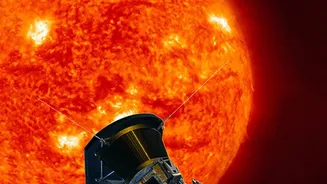
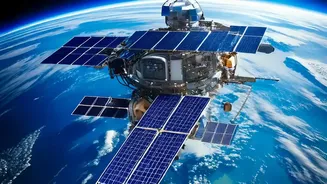
The success of Aditya-L1 is partly due to its unique location. The spacecraft is not orbiting Earth, but is positioned at Lagrange Point 1 (L1), about 1.5 million kilometres away in the direction of the Sun. This is a special spot where the gravitational pulls of the Sun and Earth balance out, allowing the spacecraft to maintain a stable position. From this vantage point, Aditya-L1 has a continuous, uninterrupted view of the Sun, free from any eclipses or occultations by the Earth or Moon. This makes it an ideal solar sentry, capable of detecting solar storms and CMEs heading our way long before they reach our planet, acting as a vital early-warning system.