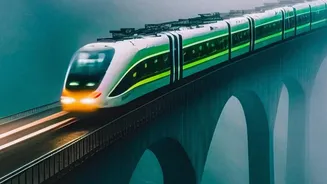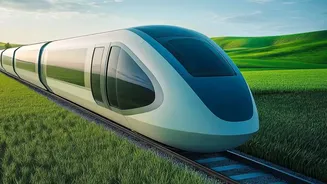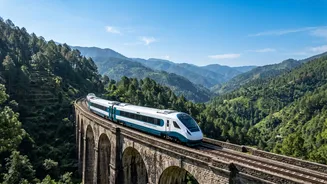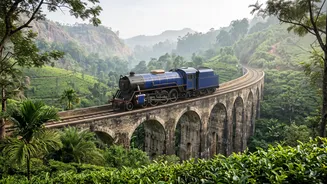





The Vision: Hydrogen for Heritage
Indian Railways has an ambitious goal: to become a net-zero carbon emitter by 2030. While electrifying its vast broad-gauge network is a major part of this plan, some of its most cherished routes present a unique challenge. The iconic heritage lines,
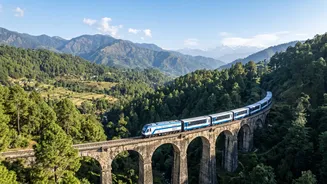
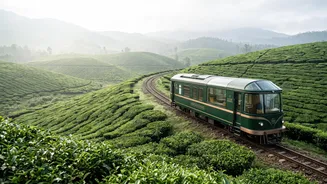
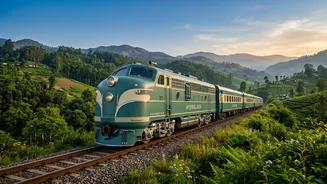
like the Kalka-Shimla, Darjeeling Himalayan, and Nilgiri Mountain Railways, are often narrow-gauge tracks running through ecologically sensitive and hilly terrains. Electrification here is difficult and could spoil the very charm these lines are famous for. The current solution, diesel engines, mars the pristine environment with smoke and noise. This is where the "Hydrogen for Heritage" initiative comes in. The plan is to introduce 35 hydrogen-powered trains specifically for these scenic and historic routes, creating a travel experience that is both beautiful and emission-free.
How Do Hydrogen Trains Actually Work?
So, how does a train run on hydrogen? It's not by burning the gas like in a car engine. Instead, these trains use a sophisticated device called a fuel cell. Inside the fuel cell, hydrogen stored in onboard tanks is combined with oxygen taken from the air. This electrochemical reaction generates electricity, which then powers the train's motors. The beauty of this process is its only byproduct: pure water vapour. There is no smoke, no soot, and no carbon emissions. Excess energy generated, for instance when the train is braking, can be stored in onboard batteries to provide a power boost when needed, like during acceleration. It’s a self-contained, mobile power plant that’s remarkably clean and quiet.
From Pilot Project to Rolling Reality
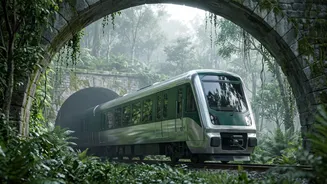
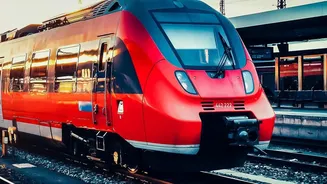
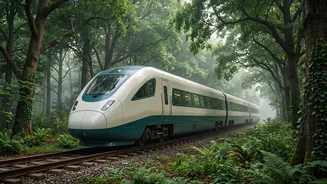
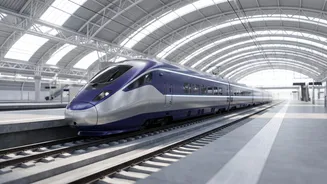
This ambitious project is already in motion. Indian Railways launched its first prototype, the Namo Green Rail, for trial runs on the Jind-Sonipat section in Haryana. This 10-coach train, developed indigenously at the Integral Coach Factory (ICF), serves as a crucial testbed for the technology under real-world operating conditions. A dedicated hydrogen production and refuelling facility has been set up at Jind to support the operations. The experience gained from this 89-km pilot route is foundational. Lessons on performance, safety protocols, and maintenance will be directly applied to the trains being developed for the more challenging heritage routes. The Kalka-Shimla line is a primary candidate to receive one of these advanced trains once the technology is proven.
A Marriage of Past and Future
Deploying hydrogen technology on century-old railway lines is more than just a technical upgrade; it's about preserving a legacy. These heritage lines are not just modes of transport but are UNESCO World Heritage sites, recognized for their engineering marvel and historical significance. The diesel smog not only impacts the passenger experience and the local environment but can also take a toll on the ageing infrastructure of bridges and stations. By switching to silent, zero-emission hydrogen trains, Indian Railways is ensuring that these symbols of its past can be sustained for future generations to enjoy. It represents a perfect marriage of history and innovation, using 21st-century solutions to protect 19th-century treasures.
Challenges and the Road Ahead
The path to a fully hydrogen-powered heritage fleet is not without its hurdles. The initial costs are significant, with each train estimated to cost around ₹80 crores and the necessary ground infrastructure adding another ₹70 crores per route. Green hydrogen production, which uses renewable energy to create the fuel, is still expensive, although costs are expected to fall. Furthermore, hydrogen is a highly flammable gas that requires specialized, high-pressure storage and stringent safety protocols, all of which have been integrated into the train's design. Despite these challenges, the long-term benefits—energy independence, zero carbon emissions, and the preservation of national heritage—are seen as a worthwhile investment.