



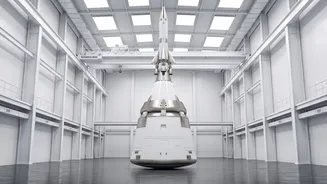
A Perfectly Simulated Failure
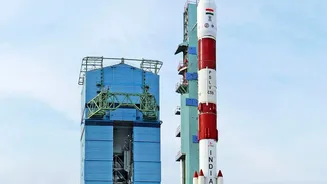
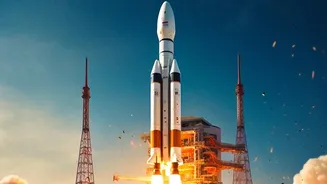
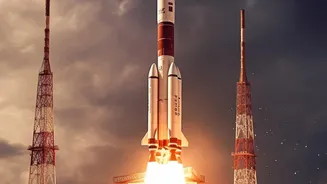
In a landmark test, the Indian Space Research Organisation (ISRO) successfully validated its Crew Escape System (CES), a mechanism designed to protect astronauts during a launch emergency. The test, known as the Test Vehicle Abort Mission (TV-D1), involved
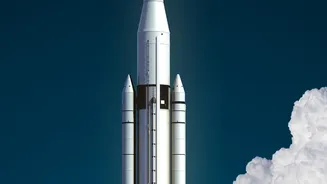
a specially designed single-stage liquid-fuelled rocket carrying a boilerplate crew module. The mission's goal was to deliberately simulate a failure during the most stressful part of the ascent, the transonic phase, where the vehicle travels at about 1.2 times the speed of sound. At a predetermined altitude of around 17 kilometres, the on-board systems triggered the abort sequence. The powerful motors of the CES fired, violently pulling the crew module away from the test rocket and carrying it to safety.
The Ultimate Ejection Seat
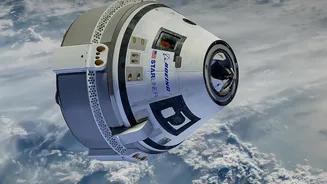
In human space missions, astronaut safety is the absolute highest priority, even over mission success. The most dangerous part of any space journey is the launch. The Crew Escape System is an emergency measure designed to quickly pull the crew module and its astronauts to a safe distance from the launch vehicle if something goes wrong. Think of it as a highly advanced ejection seat, not for a single pilot, but for the entire space capsule. Positioned at the very top of the rocket, the CES is equipped with a series of quick-acting solid motors that produce immense thrust, allowing it to accelerate faster than the main launch vehicle itself. This ensures the crew can be whisked away in the critical moments of a potential catastrophe, whether on the launch pad or during ascent.
Why This Test Is a Game-Changer
Successfully proving the escape system is not just a technicality; it's a non-negotiable prerequisite for human spaceflight. Without a reliable abort system, no astronaut would ever board the rocket. This series of tests, which includes earlier Pad Abort Tests (PAT) that simulated an emergency on the launchpad, provides ISRO with crucial real-world data. The success of the TV-D1 mission is particularly significant because it validated the system's performance under maximum aerodynamic stress, building immense confidence in the safety protocols for Gaganyaan. The system worked flawlessly, from the high-G separation to the deployment of drogue and main parachutes that guided the module to a soft splashdown in the Bay of Bengal, where it was recovered. This demonstrates ISRO's adherence to global astronaut safety standards.
The Bigger Picture: Gaganyaan
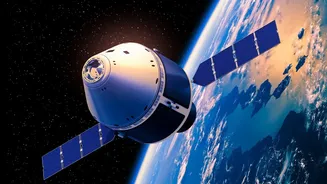
This successful test is a major milestone for the Gaganyaan programme, India's ambitious endeavour to send a three-member crew into a low Earth orbit of 400 kilometres for a mission lasting up to three days. Upon successful completion, India will become only the fourth nation in the world with independent human spaceflight capability, after the United States, Russia, and China. The programme involves a host of complex technologies, including the human-rated LVM3 rocket, a habitable crew module with life support, and the intricate systems required for re-entry and recovery. The Crew Escape System is a cornerstone of this entire architecture, ensuring the 'human' element of the mission is protected above all else.
The Road Ahead to Orbit
With the crew escape system now flight-proven, ISRO is moving forward with the next phases of the Gaganyaan mission. The roadmap includes further qualification tests and a series of uncrewed flights to validate all systems in an integrated manner. The first uncrewed flight, designated G1, is planned for the last quarter of 2026 and will carry Vyommitra, a humanoid robot, to simulate astronaut activity and monitor spacecraft performance. These precursor missions are essential to test the orbital module, life support systems, and re-entry procedures in the actual space environment. Only after every component has been exhaustively tested will the first crewed Gaganyaan mission, now anticipated for 2027, get the green light for launch.