
Peering Through the Cosmic Veil
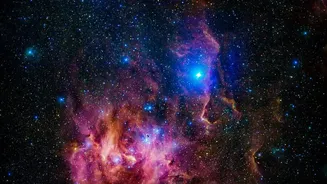
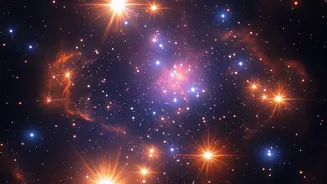
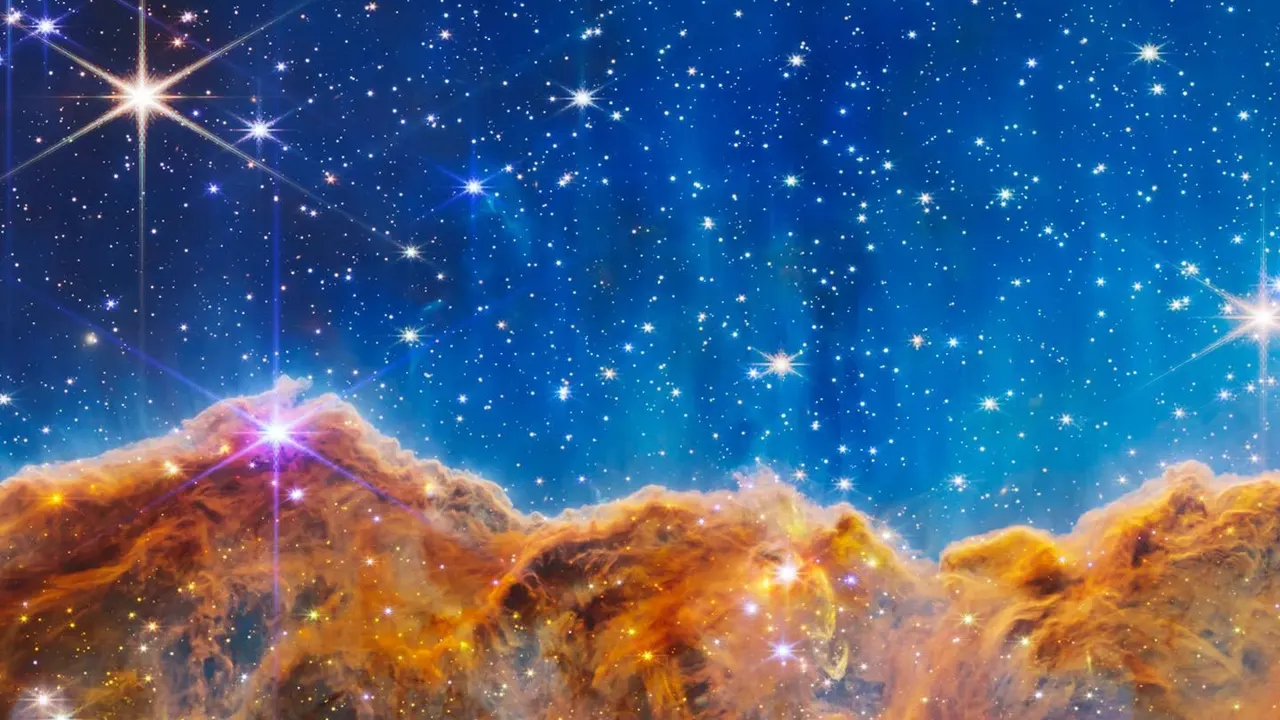
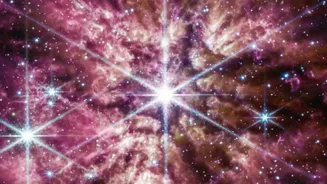
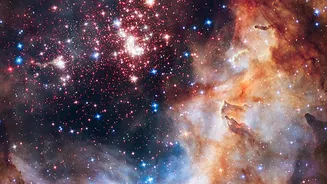
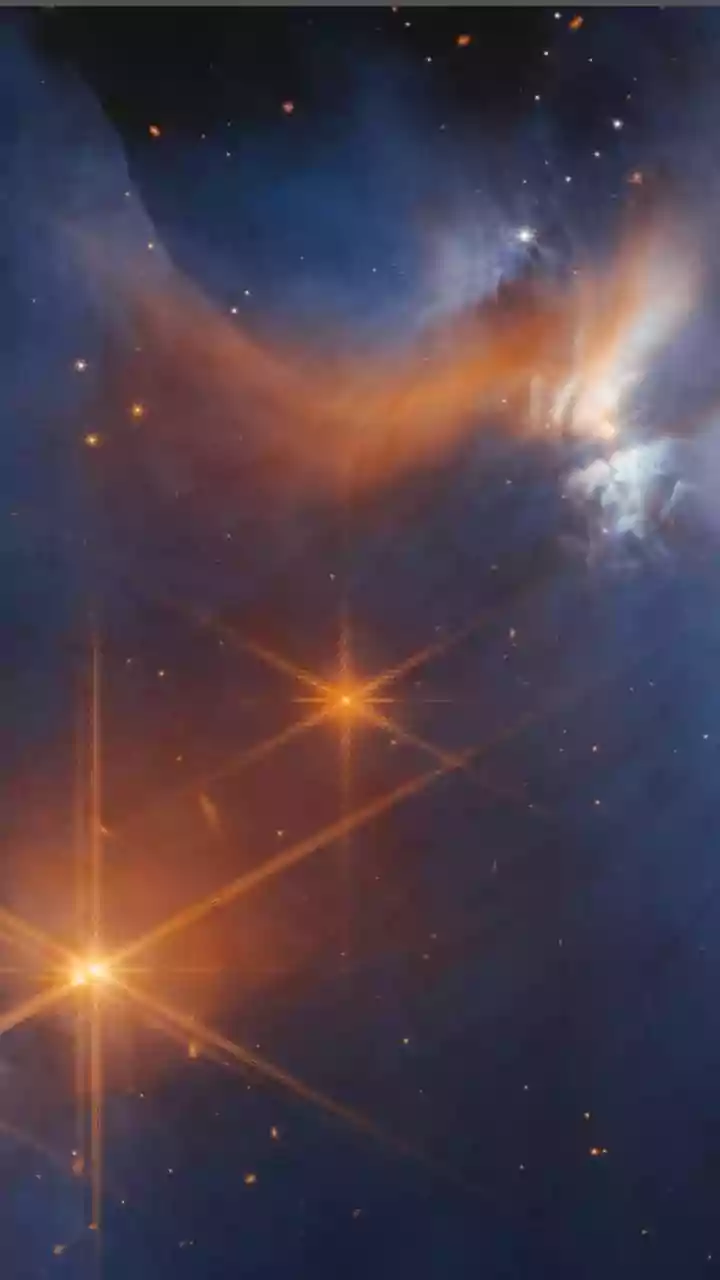
The latest celestial portrait from the James Webb Space Telescope (JWST) offers a breathtaking look into a stellar nursery, a region where new stars are actively being born. One such area recently observed is N79, a massive star-forming complex in a neighboring
satellite galaxy of our Milky Way called the Large Magellanic Cloud. Where the human eye and even the famed Hubble Telescope see only dark, dense clouds, Webb reveals a vibrant landscape of swirling gas and glowing, infant stars. These images showcase brilliant pockets of light where protostars, the baby stage of stars, are just beginning to ignite. It's a process that has been largely invisible to us, until now.
The Power of Infrared Vision
So, how is Webb able to see what other telescopes cannot? The secret lies in its ability to detect infrared light. Stellar nurseries are notoriously dusty places. These vast clouds of gas and dust act like a thick fog, blocking shorter wavelengths of light, including the visible light our eyes perceive. However, longer wavelengths of infrared light can penetrate this cosmic dust more easily. Webb’s giant, gold-coated mirror is specifically designed to collect this faint infrared light, allowing it to peer deep inside the dusty cocoons where stars are forming. This capability has transformed humanity's view of the cosmos, making it possible to witness the very earliest stages of a star's life cycle with newfound clarity.
A Stellar Nursery in Action
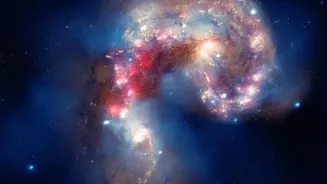
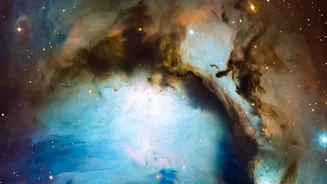
The images from regions like N79 and the Tarantula Nebula are more than just beautiful; they are rich with scientific data. Astronomers can now observe filaments of gas and dust being pulled together by gravity to form dense cores. Inside these cores, protostars heat up, gathering mass from a surrounding disk of material. In some cases, as a star bursts through its dusty envelope for the first time, it shoots out powerful jets of gas into space. Webb can capture all of this in stunning detail, from the glowing cavities carved out by the radiation of massive young stars to the thousands of previously unseen stars nestled within the nebulas. It is a dynamic and chaotic process, and for the first time, we have a front-row seat.
Why This Discovery Matters
Studying star formation isn't just about understanding distant objects; it's about understanding our own origins. Our Sun was born in a similar stellar nursery billions of years ago. By observing these cosmic cradles across the universe, scientists can piece together the story of how our own solar system came to be. Some of the star-forming regions Webb observes have a chemical composition similar to those from when the universe was much younger and star formation was at its peak. This makes the telescope a kind of time machine, providing insights into the processes that shaped the early universe. The data helps refine theories on how stars of all sizes are born, how they influence their environments, and how galaxies themselves evolve over billions of years.
What's Next for Webb?
These spectacular images are just the beginning. Webb will continue its mission to explore the hidden universe, targeting various star-forming regions within our own Milky Way and in neighboring galaxies. Scientists are particularly interested in studying the dusty disks around young stars, as these are the places where planets are born. Each new observation adds another piece to the cosmic puzzle of creation. As Webb continues to send back data, we can expect more revolutionary discoveries that will deepen our understanding of the universe and our place within it. The era of seeing the unseen has truly begun, promising to unravel mysteries that were once confined to the realm of imagination.