



The Menace of Downy Mildew
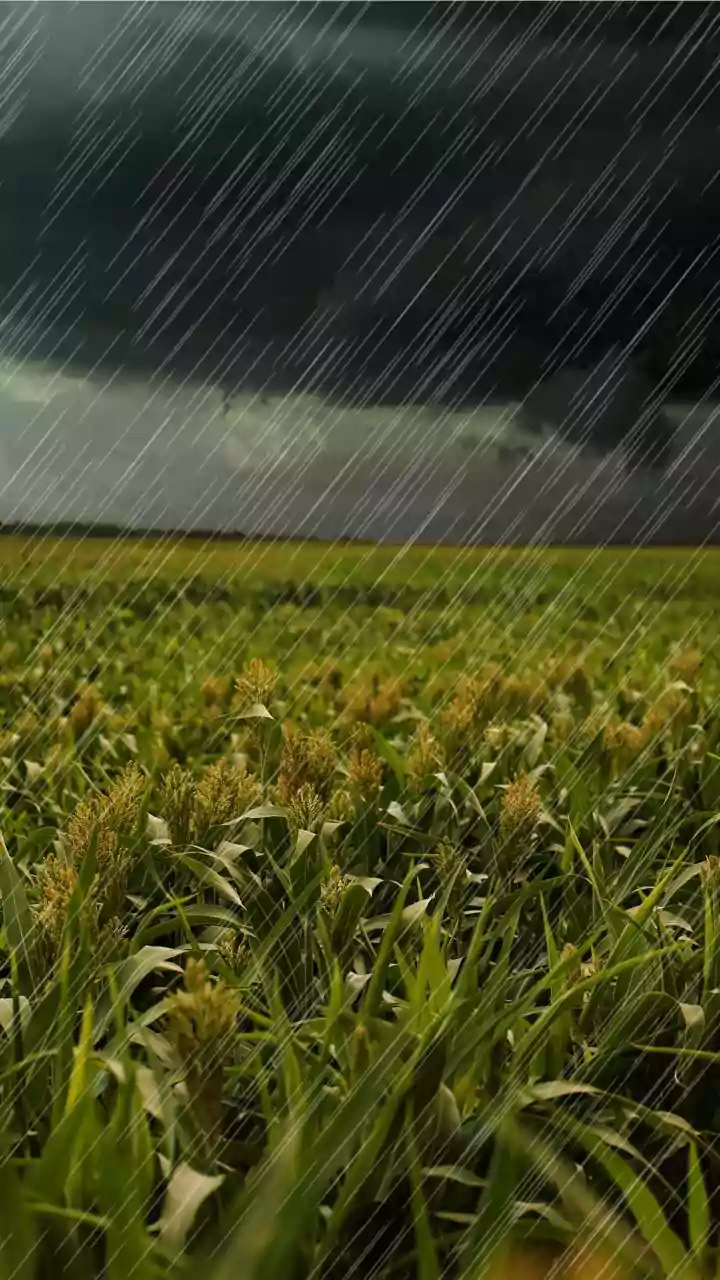
Downy mildew, caused by the pathogen Plasmopara viticola, is one of the most destructive diseases to affect grapevines. It thrives in the warm, humid conditions that often accompany the monsoon, spreading rapidly through vineyards. The disease manifests
as yellow, oily spots on leaves, which soon develop a white, cottony growth on the underside. It can quickly infect entire clusters of flowers and young berries, causing them to wither and die, leading to catastrophic yield losses that have historically wiped out up to 80% of a harvest in severe epidemics. For a region like Nashik, which is central to India's table grape and wine production, controlling this fungal outbreak is an annual battle for economic survival.
The Old Way of Fighting Back
For decades, the primary weapon against downy mildew has been manual spraying of fungicides. This involves farm labourers walking through vineyards with heavy knapsack sprayers, a process that is physically demanding, time-consuming, and fraught with challenges. Manual spraying can take an entire day to cover just a few acres, a critical delay when a fast-spreading fungus is involved. The application is often uneven, with some parts of the vine getting drenched while others are missed entirely, especially the dense inner canopy where the fungus can hide. This method leads to significant wastage of chemicals and water, and more importantly, poses health risks to workers from direct exposure to pesticides.
Enter the Drones: A High-Tech Shield
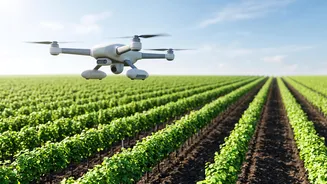
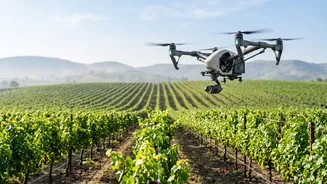
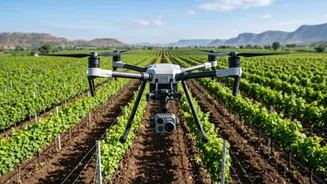
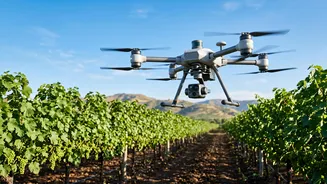
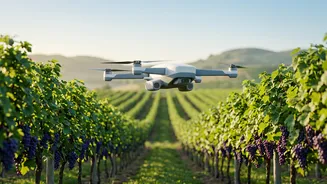
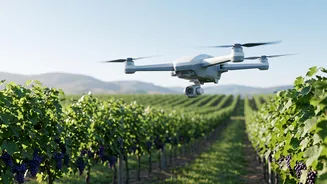
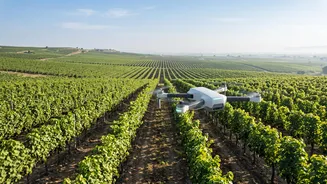
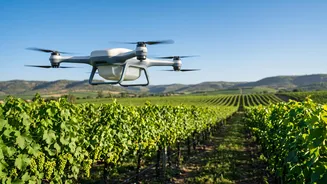
Precision agriculture drones are rapidly changing the equation for Nashik's grape growers. These unmanned aerial vehicles (UAVs), equipped with large tanks and sophisticated nozzle systems, can cover vast areas with remarkable speed and accuracy. What takes a team of workers a full day can be accomplished by a single drone in under an hour, covering an acre in as little as 5 to 10 minutes. This speed is crucial for timely intervention during high-risk weather conditions. By flying at an optimal height and using advanced sensors, drones ensure a uniform application of fungicides, creating an ultra-fine mist that penetrates deep into the vine's canopy. This ensures that every leaf and cluster receives protection, something manual methods struggle to achieve.
The Benefits of Precision Spraying
The advantages of using drones extend far beyond just speed. The precision of the application means farmers use significantly fewer resources. Studies and field reports show that drone spraying can reduce chemical use by 30-40% and water consumption by up to 90%. This not only cuts input costs for farmers, with services costing between ₹300-₹700 per acre, but also reduces the environmental impact of chemical runoff. Furthermore, it dramatically improves safety by removing human workers from direct contact with toxic chemicals. The ability to operate over difficult terrain, such as slopes or muddy fields after rain, gives drones another significant edge over traditional ground-based methods. Farmers who have adopted this technology report healthier crops and yield improvements of 10-15%.
A New Era for Indian Viticulture
The adoption of drone technology in Nashik is more than just a new way to spray fungicides; it represents a larger shift toward precision agriculture in India. While the initial investment in purchasing a drone can be high, the rise of drone-as-a-service models allows farmers of all sizes to access this technology on a pay-per-acre basis, making it economically viable. Beyond spraying, drones equipped with multispectral sensors can also be used for crop health monitoring, identifying stress spots from disease or water deficiency before they are visible to the naked eye. This data-driven approach allows for smarter, more targeted interventions, ensuring the sustainability and profitability of India's vineyards for years to come. The government's support for agri-tech is also accelerating this transformation, creating new opportunities for rural entrepreneurs to become certified drone pilots.