




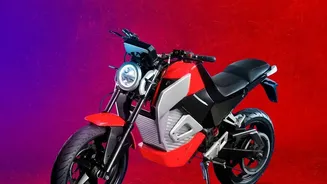
A Dual Challenge: Agricultural Waste and Battery Needs
Every year, India faces the significant challenge of managing vast quantities of agricultural waste, such as rice husks, wheat straw, and sugarcane bagasse. Often, this crop residue is burned in fields, contributing to severe air pollution. Simultaneously,
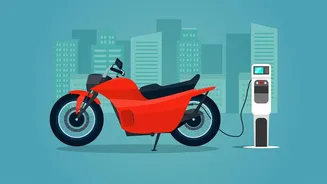
the nation's electric vehicle (EV) revolution, particularly in the two-wheeler segment, is booming. However, the performance of these e-bikes is heavily dependent on their batteries, which often face limitations in charging speed, lifespan, and environmental sustainability. Traditional lithium-ion batteries rely on materials like graphite, cobalt, and nickel, which have complex supply chains and environmental costs associated with their mining. This creates a dual problem: a surplus of agricultural 'waste' on one hand, and a demand for better, more sustainable battery materials on the other.
From the Farm to the Factory Anode
The solution lies in a remarkable scientific process that converts this agricultural biomass into a high-value material called 'hard carbon'. Think of a battery having two ends: a cathode and an anode. When you charge your e-bike, ions travel from the cathode to the anode, where they are stored. The anode in most conventional batteries is made of graphite. Scientists have discovered that by heating crop waste at very high temperatures in an oxygen-free environment—a process known as pyrolysis—they can create a unique form of carbon. This biomass-derived hard carbon is incredibly porous, with a disordered structure full of tiny spaces perfect for storing energy ions. Several Indian startups and research institutions, like Indi Energy, an IIT Roorkee spin-off, are pioneering this technology, creating their own hard carbon from local agricultural residue.
The Science of Speed and Sustainability
So, how does this lead to faster charging? The secret is in the structure. The nano-porous nature of hard carbon derived from sources like rice husks or lignin (a polymer found in all plant cells) provides a much larger surface area than traditional graphite. This structure acts like a super-sponge, allowing ions to move in and out much more quickly and easily during charging and discharging. While graphite's orderly layers can struggle with high-speed charging and can degrade, the robust, porous nature of biomass-derived hard carbon is better suited for rapid energy transfer. Some research indicates this technology can enable batteries to recharge in a matter of minutes without suffering the same lifespan degradation as conventional batteries. Furthermore, this process is being explored for both lithium-ion and sodium-ion batteries, with the latter using abundant and inexpensive sodium, offering a potential path away from reliance on lithium.
What This Means for India's E-Bike Future
The implications of this technology are enormous. For the average e-bike rider, it promises a future where 'range anxiety' is replaced by the convenience of a super-fast charge, potentially taking no longer than a coffee break. The use of agricultural waste also creates a truly circular economy. It provides a new, high-value revenue stream for the agricultural sector, turning problematic waste into a critical component for a high-tech industry. This reduces the environmental burden of both crop burning and the mining of traditional battery materials. Companies like Nexus Power are working on biodegradable batteries from crop residue, while Indi Energy is focused on using this technology for sodium-ion cells aimed at e-rickshaws and energy storage, applications where lead-acid batteries are still common. While the technology is still being scaled for mass commercialisation, it represents a significant step towards a more sustainable and self-reliant energy future.