
What Exactly Is Friselle?
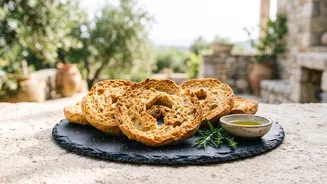
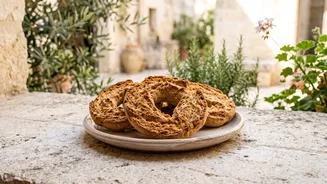
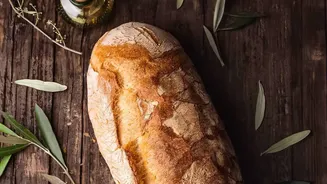
At first glance, a frisella might look like a rough, oversized, and very hard bagel. Hailing from the sun-drenched region of Puglia, the 'heel' of Italy's boot, friselle (the plural form) are a cornerstone of peasant cuisine, or 'cucina povera'. They
are traditionally made from simple ingredients like durum wheat or barley flour, water, yeast, and salt. The dough is shaped into rings, baked, and then, while still warm, sliced horizontally and baked a second time. This results in a rock-hard texture with one smooth side and one porous, rough side, perfectly designed for what comes next.
The Secret to Its Longevity
The key to friselle's extraordinary shelf life lies in its preparation. The process is known as 'biscotto', which literally means 'twice-cooked'. This second baking is done at a lower temperature for a longer period, a step designed to draw out almost all residual moisture from the bread. By removing the water, the bread becomes an inhospitable environment for mold and bacteria, acting as its own natural preservative. When stored correctly in a dry, airtight container away from light, friselle can last for many months, with some bakers claiming they remain perfectly good for up to a year.
A Bread Born from Necessity
Friselle wasn't invented as a gourmet item but as a practical solution to a real-world problem. Its history is deeply intertwined with the life of Southern Italy's fishermen, farmers, and travelling merchants. For those who spent long days or weeks at sea or working in remote fields, a reliable, non-perishable food source was essential long before refrigeration existed. The hard, dry rings were durable and easy to transport; their shape even allowed sailors to string them onto ropes for compact storage on board their ships. It was the ultimate travel food, dating back centuries, with some historians tracing twice-baked breads to ancient Roman times.
How to Properly Eat Friselle
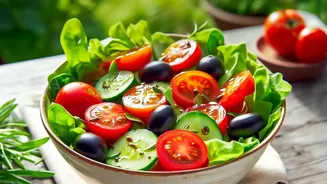
Biting into a dry frisella is not recommended unless you want to test the strength of your teeth. The bread is designed to be rehydrated before eating. This ritual, known as 'la sponzatura', involves a quick dip in cold water—just a few seconds is enough. The goal is to soften the exterior while leaving a satisfying crunch in the middle. Over-soaking is a common rookie mistake that turns the bread into a soggy mess. Historically, fishermen would simply dip it in clean seawater. Once softened, the rough, porous side is ready to be dressed. The classic topping is a simple yet perfect combination of fresh, chopped cherry tomatoes, fragrant oregano, salt, and a generous drizzle of high-quality extra virgin olive oil, allowing the juices to soak into the bread.
From Humble Staple to Modern Delicacy
While the classic tomato topping remains a beloved favourite, especially in summer, the versatility of friselle is boundless. It serves as a fantastic base—similar to a bruschetta or open-faced sandwich—for a wide variety of ingredients. Common variations include toppings of tuna and capers, creamy burrata, mashed avocado, or even spicy 'nduja sausage. Once considered the food of the poor, with barley flour versions for common folk and durum wheat for the wealthy, today all varieties are celebrated. This ancient bread has transformed from a food of survival into a cherished symbol of Southern Italian culinary ingenuity, proving that the simplest ideas are often the most enduring.