




The Age-Old Observation
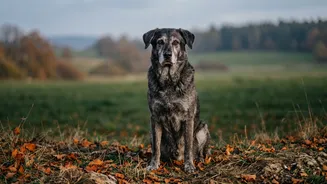
It’s a pattern veterinarians and dog lovers have observed for centuries: a Great Dane or a Mastiff is considered a senior citizen by age seven, while a tiny Chihuahua or a Pomeranian can live well into their teens. For a long time, the explanations were
logical but general. Theories suggested that the rapid growth of large breeds puts immense strain on their bodies, leading to faster cellular wear and tear. While these ideas hold some truth, they don’t tell the whole story. The real answer, it seems, lies deeper — not just in how dogs grow, but in how their very DNA is programmed to age. Scientists have now found a way to measure this biological aging, and the results are fascinating.
Meet the Epigenetic Clock
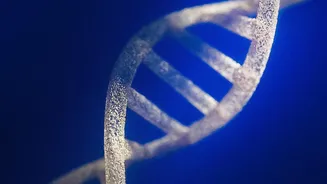
To understand the new findings, we need to look at a field called epigenetics. Think of your dog's DNA as a massive instruction manual. Epigenetics doesn't change the words in the manual, but it uses chemical tags, like sticky notes, to tell the body which pages to read and which to ignore. One of the most important types of these tags is called DNA methylation. As an animal ages, the pattern of these methylation 'sticky notes' changes in predictable ways. Scientists can read this pattern to determine an animal's 'biological age', which might be different from its chronological age in years. This 'epigenetic clock' has revealed that two dogs of the same age can be biologically very different.
Unruly 'Jumping Genes'
A recent landmark study published in the journal Science analysed the DNA from nearly 900 dogs of various breeds, sizes, and ages. The researchers discovered that a key part of the aging process involves the loss of methylation on specific parts of the DNA called 'transposable elements' or 'jumping genes'. These are ancient, hitchhiking segments of DNA that can copy themselves and 'jump' to other parts of the genome. Normally, methylation acts like a leash, keeping these jumping genes inactive and preventing them from causing damage. However, as dogs age, this leash weakens as methylation is lost. When these genes become active, they can cause genomic instability, inflammation, and DNA damage, which are all hallmarks of aging.
The Size Connection
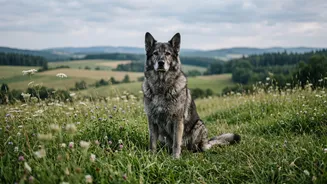
The most significant finding of the study was the direct link between a dog's size and the rate of this methylation loss. The research showed that large breeds experience a much faster loss of methylation on these jumping genes compared to small breeds. Specifically, giant breeds lost about 35% more methylation on a key family of jumping genes (called LINE-1) per year than small breeds did. This means their biological clock is ticking significantly faster. In essence, large dogs don't just die younger; their bodies are aging at an accelerated rate on a molecular level. A four-year-old German Shepherd, for instance, is biologically much older than a four-year-old Pomeranian.
What This Means For You and Your Dog
For the average dog owner, these findings don't change the day-to-day advice on pet care. A healthy diet, regular exercise, and consistent vet check-ups remain the cornerstones of a happy life for any dog. What this research does provide is a profound understanding and a sense of validation for the observed lifespan differences. It suggests the trade-off for the majestic size of a large breed is an accelerated aging process driven by their genetics. This work, part of the Dog Aging Project, also paves the way for future research. By understanding the specific molecular pathways of aging, scientists hope to one day develop interventions that could help improve the 'healthspan' — the period of healthy life — for all dogs, and perhaps even for humans, who share many of these same genetic mechanisms.