



A Journey to an Alien World
Imagine descending through the thick, toxic clouds of Venus. For 60 minutes, a probe plummets toward a mountainous region no human has ever seen up close. As it falls, it snaps hundreds of images of the rugged, scorching landscape below. For the science
team back on Earth, these pictures are everything. They are the key to unlocking the secrets of Venus's geology and history. This is the scenario facing scientists on NASA’s DAVINCI mission, which will drop a probe into Venus's atmosphere. Unlike a leisurely rover mission, a descent probe is a one-shot opportunity. The data comes fast, and the team must be ready to make sense of it immediately. This requires a level of preparation that goes far beyond just building the hardware. It requires rehearsing the very act of discovery.
Rehearsal in the Desert
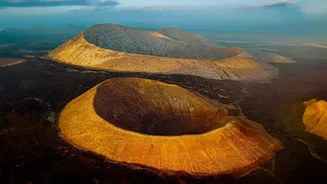
To prepare for this high-stakes moment, the DAVINCI team recently conducted a full-scale dress rehearsal, not in a lab, but in the real world. In June 2026, scientists and engineers traveled to Crater Island, Utah, a remote and geologically diverse landscape. There, they attached a suite of instruments, including cameras similar to those on the actual probe, to a helicopter. The helicopter then performed slow, vertical descents from high altitudes, mimicking the probe's forthcoming plunge through the Venusian atmosphere. As the cameras rolled, the team on the ground faced the same challenge they will on mission day: interpreting a completely new landscape based solely on a series of incoming images. The goal was to see if they could accurately map the topography and identify the chemical makeup of the rocks from a distance.
Forging a Common Tongue
The true purpose of these exercises is not just to test cameras; it is to forge a common language. A mission team is composed of experts from many different fields: geologists, atmospheric scientists, chemists, and engineers. A geologist might look at a rock formation and see evidence of ancient lava flows, while a chemist sees a clue about mineral composition. During a rapid descent, there is no time for lengthy debates. Everyone must be on the same page, using the same terms to describe what they are seeing. The rehearsals are where this shared vocabulary is built. By practicing with the Utah images, and then comparing their remote interpretations with the ground truth they could physically verify, the team calibrates itself. They learn to translate their specialized knowledge into a common, efficient dialect. They create what sociologists call a "boundary object"—in this case, the images—that allows different expert communities to communicate and collaborate effectively.
A Tried and True Method
This concept of a full-scale rehearsal is a cornerstone of successful space exploration. Before Apollo 11 made its historic landing, the crew of Apollo 10 performed a complete dress rehearsal, flying the lunar module down to just nine miles above the Moon's surface before returning. More recently, NASA’s Psyche spacecraft tested all its instruments during a flyby of Mars, ensuring everything was ready for its eventual arrival at a metallic asteroid. These rehearsals are about more than just checking systems. They are about building muscle memory and forging a cohesive team that can handle the unexpected. For missions that are millions of miles away, where the light-speed delay makes real-time control impossible, this synchronized understanding is the most critical tool of all.