
The Unsung Hero of the Indian Plate
Curd, or dahi, is more than just a food item in India; it's a cultural staple. For millennia, long before refrigeration, fermenting milk into curd was a primary method of preservation. This process not only extended its life but also enhanced its nutritional
value. Today, it forms the base of countless dishes, most notably raitas and chutneys that are essential for balancing a meal. These dishes aren't just for flavour; they serve a distinct purpose, often providing a cooling counterpoint to the heat of Indian spices. The casein protein in dairy products like curd effectively neutralises capsaicin, the compound that gives chillies their burn, providing relief that water simply cannot.
Raita: The Ultimate Cooling Condiment
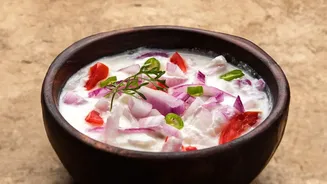
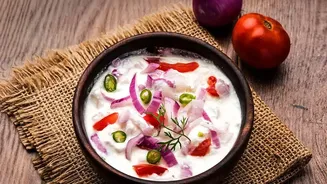
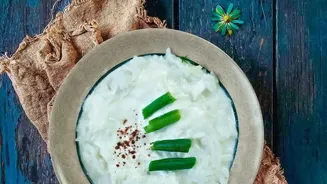
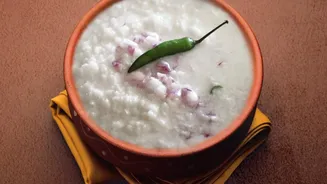
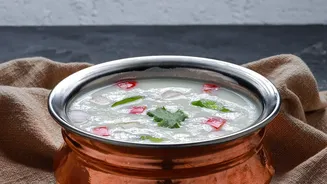
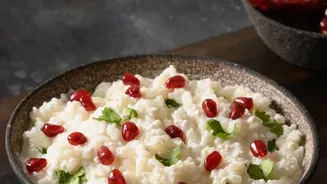
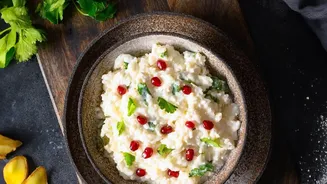
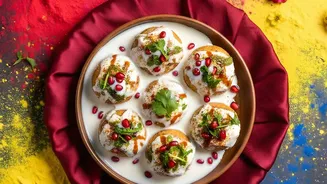
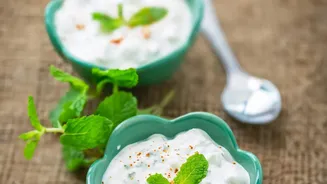
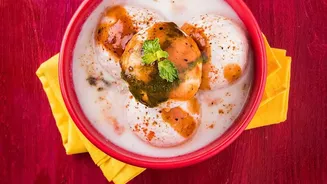
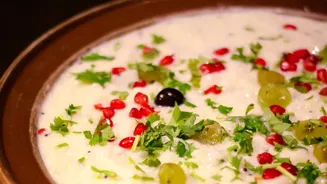
Raita is perhaps the most famous of all curd-based side dishes. It is a simple preparation of whisked dahi, often thinned with a little water, and mixed with raw or cooked vegetables, fruits, or even boondi (tiny fried gram flour balls). Common variations include cucumber, onion-tomato, and mint. While often mistaken for a dip, raita is technically a condiment or a side salad. Its primary role is to complement the main dish—be it a rich biryani, a dry kebab, or a spicy curry—by adding moisture and a cooling, tangy flavour profile that cleanses the palate. The seasonings are just as important, with roasted cumin powder, black salt, and fresh herbs like coriander and mint being classic additions.
Beyond Raita: Dips and Chutneys
While raita is ubiquitous, the world of Indian curd dips is vast. A 'dahi chutney' is often creamier and thicker than a raita, designed for scooping with snacks like tikkis or fritters. A popular version involves blending a thick green chutney paste (made from mint, coriander, and green chillies) into hung curd or Greek yoghurt. Other creative dips use thick, creamy yoghurt as a base for different flavour profiles, such as garlic, or even as a cooling foundation for a spicy topping, like an achari tomato mixture. These dips offer a protein-rich, refreshing alternative to heavier, mayonnaise-based spreads.
A Probiotic Powerhouse for Gut Health
The traditional wisdom of dahi being good for digestion is strongly backed by modern science. Homemade curd is a natural source of probiotics, the beneficial live bacteria that support a healthy gut microbiome. These bacteria, like Lactobacillus, help improve digestion, can reduce bloating, and enhance the body's ability to absorb nutrients. A healthy gut is directly linked to a stronger immune system, and regular consumption of probiotic-rich foods like dahi helps replenish the good bacteria in your gut, supporting overall wellness. Furthermore, curd is an excellent source of calcium, which is more easily absorbed by the body than the calcium in milk, thanks to the presence of lactic acid.
Fact from Fiction: Debunking Curd Myths
Many myths surround curd consumption, the most persistent being that one should avoid it at night. Ayurvedic texts do caution against it, suggesting that its heavy and mucus-forming (Kapha-increasing) properties can cause issues when digestion is naturally slower. However, for most healthy individuals, modern science finds no evidence that eating a moderate amount of plain curd at night causes colds, coughs, or sinus problems. Discomfort is more likely due to individual sensitivity, a pre-existing condition like sinusitis, or consuming large, heavy, or sugary curd-based dishes just before sleep. Another common myth is that curd is fattening. In reality, plain curd is rich in protein, which promotes satiety and can actually aid in weight management when part of a balanced diet.