
A Frozen Treasure Map
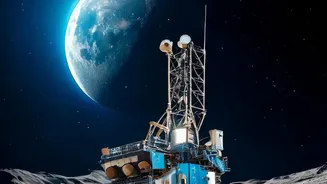
The dream of a permanent human settlement on the Moon hinges on one crucial resource: water. Hauling it from Earth is incredibly expensive, costing thousands of dollars per pound to launch. The solution lies in using what’s already there, a concept known
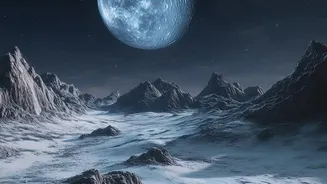
as in-situ resource utilization (ISRU). Recent breakthroughs have transformed this dream into a tangible plan. Data gathered by spectrometers, instruments that can identify materials by the light they reflect, have confirmed the presence of water ice at the Moon's poles. These aren't vast, skating-rink-style sheets of ice. Instead, the water is mostly found as ice grains mixed in with the lunar soil, or regolith, often within permanently shadowed craters where temperatures are colder than Earth's harshest winters. While orbital instruments like NASA’s Moon Mineralogy Mapper (M3) aboard India's Chandrayaan-1 orbiter first provided definitive proof of surface ice, subsequent missions are creating more detailed maps. These maps are critical, pinpointing the most promising locations for future astronauts to land, drill, and harvest this frozen treasure.
Seeing the Unseen with Light and Vibrations
So how do scientists find ice in craters that never see sunlight? One of the primary tools is a spectrometer. Orbiters and landers use these instruments to analyze how sunlight and other light sources reflect off the lunar surface. Different materials, including water ice, have unique spectral signatures, allowing scientists to identify them from afar. More recent efforts are focusing on ground-truth data. Instruments like NASA's Neutron Spectrometer System (NSS), which is part of international efforts like the LUPEX mission with Japan and India, are designed to detect hydrogen—the 'H' in H₂O—just below the surface, giving a clearer picture of ice concentrations. Scientists are also developing novel techniques, such as using seismic waves from moonquakes or rover drills to detect how vibrations travel through the ground. Ice stiffens the lunar soil, causing these waves to travel faster and creating a distinct signature that could reveal hidden deposits. These combined methods are moving beyond just knowing the water is there; they are creating a detailed understanding of its depth, concentration, and form, which is crucial for planning extraction missions.
Fueling the Future of Spaceflight
The confirmation of accessible water ice is a game-changer for the economics and logistics of space exploration. For future lunar inhabitants under programs like Artemis, this water is a lifeline. It can be melted for drinking, used to grow plants, and split into its component elements: oxygen for breathing and hydrogen for rocket fuel. Being able to refuel on the Moon would revolutionize space travel. A lunar base could become a cosmic petrol station, enabling more ambitious missions to Mars and beyond without the immense cost of launching all the necessary fuel from Earth. This potential has sparked a new kind of space race, not just between nations but also involving commercial companies. The ability to harness lunar resources is the foundational step toward creating a self-sustaining off-world economy. Early 'pioneers' won't just be astronauts; they'll be engineers, miners, and chemists tasked with turning ancient ice into the fuel for humanity's next giant leap.
The Next Steps for Lunar Pioneers
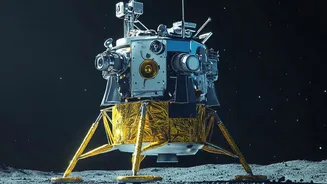
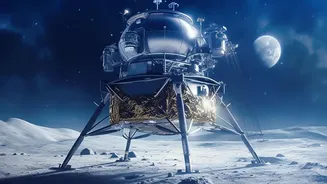
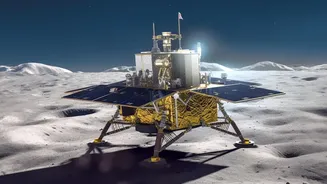
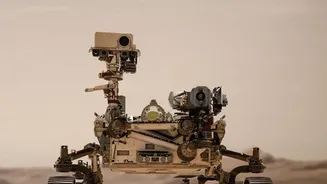
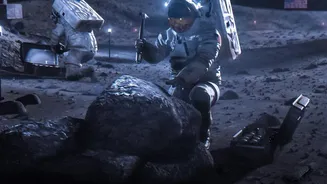
While we now have a map, the real work is just beginning. Missions are in development to explore these icy regions up close. NASA had planned the Volatiles Investigating Polar Exploration Rover (VIPER), a golf-cart-sized robot designed to drive into permanently shadowed craters, drill into the regolith, and analyze the ice directly. Although the original mission plan has shifted, the objective remains a top priority for NASA and its commercial partners. In the meantime, other missions are pushing forward. Data from India's Chandrayaan-3 lander, which touched down near the south pole in 2023, has already provided valuable on-the-ground temperature readings, suggesting that conditions for subsurface ice might exist even outside the coldest craters. Upcoming landers from various space agencies, some equipped with seismometers and drills, will further test these theories. Each new piece of data will refine our understanding of the lunar water cycle and help mission planners select the safest and most resource-rich sites for the first long-term human habitats on another world.