






The Allure of the Bulk Buy
On the surface, the maths is simple. A 15-kg tin or a 5-litre can of cooking oil almost always offers a lower price per litre than a 1-litre pouch or bottle. For families with high consumption, this bulk-buying approach translates to significant annual
savings. This is particularly true for joint families or households where deep-frying snacks and elaborate meals are a frequent affair. The large tin becomes a pantry staple, seemingly offering an endless supply. Recent government mandates to standardize pack sizes to volumes like 1, 2, 5, and 15 litres have made these price comparisons even clearer for consumers, removing the confusion of odd-sized packs. However, the real cost of oil isn't just the price tag; it's a combination of price, freshness, and usability.
Know Your Consumption Rate
Before you commit to a large tin, it is crucial to audit your family's actual oil consumption. As a general guideline, dietitians often suggest a monthly consumption of around 500-600 ml of oil per person. For a family of four, this translates to about 2 to 2.5 litres per month. If your cooking style is heavy on tadkas, curries, and parathas, this number might be higher. Conversely, if you rely more on air frying, steaming, and baking, your usage could be lower. Track your usage for a month. If your family consistently uses 4-5 litres a month, the 5-litre can is a perfect fit. However, if you struggle to finish a 5-litre can in under three months, you might be losing more to spoilage than you're gaining in savings.
The Hidden Cost of Rancidity
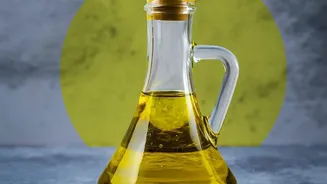
All cooking oils have a shelf life, and they don't last forever. Once opened, exposure to oxygen, light, and heat begins a process called oxidation, which causes the oil to become rancid. A rancid oil not only imparts an unpleasant, bitter taste to food but can also contain harmful compounds. While an unopened oil can last for one to two years, its quality starts to degrade much faster once the seal is broken. Most refined oils are best used within 6 months of opening, and some experts suggest an even shorter window of 3-4 months to maintain peak quality. If it takes your family six months to finish a 5-litre can, the oil used in the final months will be of inferior quality compared to a freshly opened bottle. A large 15-kg tin could take even longer to finish, increasing this risk substantially.
Refined vs. Cold-Pressed Changes the Game
The type of oil you prefer also plays a significant role. Refined oils like most sunflower, soybean, and palm oils undergo a process that gives them a more neutral flavour and a longer shelf life. Cold-pressed oils, such as kachi ghani mustard oil, groundnut oil, or extra virgin olive oil, are less processed to retain their natural flavour and nutrients. This minimal processing means they are also more delicate and prone to going rancid faster. Cold-pressed oils typically have a shorter shelf life once opened, often best consumed within three to four months. Buying a large can of a delicate cold-pressed oil is generally not advisable unless you have a very large family or run a commercial kitchen, as you are unlikely to finish it before it loses its characteristic flavour and freshness.
Finding a Smart Strategy
For many modern households, a hybrid approach works best. Consider buying a 5-litre can of a neutral, high-smoke-point refined oil (like sunflower or groundnut oil) that you use for everyday cooking and frying. This is your workhorse oil where the bulk saving makes sense. Alongside this, buy smaller 1-litre bottles of specialty or flavourful oils. This could be a cold-pressed mustard oil for pickles and specific regional dishes, a sesame oil for flavouring, or an olive oil for dressings. This strategy allows you to benefit from the cost savings of buying your primary oil in a larger quantity while ensuring that your flavour-specific, delicate oils are always fresh. It prevents you from being locked into a single type of oil for months on end and minimizes the risk of wastage due to spoilage.