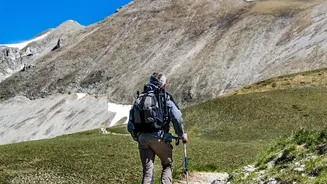







The majestic Canadian Rockies offer some of the world's most breathtaking scenery, a landscape where pristine nature is home to iconic wildlife. A trip here is unforgettable, and being prepared for wildlife encounters ensures it's memorable for all the right
reasons.
Preparation is Your First Step
Before your boots even touch the trail, preparation is crucial for a safe journey. Always check trail reports and wildlife advisories on the official Parks Canada website or at a local visitor centre. Some trails may be closed due to heavy bear activity or other wildlife concerns, especially during sensitive times like elk calving season. One of the most important tools you can carry is bear spray. Make sure it is easily accessible—not inside your backpack—and that you understand how to use it before you need it. Bear spray is also effective against other large animals like cougars and elk. Hiking in a group is always recommended; a group of four or more is louder, more intimidating, and less likely to have a negative wildlife encounter. Finally, always let someone know your hiking plan and when you expect to return.
On the Trail: Making Your Presence Known
The key to avoiding surprise encounters is to make noise. Bears and other animals generally prefer to avoid humans, and if they hear you coming, they will usually move away. Talk loudly, sing, or call out periodically, especially in areas with dense vegetation, near streams, or on windy days where visibility and sound travel are poor. While some hikers use bear bells, Parks Canada notes they are often not loud enough to be effective, as a bear focused on eating might not notice them. Staying alert is just as important as making noise. Avoid wearing headphones so you can hear your surroundings. Keep your dog on a leash at all times, as an off-leash dog can provoke a wild animal and lead it back to you. Lastly, watch for fresh signs of wildlife, such as tracks, droppings, or dug-up ground. If you find a large animal carcass, leave the area immediately as a predator may be nearby defending its food.
Bear Encounters: What to Do
Seeing a bear can be thrilling, but knowing how to react is vital. If the bear hasn't seen you, back away quietly without disturbing it. If it has seen you, stay calm. Do not run, as this can trigger a chase instinct. Speak to the bear in a calm, firm voice to identify yourself as human. Make yourself look larger by raising your arms or opening your jacket. Keep your group together and pick up small children. Do not drop your backpack, as it can offer protection in the event of an attack. Back away slowly, always leaving the bear an escape route. If a grizzly bear charges, stand your ground, as it may be a bluff, and use your bear spray when it is in range. In the rare case of an attack from a grizzly, play dead by lying on your stomach with your hands protecting your neck. For a black bear attack, you should fight back.
Elk, Cougars, and Other Wildlife
While bears get the most attention, other animals require equal respect. Elk are responsible for more injuries to people than bears, especially during the spring calving season (May-June) and the fall mating season (August-October). Never approach elk, and always maintain a distance of at least 30 metres. If an elk seems agitated, with its ears back or teeth grinding, you are too close and should back away. If charged, try to get behind a tree or large object. Do not play dead. Cougar sightings are very rare, but they are elusive predators. If you see one, do not run. Make eye contact, appear as large as possible, speak loudly and firmly, and back away slowly. If a cougar acts aggressively or attacks, fight back.
The 'Leave No Trace' Philosophy
Responsible hiking is about more than just personal safety; it's about protecting the ecosystem for generations to come. The 'Leave No Trace' principles are a core part of this. One key principle is to respect wildlife by observing animals from a distance and never feeding them. Feeding wildlife is illegal and harmful; it makes them associate humans with food, which can lead to aggressive behaviour and put both people and the animal at risk. It's also crucial to dispose of all waste properly in designated wildlife-proof bins. Even biodegradable items like apple cores or banana peels can attract animals to trails and picnic areas, creating dangerous situations. By leaving nothing behind, you help keep wildlife wild and ensure the natural beauty of the Canadian Rockies remains unspoiled.