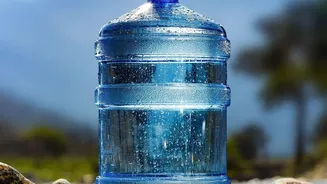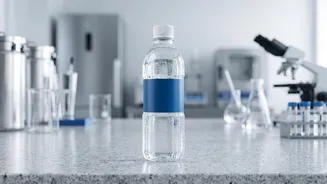





For millions, packaged drinking water is a daily necessity, trusted for its safety and purity. Recent findings by India's food regulator, FSSAI, have placed this trust under scrutiny, raising questions about what’s really inside that sealed bottle.
What FSSAI's Latest Action Reveals
In
November 2026, the Food Safety and Standards Authority of India (FSSAI) sanctioned prosecution against a major packaged water brand after a sample was found to be unsafe. The initial test revealed levels of a chemical called bromate that exceeded the permissible limit. A subsequent test by a referral lab detected another group of chemicals, polynuclear aromatic hydrocarbons (PAHs). This action has highlighted wider concerns about quality control in the packaged water industry. Government data from previous years shows that a significant number of samples regularly fail to meet prescribed standards. In response to these risks, FSSAI classified packaged water as a 'high-risk' food category in late 2024, mandating stricter inspections and a compulsory testing scheme that came into effect on January 1, 2026.
Decoding the Contaminants: Bromate and PAHs
Many consumers were left wondering what these chemicals are and how they get into bottled water. Bromate is not an additive; it's a byproduct. It forms when water containing natural bromide salts is disinfected using ozone. Ozonation is a common and effective method for killing bacteria and viruses, but if not carefully controlled, it can lead to the formation of bromate. The Indian standard limits bromate to 10 micrograms per litre, the same level advised by the World Health Organization (WHO). Polynuclear aromatic hydrocarbons (PAHs) are a group of chemicals that are formed from the incomplete burning of organic materials like wood or fuel. Their presence in water can indicate environmental pollution of the source water or contamination during processing.
Are These Chemicals a Health Risk?
The concern around these chemicals is related to long-term exposure, not immediate illness from a single bottle. The International Agency for Research on Cancer (IARC) classifies bromate as 'possibly carcinogenic to humans', based on studies in animals that showed high doses could cause tumours. Long-term exposure to high levels has also been linked to kidney and nervous system effects in animal studies. Similarly, some PAHs are known carcinogens, and their presence in drinking water is a health concern. FSSAI standards require that PAHs should not be detectable in packaged water. It's crucial to understand that regulatory limits are set to be highly protective against these long-term risks.
How Packaged Water is Regulated in India
India has a multi-layered system for regulating packaged water. The Bureau of Indian Standards (BIS) sets the quality specifications under IS 14543 for packaged drinking water and IS 13428 for natural mineral water. All manufacturers must also have an FSSAI licence, which brings them under the Food Safety and Standards Act, 2006. In a major regulatory shift in October 2024, mandatory BIS certification was removed and replaced by a more stringent FSSAI-led system of inspection and testing. This system, which began on January 1, 2026, mandates frequent testing for various contaminants, including microbiological tests monthly and pesticide residues every six months, at FSSAI-notified labs.
How to Be a Vigilant Consumer
While regulators are tightening controls, consumers can also take simple steps to ensure the water they buy is safe. First, always inspect the bottle. Look for a tamper-proof seal, a clean and unscratched bottle, and clear printing of the manufacturing and expiry dates. The label must carry the FSSAI logo and a 14-digit licence number. You can verify this licence number on the FSSAI's FoSCoS portal to check its validity. Also look for the manufacturer's name, address, and batch number. Be wary of lookalike brand names, especially at roadside stalls, as counterfeit products are a known issue. If you have any doubts about a bottle's authenticity or quality, you can report it to the authorities through FSSAI's Food Safety Connect app.