




The recent high-speed train collision in Spain’s Toledo province has sent shockwaves through the global rail industry. The tragic incident is now forcing a critical look at the very automated systems designed to make high-speed travel foolproof.
What Happened in Toledo?
On a Wednesday
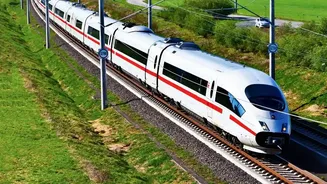
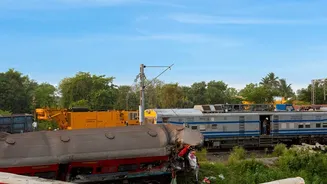
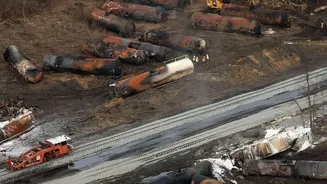
in late October 2026, two high-speed trains collided in a rural area of Spain's Toledo province. An Iryo-operated train, carrying 147 people, struck the rear of a stationary state-run Renfe train that had 397 passengers on board. Both trains were travelling in the same direction before the crash, which resulted in several carriages derailing and overturning. The devastating collision led to 64 fatalities and left over 80 people injured, prompting a massive emergency response and a period of national mourning. As investigators begin to piece together the events, the focus has shifted to one urgent question: in an era of advanced rail technology, how could something like this happen?
The Promise of Automated Safety
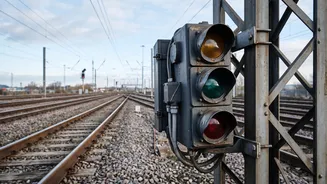
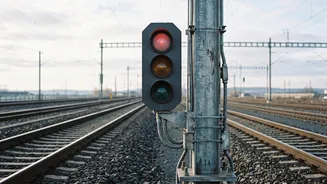
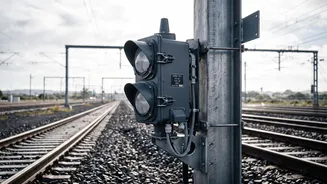
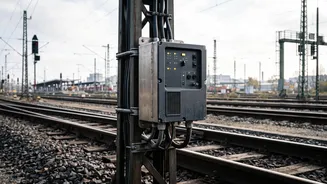
Modern high-speed trains are not just fast; they are equipped with sophisticated Automatic Train Protection (ATP) systems. In the United States, this is known as Positive Train Control (PTC), while Europe uses the European Train Control System (ETCS). The fundamental purpose of these systems is to act as a digital guardian. Using GPS, wireless radio, and onboard computers, they continuously monitor a train's location, speed, and direction. If the system detects a potential danger—such as excessive speed on a curve, an approaching red signal, or another train on the same track—it first warns the operator. If the driver fails to respond, the system automatically applies the brakes to slow down or stop the train, preventing a potential collision or derailment. These systems are designed to override human error, which is cited as a leading cause of rail accidents.
A System Under Scrutiny
The Toledo tragedy raises difficult questions about the reliability of these safety nets. Investigators will probe several possibilities: was there a mechanical failure in the signalling or ATP system? Did a human error occur that the system was unable to prevent? Or was there an 'interoperability' gap, where the systems of the two different train operators failed to communicate effectively? The 2013 Santiago de Compostela derailment in Spain, which killed 79 people, serves as a stark reminder of these vulnerabilities. In that case, the train was travelling at over double the speed limit on a sharp curve, and a critical section of the track was not covered by the advanced ETCS system. The driver was reportedly distracted by a phone call moments before the crash. That incident highlighted that even the most advanced technology is only as effective as its implementation and the operational protocols surrounding it.
The Indian Context: Lessons for Kavach
For India, which is rapidly expanding its high_speed and semi_high_speed rail network, the events in Toledo are a crucial case study. Indian Railways is deploying its own indigenous ATP system called 'Kavach' (meaning 'Shield'). Like PTC and ETCS, Kavach is designed to prevent collisions by automatically applying brakes if it detects another train on the same track or if a driver passes a danger signal. Certified to the highest safety integrity level (SIL_4), Kavach is a cornerstone of India's plan to modernise its railways and enhance passenger safety. It has already been deployed on thousands of kilometres of track. The collision in Spain underscores the importance of not just having the technology, but ensuring its seamless integration, rigorous maintenance, and robust protocols that account for interactions between different trains and potential human factors. The goal is to create a system where safety is layered, and no single point of failure—whether human or technological—can lead to disaster.