

What You Are Looking For
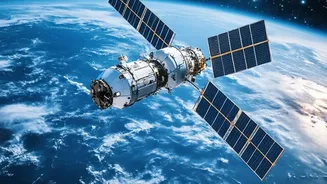
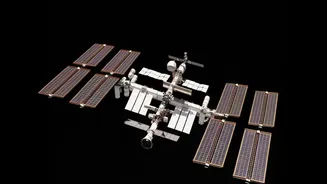
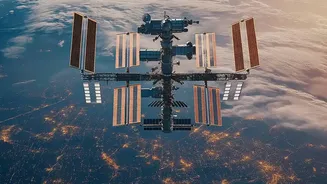
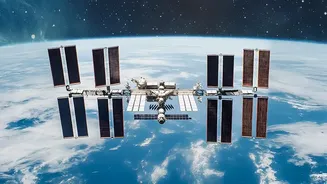
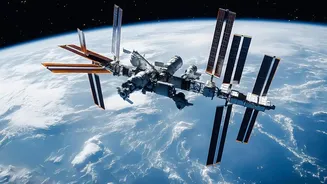
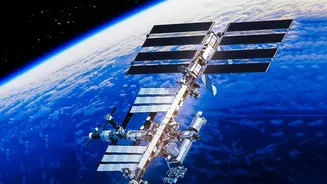
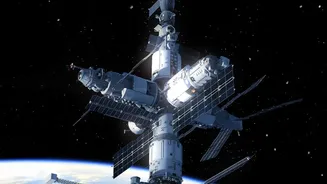
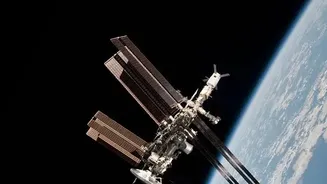
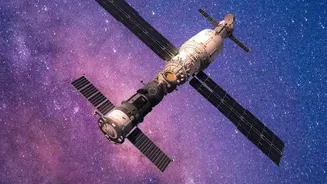
Spotting the International Space Station (ISS) doesn't require a telescope. To the naked eye, it appears as a very bright, steady point of light moving smoothly and quickly across the sky. It looks like a fast-moving star or a high-flying airplane, but
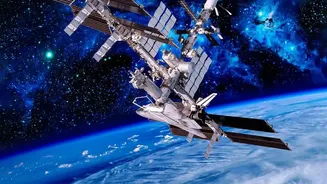
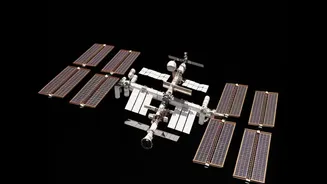
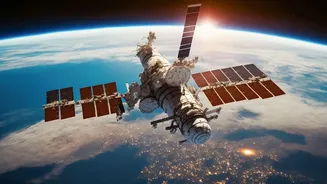
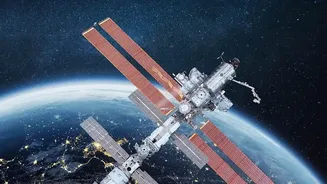
without any blinking or flashing lights. The ISS becomes visible because its large solar arrays and modules reflect sunlight, making it one of the brightest objects in the night sky, often outshining every star and even rivaling the planet Venus in brilliance. A typical viewing can last anywhere from three to six minutes as it traverses the sky from one horizon to the other. The best times for a sighting are typically a few hours before sunrise or after sunset, when the sky is dark but the station, orbiting at an altitude of about 400 kilometres, is still illuminated by the sun.
Your Phone is a Planetarium
The key to effortlessly finding the ISS is your smartphone. Modern stargazing applications use your device's built-in GPS and motion sensors to know your exact location and the direction you're pointing it. This allows them to create a real-time, augmented reality map of the sky. When you hold your phone up, the app can overlay information directly onto your camera's view, showing you exactly where to look for stars, planets, and, most importantly, satellites like the ISS. These apps transform a potentially frustrating search into a simple, guided experience, taking the guesswork out of locating the station's path across your local sky.
Top Apps for ISS Spotting
Several excellent mobile applications are designed specifically for this purpose. NASA's official Spot the Station app is a fantastic starting point, providing sighting schedules and alerts tailored to your location. For an all-in-one experience, ISS Detector is a popular choice on Android, offering pass predictions not just for the ISS but for other satellites as well. Apps like SkyView or Star Walk use augmented reality (AR) to let you point your phone at the sky and see the station's path overlaid on your screen in real time, making it incredibly intuitive. Many of these apps will send you notifications minutes before a pass is about to begin, so you’ll never miss an opportunity.
Tips for the Perfect Sighting
To make the most of a viewing opportunity, a little preparation goes a long way. First, check the forecast; a clear sky is essential. If possible, find a location away from bright city lights, like a park or an open field, to give you an unobstructed view of the horizon and reduce light pollution. Go outside five to ten minutes before the scheduled pass time to allow your eyes to adjust to the darkness. The tracking app will tell you the direction in which the station will first appear (usually in the west) and the path it will take. For the brightest and most impressive views, look for passes with a high maximum elevation, meaning the ISS will travel higher in the sky.
A Connection to a World Above
Watching the ISS glide silently overhead is more than just an astronomical event; it's a moment of connection. As that bright dot moves across the heavens at 28,800 km/h, remember that you are watching a home and workplace for astronauts. This 462-ton laboratory has been continuously inhabited for over two decades, serving as a hub for international cooperation and scientific discovery that benefits humanity. Every 92 minutes, the crew completes a full orbit of Earth, witnessing 16 sunrises and sunsets each day. Seeing it with your own eyes is a powerful reminder of the incredible feats of engineering and exploration happening just beyond our atmosphere.