







It was a week where digital life seemed to grind to a halt. From work emails to bank transfers and flights, critical services sputtered and failed. Now, an official US statement connects the dots, raising urgent questions about systemic risk.
A Cascade of Digital Failures
The disruptions
began around November 12, when a massive Microsoft outage knocked services like Outlook, Teams, and Exchange Online offline for millions worldwide. The global incident, which Microsoft later attributed to a latent software bug from July, lasted for nearly 24 hours, impacting everything from corporate communications to government operations. Just days later, on November 16, widespread service outages hit major US banks, including JPMorgan Chase, Bank of America, and Wells Fargo. Customers reported being unable to view balances or complete transactions. Chase attributed the problem to a technical bug, not a cyberattack, but the ripple effects hit other institutions connected through payment networks like Zelle. Adding to the chaos, the aviation sector was also hit. A nationwide ground stop by the Federal Aviation Administration (FAA) had already caused travel mayhem on November 13. This was followed by a separate, widespread system outage at United Airlines on November 16 that delayed departures. On November 22, just ahead of the Thanksgiving holiday travel rush, Delta Air Lines experienced its own outage related to its weight-and-balance system.
The Official Response from Washington
The string of high-profile failures prompted a response from US officials. Nick Andersen, the acting director of the Cybersecurity and Infrastructure Security Agency (CISA), described it as 'a few highly disruptive days'. While officials stated there was 'zero evidence' of the incidents being related or the result of a coordinated cyberattack, the events have served as a major wake-up call. CISA's analysis found that while the number of overall internet outages was not significantly higher than average, the impact of these specific events was massive. On November 24, the US Director of National Intelligence, Jay Clayton, stated that Americans should expect more such disruptions. He explained that the 'glitches, gaps, and interruptions' are largely the result of companies and government agencies undertaking massive, long-overdue upgrades to aging digital infrastructure. He emphasized that as more systems are taken down for maintenance and upgrades, the probability of unexpected problems increases.
Connecting the Dots: Fragility by Design?
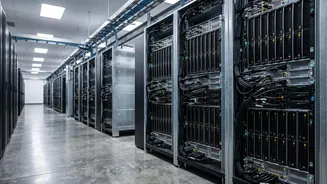
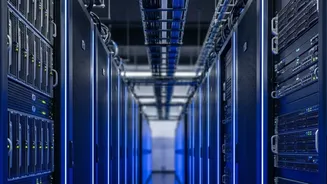
While government statements have dismissed theories of a coordinated attack, experts point to a common theme: the inherent fragility and complexity of the systems we depend on daily. The outages highlight a critical dependency on a small number of technology providers. The Microsoft failure, for example, had a cascading effect, demonstrating how an issue in one cloud provider's infrastructure can cripple countless businesses and services simultaneously. Each incident had its own technical explanation—a software bug for Microsoft, a telecommunications failure for the FAA, and a technical issue at Chase—but together they paint a picture of an interconnected ecosystem where a single point of failure can have disproportionate consequences. This series of events exposes the systemic risk built into our global economy's foundation, where the efficiency of centralized systems also becomes their greatest vulnerability.
The Soaring Cost of Downtime
The economic impact of these outages is staggering. Studies have shown that major tech disruptions can cost billions in direct financial losses, lost productivity, and supply chain chaos. One estimate placed the economic loss from the Microsoft outage alone at $7 billion. For businesses, the costs extend beyond immediate revenue loss to reputational damage and the erosion of customer trust. For individuals, the consequences range from the inconvenience of a delayed flight to the anxiety of not being able to access personal funds. These incidents serve as a powerful reminder that as our reliance on digital services grows, so does our collective exposure to the financial and social fallout when those services fail. The conversation is now shifting from simply preventing attacks to building resilience—creating systems that can withstand and quickly recover from inevitable disruptions.