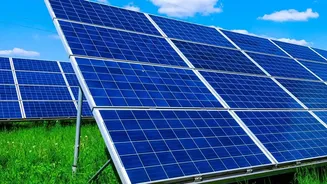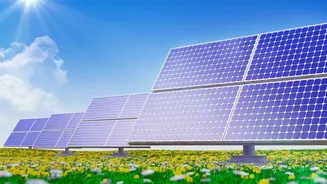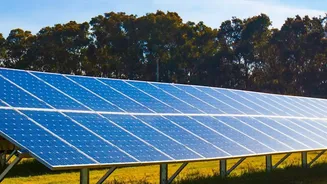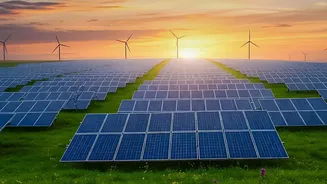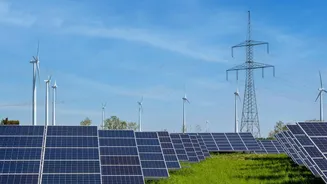




India faces a dual challenge: boosting renewable energy and sustaining its agricultural backbone. What if one solution could address both? Agrivoltaics offers a way to share land between solar panels and crops, solving a critical resource conflict.
What is Agrivoltaics?
Agrivoltaics,
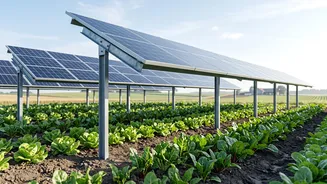
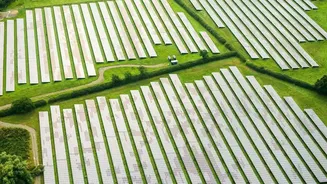
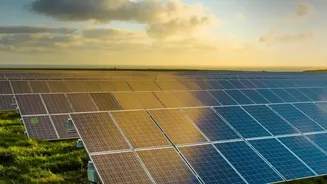
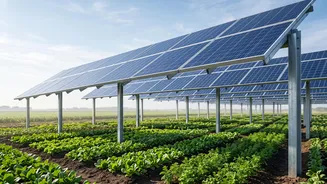
also known as dual-use solar, is the practice of using the same piece of land for both solar energy generation and agriculture. Instead of conventional solar farms that occupy land exclusively, agrivoltaic systems are designed to coexist with farming. This is typically achieved by installing solar panels high enough off the ground or with enough space between rows to allow for crops to be cultivated or for livestock to graze underneath and around them. The concept turns a potential land-use conflict into a synergistic partnership, allowing a single plot of land to produce both food and clean energy. This approach is gaining significant attention in India, where agricultural land is a precious resource and the demand for renewable energy is rapidly growing.
The Height Advantage: Making Room for Machinery
The key innovation highlighted in the headline is the elevation of the solar panel structures. By mounting panels at heights of 3.5 to 5 metres, these systems create enough vertical clearance for standard farm machinery, including tractors and even some harvesters, to operate underneath without obstruction. This design is a game-changer because it means farmers do not have to significantly alter their cultivation practices or invest in specialized, smaller equipment. It allows for the mechanised farming of various crops to continue, preserving agricultural productivity while adding an entirely new function to the land. This engineered space is crucial for making agrivoltaics a practical and scalable solution for modern agriculture, not just a niche concept for manual farming.
More Than Just Space: The Microclimate Effect
Beyond just creating physical space, the partial shade cast by the elevated panels creates a beneficial microclimate for the crops below. This shading protects plants from extreme heat and direct sun exposure, which can reduce heat stress and lead to healthier growth, especially in India's hot and arid regions. Furthermore, the shade reduces water evaporation from the soil, leading to significant water conservation—a critical benefit in drought-prone areas. Studies have shown that this environment can actually increase the yield of certain shade-tolerant crops like leafy greens, potatoes, and various vegetables. For animals, the panels provide welcome shade, reducing heat stress in livestock like sheep and cattle. The plants, in turn, can help cool the solar panels through transpiration, slightly improving their energy-generating efficiency.
The Business Case for Farmers
For Indian farmers, agrivoltaics presents a powerful opportunity for income diversification and financial stability. They can continue to earn revenue from their crops while simultaneously generating a second income stream from the production of solar energy. This electricity can be used to power farm operations like irrigation pumps, reducing reliance on expensive diesel or an unreliable grid. Surplus power can be sold back to the grid, providing a steady, predictable revenue source that can cushion farmers against the volatility of agricultural markets. Government initiatives like the PMKUSUM scheme are in place to provide financial assistance and encourage this transition, helping transform farmers into both food producers ('annadatas') and energy producers ('urjadatas'). In some cases, farmers have the potential to nearly double their annual earnings per acre.
Hurdles on the Horizon
Despite its immense potential, the path to widespread adoption of agrivoltaics has its challenges. The primary obstacle is cost. The specialised, elevated structures required for agrivoltaic systems make them 25%30% more expensive to install than conventional ground mounted solar projects. This higher upfront capital investment can be a significant barrier for small and medium sized farmers. There are also technical complexities in design and maintenance; the system must be meticulously planned to balance sunlight for crops with energy generation, and panel cleaning can be more frequent and costly due to dust and pollen from farming activities. Finally, not all crops are suitable for growing in partial shade, requiring careful selection and sometimes a shift in what a farmer cultivates.