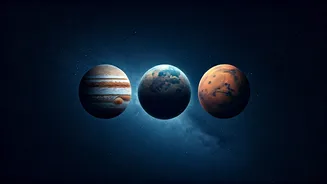






A Celestial Trio on Display
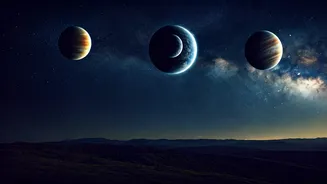
If you've glanced towards the eastern horizon before sunrise recently, you may have noticed a few unusually bright 'stars'. These aren't stars at all, but planets. In a beautiful coincidence of orbital mechanics, Mars, Jupiter, and Saturn have been appearing
close together, forming a temporary 'triple alignment'. While not a perfect straight line, their proximity in the same patch of sky creates a stunning visual. Such gatherings, known as conjunctions or alignments, happen from time to time, but seeing three major planets together is always a special treat for stargazers and casual observers alike. This particular event brings together the fiery red of Mars, the steady gleam of giant Jupiter, and the distinct golden hue of Saturn.
When and Where to Look
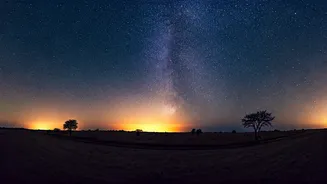
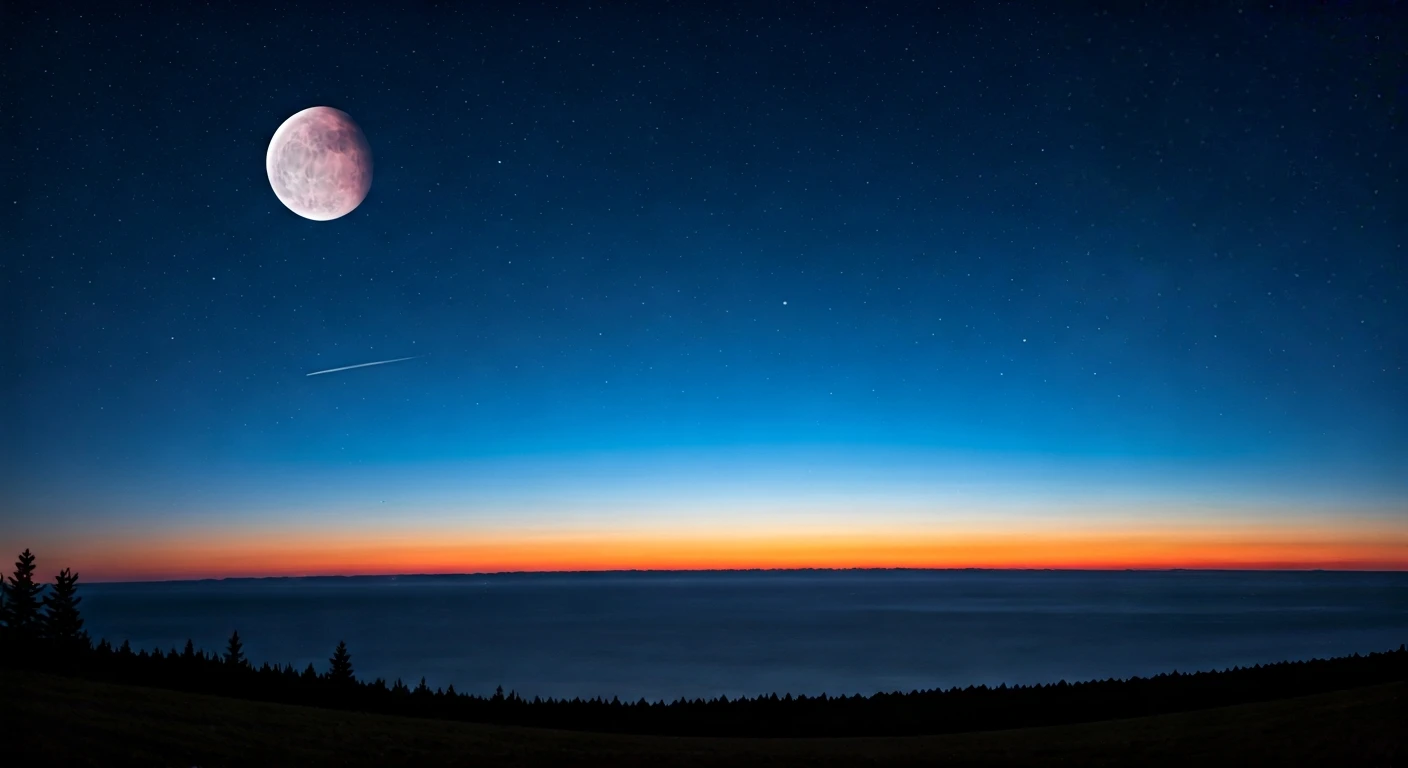
The best part about this cosmic event is its accessibility. You don't need to be in a remote observatory to enjoy it. The alignment is visible across India. The key is timing and direction. You’ll want to set your alarm for about an hour before local sunrise. Find a spot with a clear view of the eastern or southeastern horizon, away from tall buildings and bright city lights if possible. The planets will be relatively low in the sky, forming a loose diagonal line or a compact triangle, depending on the day. From Delhi to Chennai, Mumbai to Kolkata, the view is available to everyone. Just give your eyes a few minutes to adjust to the darkness, and the planetary trio will reveal itself.
Telescope Optional, Curiosity Mandatory
One of the most frequent questions for any sky-watching event is about equipment. The great news is that all three planets—Mars, Jupiter, and Saturn—are bright enough to be easily seen with the naked eye. Jupiter is typically the brightest and easiest to spot, appearing as a brilliant, unwavering point of light. Saturn will be slightly fainter, and Mars will be identifiable by its distinct reddish tint. However, if you have a pair of binoculars, you'll get an even better view. With good binoculars, you might even be able to spot Jupiter's four largest moons, known as the Galilean moons, appearing as tiny pinpricks of light flanking the planet. A basic telescope will, of course, elevate the experience, potentially revealing the glorious rings of Saturn—a sight that never fails to inspire awe.
A Quick Introduction to the Planets
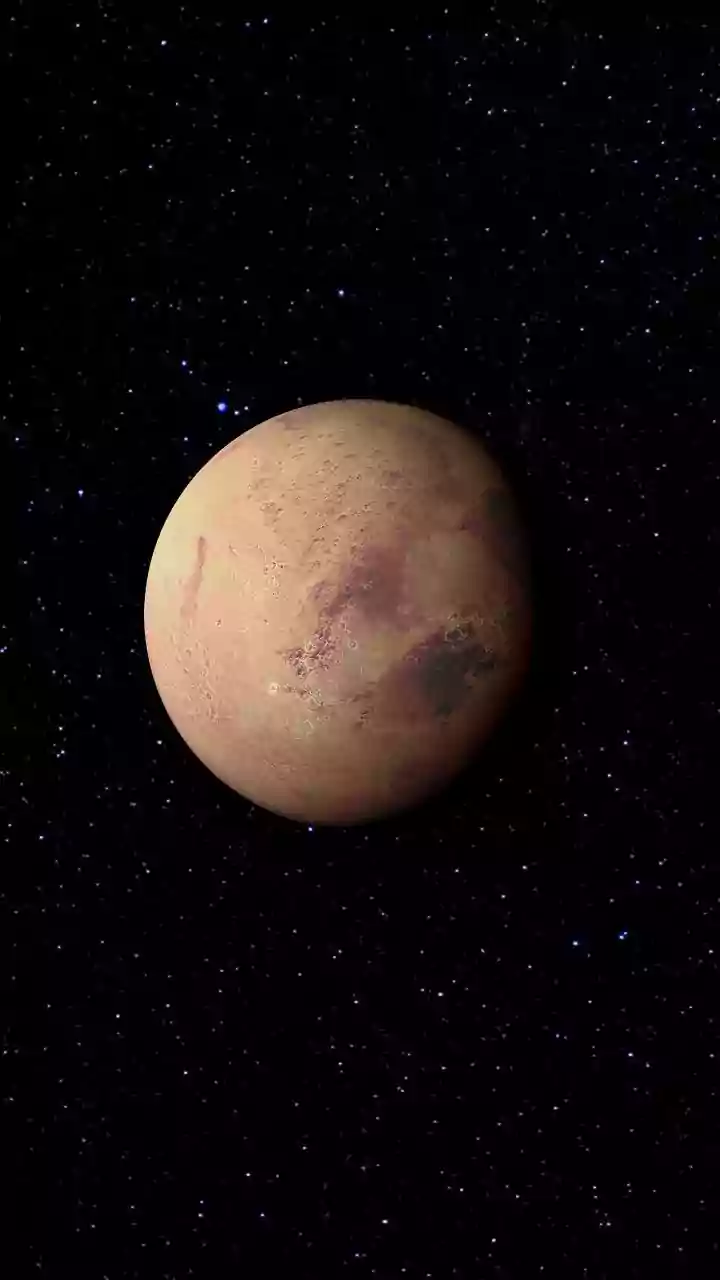
So, who are these celestial visitors? Jupiter, the king of the planets, is the largest in our solar system, a gas giant so massive that all other planets could fit inside it. Saturn, the jewel of the solar system, is famous for its spectacular system of icy rings, which are visible even with a small telescope. It's the second-largest planet and another gas giant. Finally, there's Mars, the 'Red Planet'. Its rusty colour comes from iron oxide on its surface. For centuries, Mars has captivated human imagination with the possibility of past or present life, and it remains a primary target for robotic exploration. Seeing these three distinct worlds together in one frame is a powerful reminder of our solar system's diversity and scale.
The Science of an 'Alignment'
The term 'alignment' can be a bit misleading. The planets are not actually close to each other in space; in fact, they remain hundreds of millions of kilometres apart. What we are witnessing is a line-of-sight phenomenon from our perspective here on Earth. As the planets orbit the Sun at different speeds and on different paths, their positions in our sky constantly change. An alignment occurs when, from our vantage point, they appear to gather in the same small area of the sky. It's like seeing two distant ships on the ocean appearing close together from the shore, even though they are miles apart. This celestial dance is a beautiful, predictable result of gravity and orbital physics, offering us a dynamic and ever-changing view of our cosmic neighbourhood.