






The Core Problem: A Shared Battle for Tracks
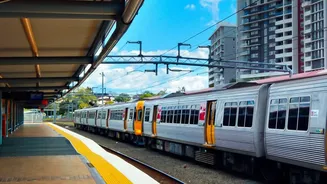
Mumbai's suburban railway, the city's lifeline, carries over 7.5 million people daily, a figure that represents about 40% of all Indian Railways commuters. The infamous overcrowding is not just due to passenger volume. A key bottleneck is the shared use
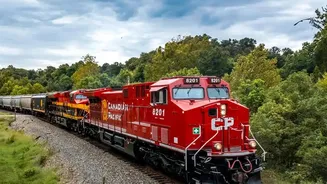
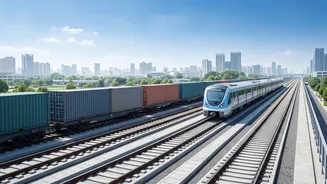
of tracks. Slow-moving freight trains, essential for moving goods to and from the nation's largest container port, JNPT, have historically run on the same lines as fast local trains. This mixed traffic forces passenger services to slow down, causes cascading delays, and limits the number of local services that can be run, especially on critical sections like the Virar-Dahanu corridor where all types of trains share just two tracks.
The Solution: A Superhighway for Goods Trains
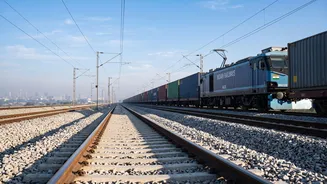
Enter the Dedicated Freight Corridor (DFC), a project nearly two decades in the making. The concept is simple but transformative: create a separate, high-speed railway network exclusively for freight trains. For Mumbai, the relevant artery is the 1,506-km Western Dedicated Freight Corridor (WDFC), which connects the industrial heartlands of North India directly to Jawaharlal Nehru Port (JNPT) near Mumbai. After years of construction, the final sections of the WDFC were inaugurated on September 8, 2026, making the entire corridor from Dadri in Uttar Pradesh to JNPT fully operational. This network is built for efficiency, allowing double-stack container trains to run at higher speeds on a fully electrified route.
How It Decongests Mumbai's Local Network
The logic is straightforward: by shifting goods trains off the passenger network, immense capacity is unlocked. With the WDFC now providing a direct, high-efficiency path to the port, the dozens of freight trains that once clogged the suburban lines can be rerouted. This separation of traffic is the crucial step. It allows railway authorities to use the newly freed-up tracks exclusively for passenger services. It means more local trains can be introduced, the frequency of existing services can be increased, and punctuality can be improved because local trains will no longer be held up by slower freight traffic. Officials state that this will directly ease congestion on Mumbai's conventional railway network.
The Expected Impact for Commuters
The completion of the DFC network is a cornerstone of a broader capacity expansion plan for Mumbai. The Mumbai Railway Vikas Corporation (MRVC), the body responsible for upgrading the suburban network, is already working on projects under the Mumbai Urban Transport Project (MUTP) that will leverage this new capacity. These include adding new lines, like the quadrupling of the Virar-Dahanu corridor, which will segregate local and long-distance traffic. With freight traffic moved to the WDFC, the potential to run three to four times the number of local trains on such stretches becomes a reality. The ultimate goal is a more reliable, less crowded, and safer journey for every Mumbaikar, moving closer to the 'Mission Zero Death' aim by reducing overcrowding-related accidents.