



It’s a classic kitchen dilemma. For a healthy addition to your meal, should you reach for the crunchy orange carrot or the vibrant leafy spinach? Both are champions of the vegetable world, but they offer surprisingly different nutritional benefits.
The Nutrient Showdown
When
you put them side-by-side, the differences become clear. Spinach is a nutritional powerhouse, packing significantly more vitamin K, folate, iron, magnesium, calcium, and vitamin C per serving than carrots. For instance, a 100-gram serving of spinach contains vastly more iron and calcium than the same amount of carrots. It's also lower in calories and sugar. However, carrots have a major claim to fame: they are an exceptional source of Vitamin A, delivering much more than spinach. This is thanks to their high concentration of beta-carotene, the pigment that gives them their orange hue. So, while spinach wins on the breadth of its mineral and vitamin content, carrots are the undisputed champion of Vitamin A.
For Your Eyes Only
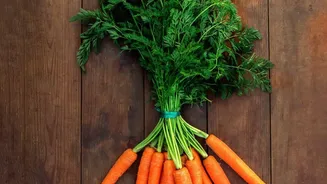
The old saying that carrots are good for your eyes holds true. The beta-carotene in carrots is converted by your body into vitamin A, a crucial component for good vision. Vitamin A helps form rhodopsin, a pigment in your retinas necessary for seeing in low light. Studies also show that beta-carotene can help protect against macular degeneration and cataracts. But spinach brings its own set of eye-protective compounds to the table. It is loaded with lutein and zeaxanthin, two powerful antioxidants that are also found in the human eye. These compounds act like internal sunglasses, filtering harmful blue light and protecting the macula from damage. Research suggests a diet rich in lutein and zeaxanthin can significantly lower the risk of age-related eye diseases.
Bone Health and Blood Builders
When it comes to building strong bones and healthy blood, spinach has a clear edge. It is an extraordinary source of Vitamin K1, a nutrient essential for blood clotting and bone health. In fact, a single cup of raw spinach can provide more than the daily recommended intake. Vitamin K helps improve calcium absorption, which is vital for maintaining bone density. Spinach is also famous for its iron content, a mineral crucial for creating haemoglobin, which transports oxygen throughout your body. While carrots contain some iron, spinach provides a much more substantial amount. It is important to note, however, that the iron in spinach is 'non-heme' iron, which is less easily absorbed than the iron from animal products. Pairing spinach with a source of vitamin C, like a squeeze of lemon juice, can help enhance its absorption.
Raw vs. Cooked: It Matters
How you prepare these vegetables can change their nutritional profile. Cooking carrots actually helps your body absorb more beta-carotene. The heat breaks down the vegetable's tough cell walls, releasing the valuable nutrient. However, cooking can also decrease its vitamin C content, which is water-soluble and sensitive to heat. For spinach, cooking has a dual effect. It wilts down significantly, allowing you to consume a larger quantity and therefore more nutrients in one sitting. Cooking also reduces the levels of oxalic acid, a compound in raw spinach that can inhibit the absorption of iron and calcium. Lightly steaming or sautéing spinach can make its lutein more available for your body to use. So, for maximum benefit, a mix of raw and lightly cooked preparations of both vegetables is ideal.
Roots vs. Leaves: The Bigger Picture
The differences between carrots and spinach reflect a broader pattern between root vegetables and leafy greens. Root vegetables, which grow underground, primarily function as storage units for the plant. They tend to be higher in carbohydrates and starches. Carrots, for example, are a source of healthy fibre and carbs that provide sustained energy. Leafy greens like spinach are the plant's solar panels, where photosynthesis happens. As a result, they are often packed with a wider array of vitamins and minerals, particularly folate, vitamin K, and antioxidants developed to protect the plant from sun damage. Leafy greens are generally lower in calories and carbs but higher in protein per calorie.