





Return to the Moon: Artemis and a Permanent Base
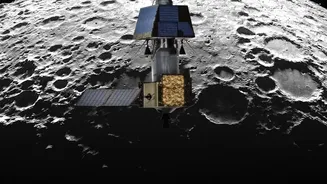
The biggest story in human spaceflight is NASA's Artemis program. After the successful uncrewed Artemis I flight in 2022 and the crewed lunar flyby of Artemis II in April 2026, all eyes are on the next steps. The program aims not just to visit the Moon,
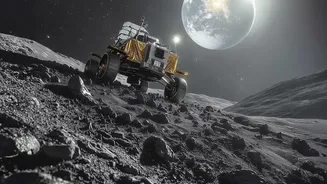
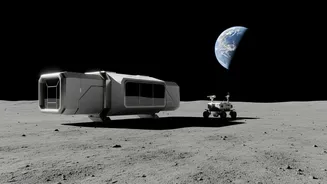
but to stay. The ultimate goal is a permanent human outpost near the lunar South Pole, and progress is well underway. In a significant development for India, NASA officially invited ISRO in August 2026 to collaborate on its Moon Base program. This invitation builds on India's 2023 signing of the Artemis Accords, a set of principles for lunar exploration. With its own plans for a lunar landing by 2040, this partnership signals a deepening of space ties between the two nations. Preparations for future missions are advancing, with hardware for Artemis III being assembled for a planned 2027 mission that will test lunar landing systems in Earth orbit. The first crewed landing is now targeted for 2028 with Artemis IV.
A New Eye on the Universe: The Roman Telescope
While human exploration captures headlines, robotic observers are set to revolutionize our understanding of the universe. The highly anticipated Nancy Grace Roman Space Telescope is scheduled to launch in late August or early September 2026. Named after NASA's first chief of astronomy, Roman is a next-generation observatory with a field of view 100 times larger than the Hubble Space Telescope. Its primary mission is to tackle some of the biggest mysteries in cosmology, including the nature of dark energy and dark matter. Roman will create vast, panoramic maps of the cosmos, expecting to discover billions of new galaxies and thousands of exoplanets. Its infrared camera will peer through cosmic dust to uncover objects from the outer reaches of our solar system to the edge of the observable universe. Scientists expect its data to fuel astronomical research for decades.
The Red Planet: A Change of Plans
NASA's plans for Mars have undergone a major reset. The ambitious Mars Sample Return (MSR) mission, a joint project with the European Space Agency to bring back rock samples collected by the Perseverance rover, was overhauled due to budget and schedule concerns. The original program was effectively canceled in early 2026. However, NASA has not given up on bringing the precious samples home. The agency is now evaluating two new, more cost-effective approaches and expects to confirm a final design in the second half of 2026. While this means the samples will likely not return to Earth until the 2030s, the scientific community remains hopeful. These samples hold the potential to reveal Mars' geological history and whether life ever existed on the Red Planet. In the meantime, other nations are moving forward, with Japan's MMX mission launching in 2026 to retrieve samples from Mars' moon Phobos.
Building the Future of Spaceflight
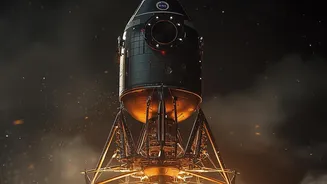
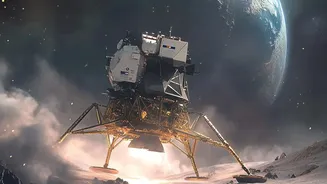
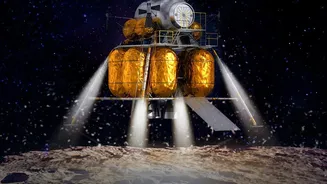
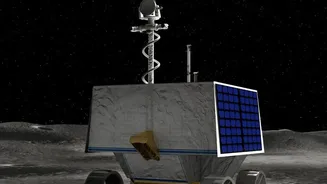
Beyond the flagship missions, NASA is developing critical technologies for a sustainable future in space. Commercial partnerships are at the heart of this strategy, with companies like Blue Origin, Firefly Aerospace, and Intuitive Machines developing landers to deliver cargo and infrastructure to the Moon. These missions are paving the way for the Moon Base by testing landing capabilities and deploying scientific instruments. NASA is also advancing autonomous navigation with projects like the Starling mission, which successfully tested a system allowing satellites to determine their own position without ground support. This technology is crucial for future missions in deep space, including potential swarms of satellites around the Moon and, eventually, human exploration farther from Earth. These innovations, from new landing systems to smarter spacecraft, are the essential building blocks for making humanity a truly multi-planetary species.