



MS Dhoni: The Master of Instinct
Mahendra Singh Dhoni, known as 'Captain Cool', redefined modern captaincy not with overt aggression, but with an almost supernatural calm and intuitive decision-making. His game IQ wasn't found in textbooks; it was written in the field with masterstrokes
that often defied logic but delivered results. Dhoni's leadership was a masterclass in managing pressure and backing his players. He famously gave the final over of the 2007 T20 World Cup to the inexperienced Joginder Sharma, a gamble that won India the inaugural trophy. His greatest strength was his ability to read the game from behind the stumps, often a step ahead of the opposition. This, combined with his knack for promoting himself up the order in crucial moments, like the 2011 World Cup final, cements his legacy as a captain who won with his mind as much as with his team's talent. He remains the only captain to win all three major ICC trophies.
Kane Williamson: The Quiet Tactician
If Dhoni’s genius was in his gut feeling, Kane Williamson’s lies in his quiet, methodical deconstruction of the game. He is the embodiment of composure and tactical intelligence. Williamson’s leadership is defined by his ability to adapt his team’s strategy based on player strengths and match situations, always seeming to be in control. He doesn’t rely on intimidation but on astute field placements and subtle bowling changes that create pressure. Under his captaincy, New Zealand, a team with fewer superstars than its rivals, consistently punches above its weight. His leadership in the 2019 World Cup final, even in a heart-wrenching loss, was a study in grace and clear-headed thinking under unimaginable pressure. Williamson proves that the smartest person in the room doesn't always have to be the loudest.
Pat Cummins: The Modern-Day Leader
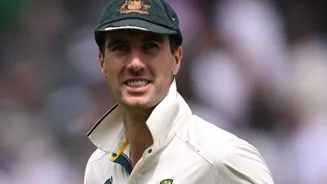
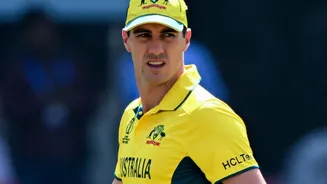
Pat Cummins has risen as a new-age captain who blends traditional Australian grit with a modern, empathetic approach. After stepping in during a turbulent period for Australian cricket, he has led with a quiet authority that inspires immense loyalty. His captaincy IQ is evident in his bold, courageous decisions, such as the call to bowl first in the 2023 World Cup final against an undefeated Indian team in their own backyard—a move that proved to be a masterstroke. Cummins is not an authoritarian; he trusts his players and empowers them to take responsibility. He leads from the front, often making crucial breakthroughs with the ball or playing game-winning innings under pressure. His leadership of a team that has won the World Test Championship and the ODI World Cup showcases a leader who is tactically sharp, mentally tough, and perfectly in tune with the demands of modern cricket.
Ricky Ponting: The Ruthless Strategist
Ricky Ponting captained one of the most dominant teams in cricket history, and while he had a squad of legends, his leadership was a key ingredient in their relentless success. His game IQ was rooted in an aggressive, uncompromising approach. Ponting was a master of meticulous planning and applying relentless pressure on opponents through aggressive field placements and a commanding presence. Under his leadership, Australia won two consecutive World Cups in 2003 and 2007, and enjoyed a record-breaking 16-match winning streak in Test cricket. While some critics pointed to his on-field aggression, his results are undeniable. He demanded excellence and led by example, transforming a team of great players into an all-conquering dynasty. His tenure remains a benchmark for dominance in the sport.
Clive Lloyd: The Visionary Architect
Long before the era of data analytics, Clive Lloyd demonstrated a profound understanding of team psychology and strategy. Taking over a talented but inconsistent West Indies side, he transformed them into the most feared team in world cricket for over a decade. Lloyd’s genius was in his vision. He recognised that a battery of fast, intimidating bowlers could dominate the game, and he built his team around this philosophy. He was a master of man-management, uniting players from different Caribbean islands into a cohesive and dominant force. Under his astute leadership, the West Indies won the first two Cricket World Cups in 1975 and 1979. Lloyd's legacy is not just the trophies, but the creation of a cricketing dynasty that changed the game forever.