







What Sparked the Controversy?
The issue exploded into public view in early November 2026 when acclaimed Tamil writer and Sahitya Akademi winner, Perumal Murugan, raised the alarm. After visiting the newly opened Periyar Arivulagam library in Coimbatore, he was shocked to find its
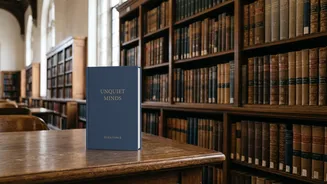
shelves filled with thousands of books of questionable quality. These were not the titles recommended by the expert advisory committee he was part of. Instead, he found books with factual errors, dubious authorship, incorrect historical details, and suspicious publication data, all purchased at highly inflated prices. This revelation opened a Pandora's box, suggesting a systemic issue rather than an isolated incident.
The 'AI-Generated' Angle
A startling aspect of the allegations is that many of the books appear to be generated by Artificial Intelligence. Minister for School Education, A Rajmohan, alleged that a network has been operating for years using AI, along with shifting author identities and multiple publishing house names, to get low-quality books into the state's library system. These books often feature generic author bios, strange factual inaccuracies—like inventing a fictional Chief Minister—and content that appears plagiarised or nonsensical, leading many to suspect they were machine-generated. The Madras High Court has observed that such AI-generated and plagiarised works cannot be considered standard literature and fall under the category of 'doubtful taste', making them ineligible for public procurement.
Allegations of a Larger Scam
The problem extends far beyond a single library in Coimbatore. Investigations have since expanded to other major institutions, including the iconic Connemara Public Library and the Anna Centenary Library in Chennai. Authorities have identified and removed tens of thousands of suspect books from libraries across the state. The focus has fallen on previously unknown publishers like Agalvilakku Publishing House and Phoenix 2023, which are linked to a vast number of these questionable titles. The core of the alleged scam involves procuring these low-quality books in bulk to siphon public funds, bypassing established publishers and quality checks. It's suspected that old, out-of-copyright books were also repackaged with new titles and fake authors to be sold to libraries as new acquisitions.
The High Court Steps In
Following a contempt petition alleging that its previous orders on transparent book procurement from June 2024 were ignored, the Madurai Bench of the Madras High Court has taken decisive action. On November 10, 2026, the court ordered the Directorate of Vigilance and Anti-Corruption (DVAC) to register an FIR immediately. The judges directed the government to freeze the bank accounts of the publishers and individuals involved, suspend the officials responsible, and remove all suspect books from circulation. The court stated that a fraud of this scale, involving crores of rupees, could not have happened without the 'active involvement of government servants' and that 'heads must roll'.
What Happens Next?
The state government has begun taking action, suspending five senior officials from the Directorate of Public Libraries as of November 15, 2026. The DVAC's investigation is now underway, tasked with identifying everyone involved 'from top to bottom' and calculating the exact amount of public money spent on the fraudulent books. This scandal has also triggered a political blame game, with the current TVK-led government pointing fingers at the previous DMK administration, under whom the procurements were allegedly approved. The DMK, in turn, has demanded an impartial probe. The High Court is closely monitoring the case, emphasizing that the right of citizens to access quality and accurate information in public libraries has been violated.