



A Spectacle Over Europe
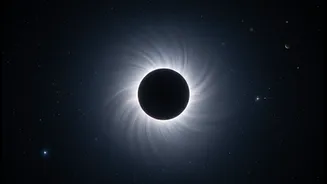
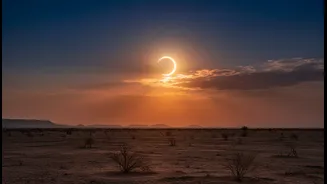
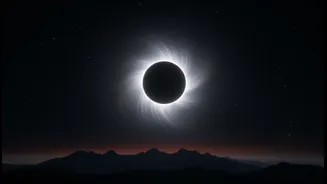
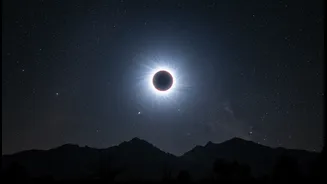
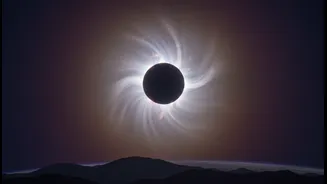
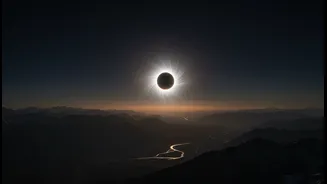
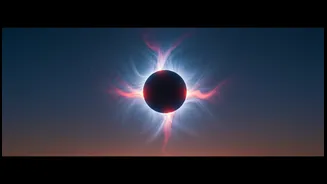
On August 12, 2026, millions of people across the globe will be treated to one of nature's most awe-inspiring sights: a total solar eclipse. For a few precious minutes, the Moon will pass directly between the Earth and the Sun, completely obscuring the solar disk.
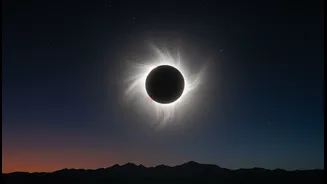
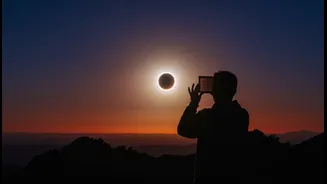
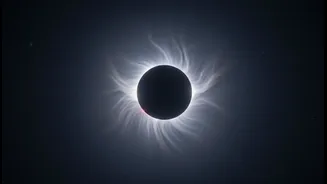
This celestial alignment will trace a narrow 'path of totality' across the planet, beginning over the Arctic and sweeping across Greenland, Iceland, and finally, northern Spain. Cities like Valencia and Palma will be plunged into an eerie twilight, and observers will have the rare chance to witness the Sun's magnificent outer atmosphere, the corona, which is normally invisible. It is the first total solar eclipse to grace mainland Europe in over two decades, making it a highly anticipated event for scientists, tourists, and locals alike.
The Science of the Shadow
Why is such a monumental event visible only from a sliver of the planet? The answer lies in the specific shadows cast by the Moon. During a solar eclipse, the Moon casts two types of shadows on Earth: a large, faint outer shadow called the penumbra, and a much smaller, darker inner shadow called the umbra. Anyone within the vast penumbra will see a partial eclipse, where the Moon covers only a portion of the Sun. But the grand prize, totality, is reserved exclusively for those within the narrow path of the umbra, which is typically only 100 to 200 kilometres wide. This path is determined by the precise alignment of the Sun, Moon, and Earth, combined with our planet's rotation. The umbral shadow sweeps across the Earth's surface at over 2,500 kilometres per hour, creating a fleeting and geographically exclusive experience.
India's View: A Story of Night
While the headline suggests limited visibility, the reality for the August 2026 eclipse in India is even more stark: there will be no visibility at all. The event will be entirely missed across the subcontinent for a very simple reason: timing. The peak of the eclipse will occur around 11:16 PM Indian Standard Time. By then, the Sun will be long set and on the opposite side of the Earth from India. For any eclipse to be visible, the Sun must be above the horizon. In this case, while parts of Europe experience a dramatic sunset eclipse, India will be deep into its own night. This geographical lottery is a fundamental part of eclipse chasing; what is a daytime spectacle for one hemisphere is a non-event for the other. So, while Indians can follow the spectacle via live streams, our skies will remain unchanged.
The Wait for India's Turn
The news is not all disappointing for aspiring astronomers in India. While the 2026 total solar eclipse is a miss, other celestial events are on the horizon. A partial solar eclipse will be visible from India on August 2, 2027. Furthermore, 2026 itself offers other sights; a total lunar eclipse, or 'Blood Moon', will be visible on March 3 from the northeastern states and the Andaman and Nicobar Islands. And on the very night of the solar eclipse, August 12-13, the Perseid meteor shower is expected to peak under ideal, moonless conditions, promising a spectacular show of shooting stars. For those holding out for the ultimate prize, patience is key. The next time the Moon's umbral shadow graces the Indian mainland will be on March 20, 2034, when a total solar eclipse traces a path across the northern part of the country.