

The Grand Vision: 111 National Waterways
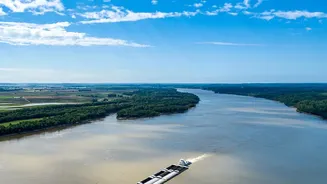
At the heart of this transformation is the National Waterways Act of 2016, a landmark law that identified 111 rivers, creeks, and canals for development as official National Waterways (NWs). This massive undertaking, managed by the Inland Waterways Authority
of India (IWAI), aims to develop a cost-effective and environmentally friendly alternative to congested roads and railways. While India has about 14,500 km of navigable waterways, this potential has been largely untapped. The goal is to significantly increase the modal share of inland water transport from its current low figure, leveraging this natural infrastructure for economic growth. As of early 2026, 32 of these waterways are operational, with plans to activate many more in the coming years.
NW-1: The Ganga-Hooghly Expressway
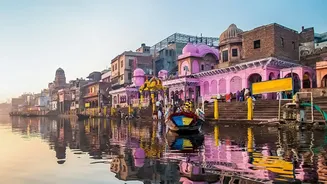
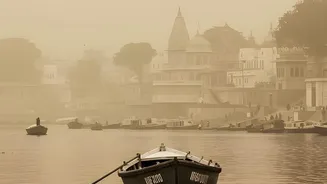
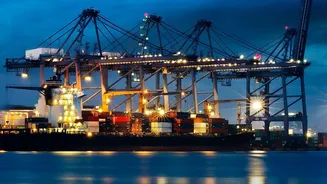
The flagship route is National Waterway 1, a 1,620 km stretch on the Ganga-Bhagirathi-Hooghly river system. It connects the industrial and agricultural heartlands of Uttar Pradesh, Bihar, Jharkhand, and West Bengal, running from Prayagraj to the port of Haldia. Under the Jal Marg Vikas Project, major infrastructure like multi-modal terminals at Varanasi, Sahibganj, and Haldia have been developed to seamlessly integrate river transport with road and rail networks. These terminals facilitate the movement of bulk cargo like coal, fertilisers, and cement. The project aims to ensure a navigable depth that allows large vessels of 1500-2000 tonnes to ply the river, drastically reducing logistics costs and transit times.
NW-2: Lifeline of the Northeast
In the Northeast, the 891 km National Waterway 2 on the Brahmaputra River serves as a vital artery for Assam and the wider region. Stretching from Sadiya to Dhubri, this waterway is crucial for transporting tea, coal, petroleum products, and other goods, enhancing connectivity in a region where terrain makes road and rail development challenging. Its integration with the Indo-Bangladesh Protocol (IBP) route further opens up trade and transit channels to the sea, connecting the landlocked northeastern states to global markets via the Bay of Bengal. This route is not just for cargo; it is also a premier destination for river cruises, offering travellers a unique window into the region's rich biodiversity and culture.
NW-3: Kerala’s Coastal Connector
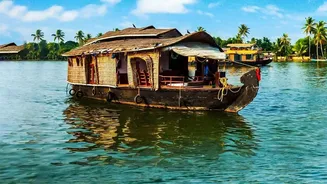
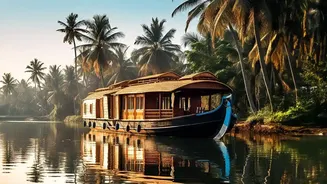
The West Coast Canal, or National Waterway 3, is a 205 km route that is integral to life and commerce in Kerala. It connects Kollam and Kottapuram and includes the Champakara and Udyogmandal canals, forming a key network for both passenger ferries and cargo movement. For decades, these backwaters have been a channel for local trade and are now a world-famous tourism circuit. The development under the national plan aims to further enhance its capacity, supporting coastal trade and easing pressure on the state's road network. Its significance lies in its dual role as a commercial channel and a pillar of the state's tourism economy.
Beyond Cargo: The Rise of River Tourism
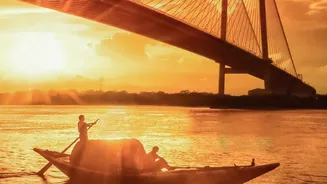
The expansion of waterways is not just about moving goods; it's also about creating new avenues for travel and leisure. River cruise tourism is an emerging sector with immense potential. As of July 2026, 17 river cruise circuits are already operational across 13 waterways. Luxury cruises on the Ganga (NW-1) take travellers on historical journeys from Varanasi to Kolkata, while expeditions on the Brahmaputra (NW-2) explore remote national parks and unique island cultures. In Goa, short-distance cruises on the Mandovi River (NW-68) offer vibrant cultural experiences. The government has identified 34 waterways for developing cruise tourism, with plans to invest significantly in cruise terminals and vessels.
The Economic and Environmental Payoff
The shift to water transport promises significant advantages. Inland waterways are inherently more fuel-efficient; studies show that one litre of fuel can move 215 tonne-kilometres by water, compared to just 24 by road. This translates to lower logistics costs, making Indian goods more competitive. Environmentally, it means a lower carbon footprint and reduced air pollution. By shifting bulk cargo from trucks to barges, the plan will also help decongest India’s strained highways, reducing traffic and accidents. The development of this infrastructure is also a major source of employment, creating jobs in everything from terminal construction to vessel operation and tourism services.