






The Hidden Costs of Sitting
Our bodies are designed for movement, but modern work life often keeps us rooted to a chair for eight hours or more. This prolonged sitting has consequences. It places strain on the neck, shoulders, and lower back. Muscles that are crucial for support,
like those in your core and glutes, become less active and weaken over time. This inactivity also reduces blood flow and slows the circulation of synovial fluid, your body’s natural joint lubricant. Without regular movement to keep this fluid flowing, joints become stiff, making it uncomfortable to move and potentially accelerating wear and tear on cartilage.
Movement is the Best Medicine
The solution is not necessarily an intense workout regime; it is about reducing your total sitting time. Integrating small, consistent movements throughout the day can make a significant difference. Standing and walking breaks help counteract the negative effects of being static. When you move, you encourage the flow of that vital synovial fluid, which reduces friction between your joints. It also re-engages and strengthens the muscles that support your spine, hips, and knees, improving stability and reducing strain. Better circulation from regular movement also means more oxygen and nutrients reach your muscles and tissues, helping to prevent stiffness and fatigue.
How to Stand Up for Your Joints
Integrating more standing time into your day doesn't require a complete overhaul of your workspace. Start small. Make it a habit to stand up every time you take a phone call. If you have a quick, informal chat with a colleague, have it standing up. Look for opportunities to work at a high counter or communal table for 15-20 minutes at a time. The goal is to break the cycle of continuous sitting. Using a timer or a break software on your computer can be a great reminder to get up at least once every hour. If available, a sit-stand desk converter is an excellent tool that allows you to easily alternate between sitting and standing.
Simple Walking Break Strategies
Walking is one of the most effective and accessible ways to combat sedentary effects. Instead of emailing or messaging a colleague in the same office, walk over to their desk. Opt for the stairs instead of the lift whenever possible, even if it's just for one or two floors. During your lunch break, dedicate 10-15 minutes to a brisk walk outside or around your office building. Another popular method is the Pomodoro Technique: work for 25 minutes, then take a 5-minute walking break. These short bursts of activity prevent your muscles and joints from locking up and can also boost your focus and energy levels.
Easy Desk-Side Stretches
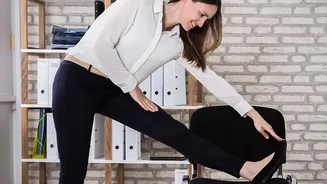
You can further improve joint comfort without even leaving your workspace. To relieve back tension, sit tall and gently twist your torso from side to side, using your chair for support. For your neck, slowly tilt your head from side to side, holding for 15-30 seconds on each side. To combat shoulder stiffness, roll your shoulders forwards and backwards several times. You can also perform seated hip stretches by crossing one ankle over the opposite knee and gently leaning forward. These simple movements, performed a few times a day, can release accumulated tension and improve your flexibility.