

What is Functional Core Power?
Before we dive into the poses, let's understand what 'functional core power' really means. It’s not just about achieving a 'six-pack'. Your core is a 360-degree system of muscles that wraps around your torso, including your abs, obliques, lower back,
and even glutes. Functional strength is the ability of these muscles to work together to stabilize your spine, support your posture, and power your everyday movements, from sitting at a desk to lifting groceries or playing with your children. Unlike traditional ab exercises that often isolate one muscle group, yoga teaches the entire core to work as a coordinated team.
Plank Pose (Phalakasana)
Plank is a foundational pose that is deceptively simple but incredibly effective. It's a full-body exercise that teaches your core to resist gravity and maintain a straight spinal alignment. By holding this pose, you engage not just the front abdominal muscles but also your back, shoulders, and legs, building true endurance. How to do it: Start on your hands and knees. Step your feet back one at a time until your body forms a straight line from your head to your heels. Your hands should be directly under your shoulders. Actively press the floor away, pull your belly button towards your spine, and squeeze your thigh muscles. Keep your neck neutral by looking at the floor slightly ahead of your hands. Gentle Tip: If a full plank is too intense, lower your knees to the mat. This modification still provides significant core engagement while allowing you to build strength gradually.
Boat Pose (Navasana)
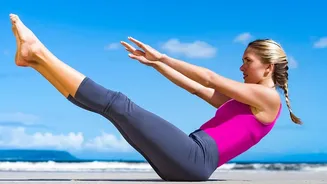
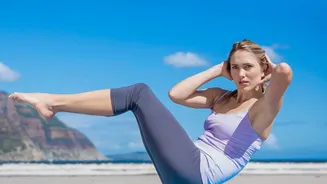
If you’ve ever felt your midsection shake in a yoga class, you were likely in Boat Pose. This posture is one of the most efficient for building core strength because it targets the abs, hip flexors, and back muscles all at once. It’s a fantastic way to build stability and balance. How to do it: Sit on the floor with your knees bent and feet flat. Lean back slightly, keeping your spine straight, until you feel your abdominal muscles engage. Lift your feet off the floor, bringing your shins parallel to the ground. You can keep your hands on the floor behind you for support or extend your arms forward, parallel to the floor. Gentle Tip: For an easier version, keep your knees bent and hold the backs of your thighs for support. The goal is to keep the spine long and avoid rounding your lower back. Focus on holding for just a few breaths at first and build from there.
Bridge Pose (Setu Bandhasana)
Bridge Pose is a gentle backbend that is excellent for strengthening the posterior part of your core, including your glutes and lower back muscles. These muscles are crucial for supporting the spine and are often neglected in traditional ab workouts. How to do it: Lie on your back with your knees bent and feet flat on the floor, hip-width apart. Your arms should be resting alongside your body with your palms facing down. On an exhale, press through your feet and lift your hips off the floor. Clasp your hands together underneath your body and roll your shoulders under for support. Keep your thighs parallel. Gentle Tip: Hold the pose for 30 seconds, breathing steadily. The work comes from keeping your hips lifted and engaging your glutes and hamstrings. To release, unclasp your hands and slowly lower your spine back to the mat, one vertebra at a time.
Bird-Dog Pose (Dandayamana Bharmanasana)
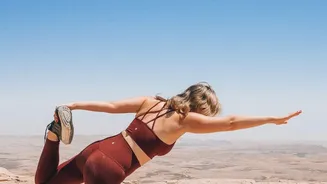
This beginner-friendly pose is brilliant for improving balance and stability. It trains your core to resist rotation and keep your spine steady as you move your limbs, a key component of functional strength. Your abs and back muscles must work in harmony to prevent your hips and shoulders from tilting. How to do it: Start on your hands and knees in a tabletop position. Engage your core to keep your back flat. Extend your right arm straight forward and your left leg straight back simultaneously. Hold for a moment, focusing on keeping your hips and shoulders level. Slowly lower your arm and leg back to the start and repeat on the other side. That's one repetition. Gentle Tip: Move slowly and with control. The goal is not to lift your leg high but to keep your torso perfectly still. This mindful movement is what builds deep core control.