




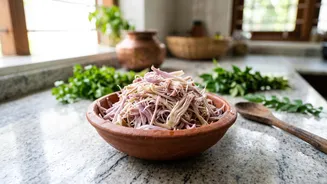

In the quest for healthy eating, vegetables are often subjected to the steamer, a method that promises nutrition but rarely delivers on flavour. But what if health and aroma weren't mutually exclusive? Enter the banana flower, a humble ingredient.
The Understated Hero of the Kitchen
Before
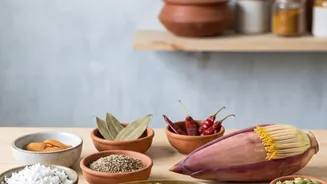
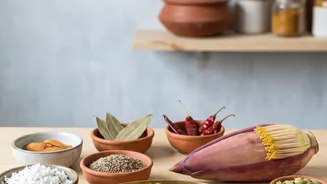
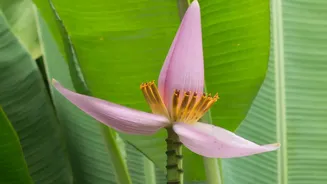
it becomes a bunch of bananas, the plant produces a large, purplish, tear-drop-shaped flower. This is the banana blossom, known as 'mocha' in Bengal and 'vazhaipoo' in Tamil Nadu. Eaten as a vegetable across South and Southeast Asia, its flavour is mild, slightly nutty, and a bit floral—often compared to artichokes or bamboo shoots. Its true genius lies in its texture, which is tender yet toothsome, and its remarkable ability to absorb the flavours it's cooked with. Preparing a fresh banana flower is a labour of love. It involves peeling away the tough outer petals to reveal the delicate florets within, from which a hard pistil and a translucent scale must be removed. This intricate process is a testament to the care embedded in traditional cooking, a stark contrast to simply tossing vegetables in a steamer.
A Bengali Classic: Mochar Ghonto
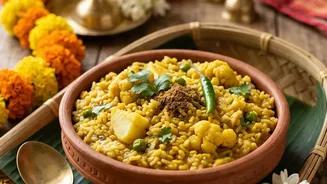
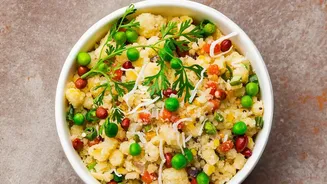
In West Bengal, the banana flower transforms into Mochar Ghonto, a celebrated dry curry that is the pinnacle of vegetarian cooking for many. The dish is a complex medley of textures and tastes. The finely chopped florets are typically boiled first, then sautéed with cubed potatoes, grated coconut, and a host of aromatic spices. The process begins by tempering spices like cumin seeds and bay leaves in hot mustard oil or ghee. Ginger paste and powdered spices like cumin, coriander, and turmeric are added, creating a fragrant base before the boiled banana flower joins the pan. A hint of sugar or jaggery balances the slight bitterness of the flower, while a final touch of garam masala and a dollop of ghee adds a rich, warm aroma that steaming could never achieve.
A South Indian Staple: Vazhaipoo Poriyal
Travel south, and you'll find Vazhaipoo Poriyal, a traditional Tamil stir-fry that offers a different but equally compelling aromatic profile. Here, the banana flower is cooked with a classic South Indian tempering (tadka) of mustard seeds, urad dal (split black lentils), and curry leaves sizzled in oil. Finely chopped onions and green chillies are sautéed until translucent before the cleaned and chopped banana flower is added. Cooked with turmeric and salt, the dish is finished with a generous amount of freshly grated coconut, which adds sweetness and texture. The aroma isn't just from one ingredient, but from the symphony of popping mustard seeds, earthy dal, and fragrant curry leaves that form the flavour foundation.
The Science of Scent and Flavour
The pronounced difference in aroma comes down to culinary science. Steaming uses water vapour to cook food. While it's excellent at preserving certain nutrients, it doesn't create new flavour compounds. Many of the aromatic compounds in spices are fat-soluble, not water-soluble. The Indian technique of 'tempering' or 'blooming'—frying spices in hot fat like oil or ghee—is designed to unlock these compounds. The heat causes the spices' cell walls to break down, releasing their essential oils. This infused oil then becomes a vehicle, carrying deep, complex flavours throughout the entire dish. This process creates a layered, robust aroma that is simply chemically impossible to achieve with water vapour alone. A steamed vegetable may taste of itself, but a curried one tastes of a whole, integrated system of flavours.
Beyond Blandness, Without Compromise
To label steamed vegetables as 'bland' isn't a criticism of their health benefits, but a recognition of their culinary limitations. Steaming retains water-soluble vitamins well and is low in fat, making it a healthy choice. However, flavour and health are not enemies. Regional curries like Mochar Ghonto and Vazhaipoo Poriyal demonstrate that thoughtful preparation and the strategic use of spices can create an experience that is both nourishing and deeply satisfying. The banana flower itself is rich in fiber, protein, and various minerals like potassium and iron. By embracing the techniques that build aroma, we don't sacrifice health; we simply refuse to accept that nutritious food must be devoid of joy and character. These curries are a delicious proof point that complexity, aroma, and flavour are not the opposite of healthy eating, but rather its most delightful expression.