






The Great Monsoon Myth
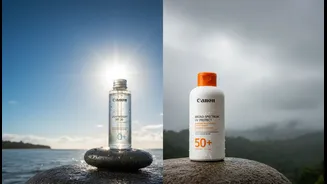
It’s a common belief: if you can’t see the sun, it can’t harm your skin. The cool, overcast days of the monsoon create a false sense of security, leading many to believe that sunscreen is only for bright, sunny weather. This thinking is logical but unfortunately
incorrect. The temperature and the brightness of the day have very little to do with the underlying levels of ultraviolet (UV) radiation. While heavy, thick clouds do offer some blockage, a significant amount of UV radiation still penetrates the atmosphere, reaching your skin and causing damage that isn't immediately visible.
Understanding the Invisible Threat: UVA vs. UVB
The sun emits two main types of UV rays that reach the Earth: UVA and UVB. Think of it this way: UVB rays are the 'burning' rays, while UVA rays are the 'ageing' rays. UVB rays are shorter, affect the skin's surface, and are the primary cause of sunburn. Clouds are fairly effective at blocking a portion of these UVB rays, which is why you're less likely to get a painful sunburn on a cloudy day. However, UVA rays have a longer wavelength that allows them to penetrate deeper into the skin, reaching the dermis where they degrade collagen and elastin. These are the rays responsible for premature ageing, wrinkles, and hyperpigmentation. Crucially, up to 95% of the UV radiation reaching us is UVA, and clouds do very little to stop it. In fact, up to 80% of the sun's UV rays can pass through even on a gloomy day.
When Clouds Can Make It Worse
Counterintuitively, certain types of cloud cover can actually increase your UV exposure. This is known as the 'broken-cloud effect' or 'cloud enhancement'. On partly cloudy days, the edges of clouds can reflect and scatter UV rays, focusing them and raising the UV levels on the ground to be even higher than on a perfectly clear day. Some studies have shown that partly cloudy skies can increase UV-B rays by as much as 25%. This means a day with scattered white clouds, common during the monsoon, can pose a surprisingly high risk for skin damage precisely because we underestimate the danger.
Your Monsoon Sunscreen Strategy
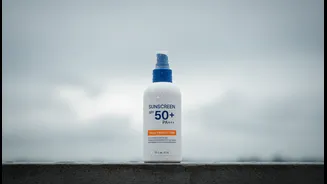
Protecting your skin during the monsoon requires a consistent and smart approach. Given the high humidity and potential for getting caught in the rain, your choice of sunscreen matters. Look for a 'broad-spectrum' sunscreen, as this label ensures it protects against both UVA and UVB rays. Dermatologists recommend an SPF of 30 or higher for daily use. For the Indian climate, especially during the humid monsoon, a lightweight, non-greasy, and water-resistant formula is ideal. Gel-based or fluid sunscreens tend to absorb quickly without feeling sticky or heavy on the skin. Water-resistance is key to ensure your protection doesn't immediately wash or sweat off. Reapplication every two hours is still important, particularly after heavy sweating or exposure to rain.
Long-Term Protection for Indian Skin
The long-term effects of UV exposure are cumulative, meaning the damage adds up day after day, year after year. For Indian skin, which is rich in melanin, one of the most common consequences of consistent UVA exposure is hyperpigmentation. This can manifest as dark spots, an uneven skin tone, and conditions like melasma, which can be worsened by sun exposure. While melanin offers some natural protection against burning (UVB), it is less effective against the deeper damage caused by UVA rays that leads to photoaging. Making sunscreen a non-negotiable part of your daily routine, regardless of the season or weather, is the single most effective way to prevent premature aging and reduce the long-term risk of skin cancer.