


The Quest for Lunar 'White Gold'
For decades, scientists believed the Moon was bone-dry, an idea supported by the rock samples returned by the Apollo missions. That perception dramatically shifted when India's Chandrayaan-1 mission, launched in 2008, provided definitive proof of water
molecules on the lunar surface. This discovery was a game-changer. Water on the Moon isn't just for drinking. It's a fundamental resource for building a sustainable presence beyond Earth. Through a process called electrolysis, water (H2O) can be split into breathable oxygen and hydrogen, a primary component of rocket fuel. The ability to produce air and fuel on-site would dramatically reduce the cost and complexity of future missions, liberating them from having to launch everything from Earth. This makes lunar water a strategic asset, the foundational element for future lunar habitats, fuel depots, and a launchpad to the wider solar system.
The Dark and Frigid Challenge
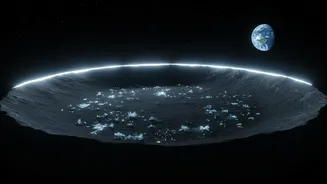
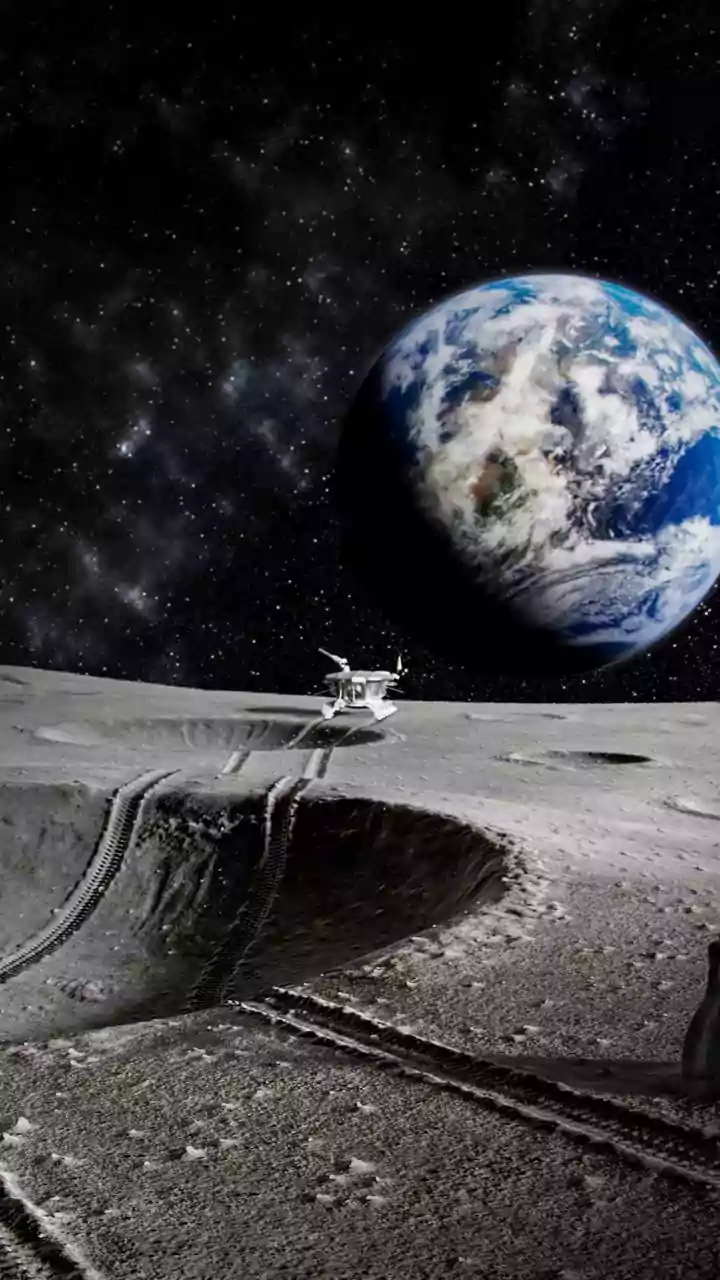
The most promising reserves of lunar water are locked away as ice in some of the most inhospitable locations in the solar system: permanently shadowed regions (PSRs) near the Moon’s poles. These are craters whose floors have not seen direct sunlight for billions of years, creating 'cold traps' where water ice can remain frozen in the near-perfect vacuum. But this also makes them incredibly difficult to explore. Temperatures inside these craters can plummet to -240 degrees Celsius, just 30 degrees above absolute zero. Any robotic explorer must survive this extreme cold, which can freeze electronics and seize mechanical parts. Furthermore, the complete darkness means that solar-powered rovers are not an option, creating a significant power challenge for any mission designed to operate for more than a few hours. Extracting resources requires drilling into what is essentially rock-hard, ice-infused soil, or 'regolith', all while operating in perpetual darkness on treacherous terrain.
ISRO's Blueprint for Extraction
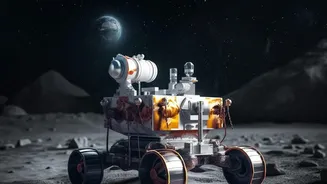
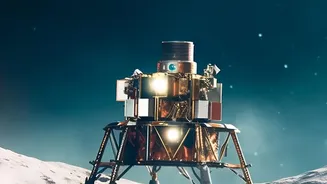
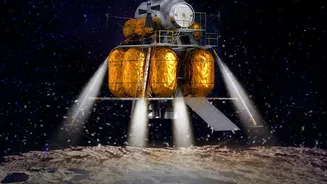
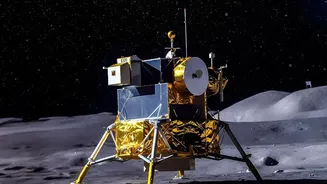
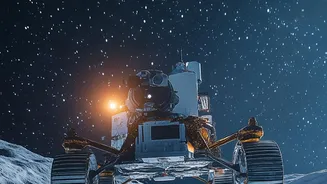
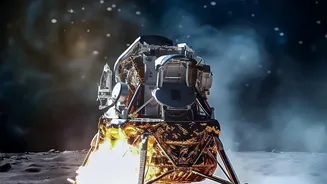
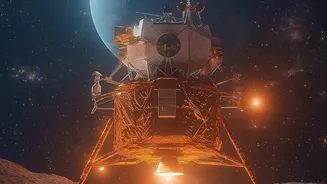
ISRO's strategy for tackling this challenge is centered on the upcoming Lunar Polar Exploration Mission (LUPEX), a joint project with the Japan Aerospace Exploration Agency (JAXA). Scheduled for no earlier than 2028, this mission will send a lander built by ISRO and a sophisticated rover developed by JAXA to the Moon's south pole. The mission's primary objective is to directly investigate the quantity, quality, and accessibility of water ice. The 350-kg rover is a significant step up from Chandrayaan-3's Pragyan rover and will be equipped with a suite of advanced instruments. A key piece of hardware will be a drill capable of extracting subsurface samples from a depth of up to 1.5 meters. This will allow scientists to analyze the icy regolith directly, moving beyond the orbital radar data gathered by missions like Chandrayaan-2, which first indicated the presence of subsurface ice.
How to Mine the Moon: The Technology
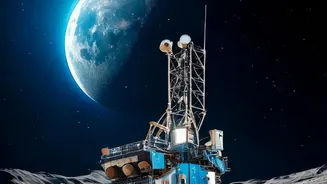
The core of the extraction process is a concept known as in-situ resource utilization (ISRU), which essentially means living off the land. The LUPEX rover will be a mobile laboratory designed to test these techniques. The most likely method is 'thermal mining'. First, the rover's drill will excavate the icy soil. This regolith will then be transferred into a contained heating unit or oven. As the material is heated, the water ice will turn directly from a solid into a gas—a process called sublimation. This water vapor is then collected and channeled into a cold trap, a cooled chamber that allows the vapor to condense back into liquid water or re-freeze into pure ice. ISRO and its partners are contributing several instruments to analyze this process, including spectrometers to identify the composition of the vapor and a thermal probe to quantify the ice content in the soil samples. This entire system must be incredibly efficient, lightweight, and robust enough to function in the Moon's harsh environment.
Pioneering the Future of Exploration
The LUPEX mission is more than just a scientific expedition; it's a critical technology demonstration that paves the way for a lunar economy. By proving that water can be reliably located, extracted, and processed, ISRO and JAXA will provide the essential data needed for planning long-term human settlements and large-scale industrial activities, such as producing rocket propellant. The mission will feature instruments from NASA and the European Space Agency (ESA) as well, making it a truly global collaboration. For India, LUPEX builds on the historic success of the Chandrayaan program, which first discovered lunar water and then achieved the first-ever soft landing at the south pole. Successfully mining water ice will solidify India's position as a leader in space exploration and a key player in humanity's return to the Moon and eventual journey to Mars.